
by Kevin Smith
In just a few short years, Guyana’s landscape has undergone a dramatic transformation; one measured in more than dollars spent and concrete laid, but in communities connected, travel times reduced, and opportunities unlocked.
From the banks of the Demerara to the rolling hills of Linden and the far-reaching coastlines of Region Six, a new network of modern infrastructure is being built, piece by piece, under the stewardship of the PPP/C Government. These bridges and roads aren’t just engineering marvels—they are the foundation of a smarter, more unified Guyana.
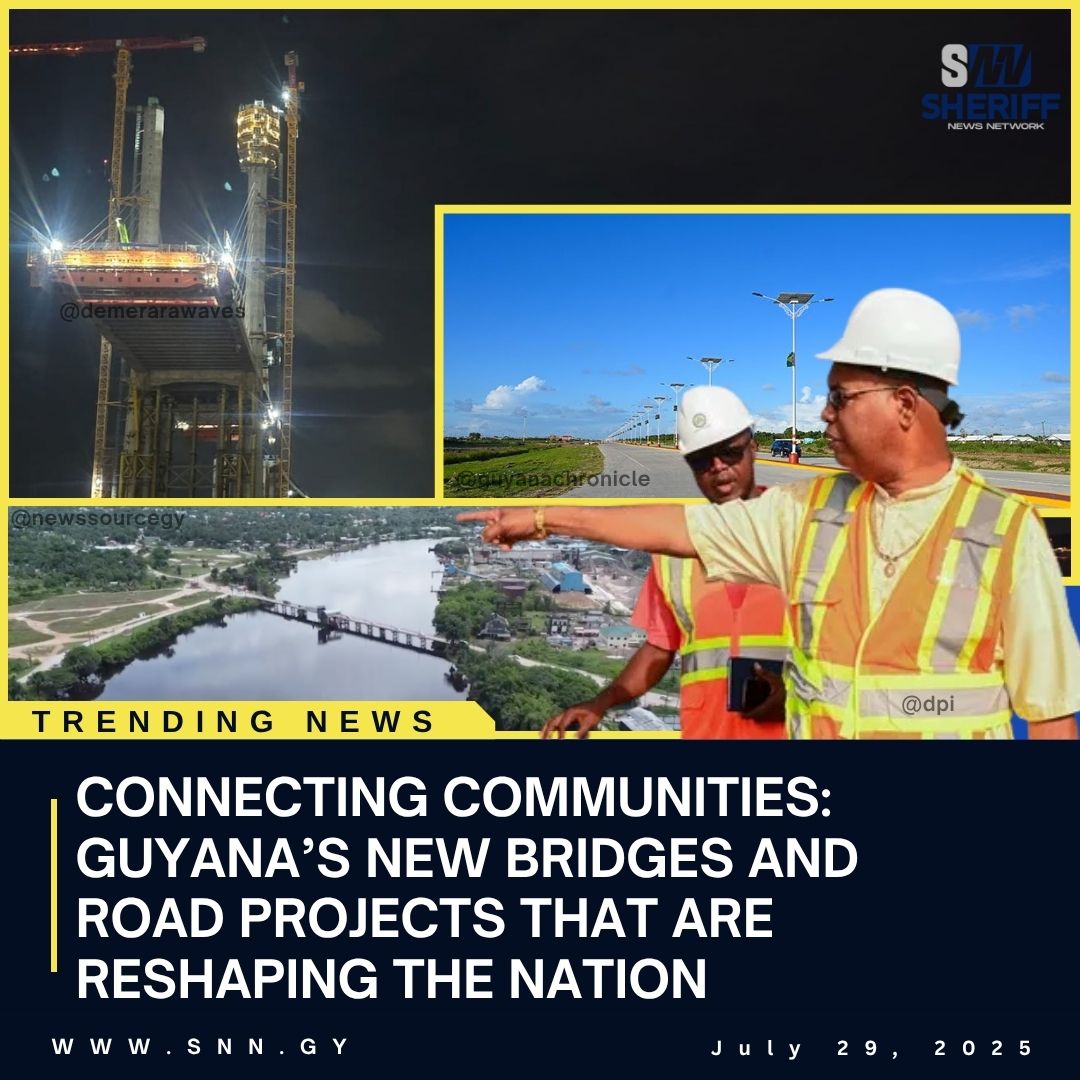
The new Demerara River Bridge, a long-held national aspiration, is now a striking symbol of progress. Replacing the ageing 1978 floating structure, this four-lane fixed span finally promises 24-hour connectivity, cutting commute times and eliminating the frustration of hours-long closures due to retractions.
“This is more than a bridge,” President Irfaan Ali said during a recent site inspection. “It is a bridge to the future—one where we’re building a Guyana that works for everyone.”
Other major road expansion projects are quietly changing lives across the country:
The much-anticipated Corentyne River Bridge Project between Guyana and Suriname will not only link two nations but also position Guyana as a trade and travel hub in the region.
The Linden to Mabura Hill Road will become a gateway to Region Nine and deep hinterland communities, enhancing tourism, commerce, and indigenous access to markets and services.
The government has taken the initiative to make important bridges in the country toll-free. For example, the new Demerara River Bridge and the Wismar Bridge. This is a key policy shift by the Ali administration that prioritizes equity and access over profit.
“We are removing hidden taxes on working-class Guyanese. These projects are for the people,” said Public Works Minister Juan Edghill.
Importantly, with each project comes a ripple effect. Thousands of construction jobs created, small businesses benefit from increased traffic, and engineers, surveyors, and suppliers feed into a growing economy.
More than just convenience, this network of bridges and roads is about knitting the nation together- making Guyana smaller, safer, and stronger.
From Berbice to Lethem, the government is quite literally bridging the gap between coast and interior, between economic centers and rural communities, between past promises and present delivery.
And while the traffic may move faster now, one thing is certain; Guyana’s development journey is just beginning.