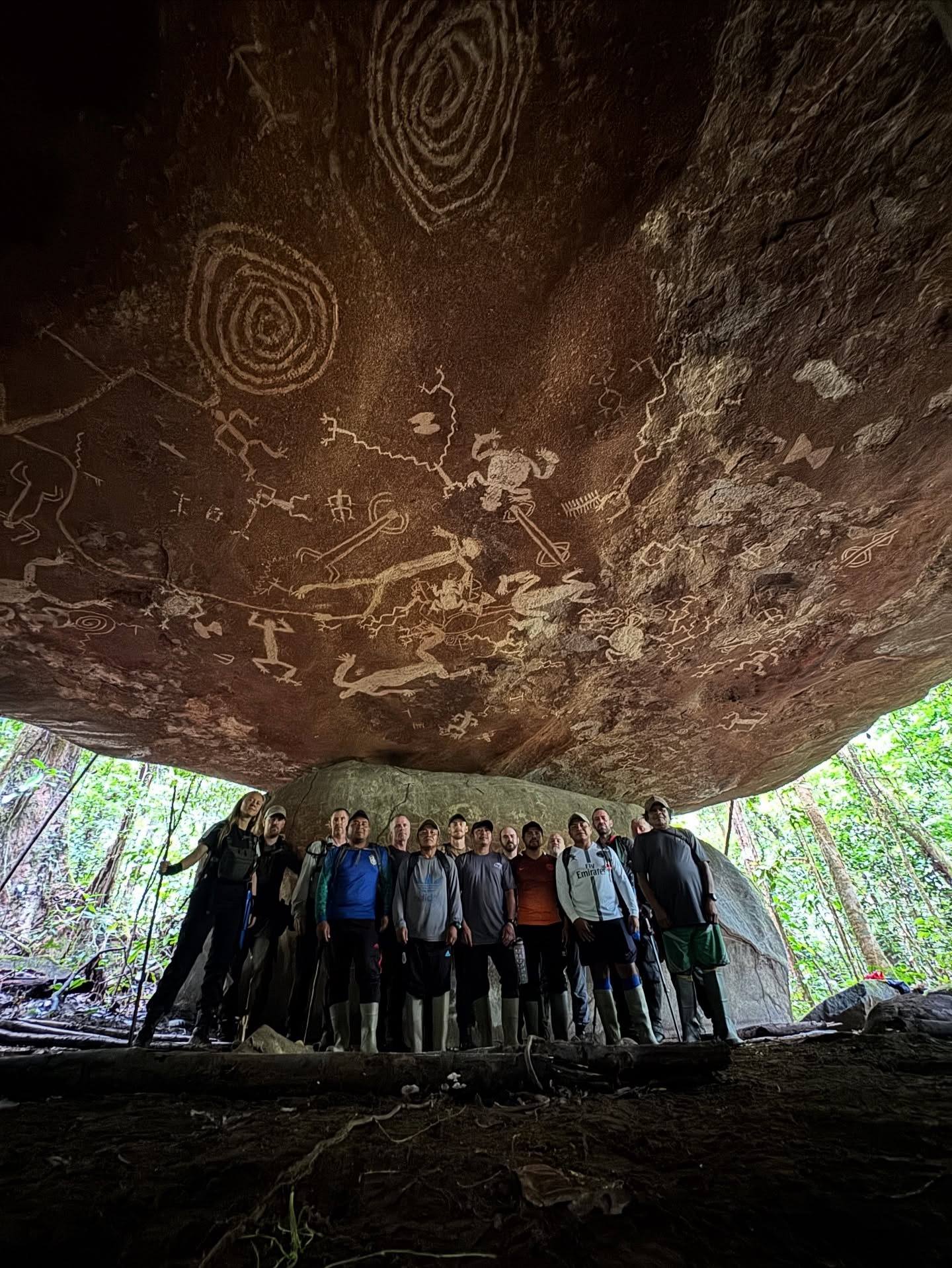

Deep in the rugged Pakaraima Mountains, an international team from The Wild Tales and the local community of Kopinang have made a discovery that could reshape our understanding of Guyana’s cultural past. After days of demanding travel through rainforest and mountain terrain, the expedition stepped into a cave whose walls were covered with an extraordinary array of ancient paintings and symbols.
Archaeologically, this is a remarkable find. Rock art sites are among the most important windows into the beliefs, rituals, and daily lives of early Indigenous peoples. Each painting — whether geometric design, animal form, or spiritual symbol — represents a message left by those who lived in these mountains’ centuries, perhaps millennia, ago. The exceptional state of preservation reported by the team makes this cave one of the most significant rock art sites ever documented in Guyana.
Unlike many expeditions where visitors are guided through with logistical support, this journey was full immersion. Participants became true expedition members — hauling gear, setting camp, managing rations, and enduring the same challenges as early explorers. The reward was entry into a site that blends archaeology, anthropology, and living heritage.
Such discoveries highlight the deep time depth of Indigenous presence in Guyana’s interior, while also providing evidence of symbolic thought, storytelling, and spiritual traditions of communities often left out of written history. An emphasis for preservation partnerships between archaeologists, local communities, and government agencies was also hinted, to ensure fragile cultural heritage is protected.
The team has rightly credited the people of Kopinang — guides, porters, and cultural custodians — without whom the discovery would not have been possible in archaeology today.