
The Customs Anti-Narcotic Unit (CANU) recorded 117 arrests and 29 convictions for drug-related offences in 2025, while warning of an increasing overlap between narcotics trafficking and firearm seizures, according to its 2025 Public Briefing.
CANU reported that a total of 117 persons were arrested during the year, with 62 individuals charged in relation to narcotics offences. Of those cases, the Unit secured 29 drug-related convictions.
The convictions were broken down as 14 cocaine-related convictions, 12 cannabis-related convictions, and three convictions linked to synthetic drugs, including ecstasy and cannabis products.
CANU noted that fines ranged up to GYD $311 million, while sentences extended up to four years, depending on the quantity of drugs involved and the assessed trafficking intent.
The Unit also highlighted that approximately 82 per cent of all arrests were male, a trend it said is “consistent with global drug-crime patterns.” The months recording the highest number of arrests were April, May, July and September.
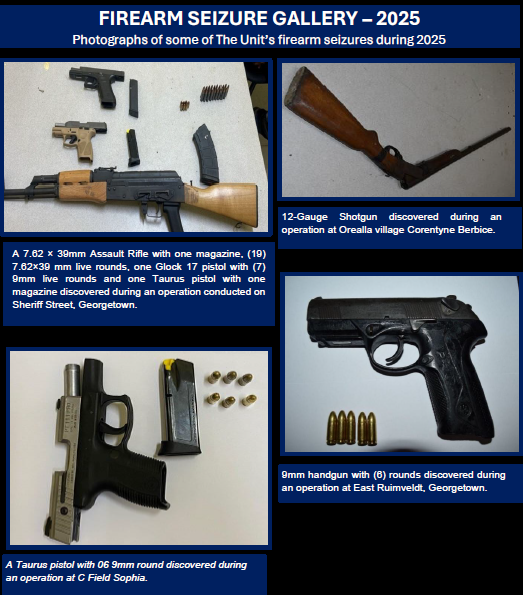
Alongside narcotics enforcement, CANU raised concern about the growing intersection between drugs and firearms. The Unit disclosed that it recorded 13 firearm seizures in 2025, with 9mm pistols being the most common weapon type recovered.
According to the briefing, half of all firearms seized were directly linked to narcotic trafficking operations, underscoring what CANU described as a continued overlap between drug networks and armed criminal activity.
While ammunition seizures declined by 62 per cent, CANU said the recovery of 9mm and shotgun ammunition continues to reflect the connection between firearms and drug trafficking networks.
In addition to enforcement efforts, CANU said it expanded its prevention and public awareness programmes, with a strong focus on schools and youth engagement.
The Unit reported reaching 5,678 beneficiaries nationwide through school-based programmes, youth engagements, community outreach, and special-needs and vulnerable-group interventions.
CANU noted that over 86 per cent of all prevention outreach occurred in schools, aligning with the academic calendar and targeting what it described as “the most at-risk age groups.”
The agency said these initiatives form part of a broader strategy linking enforcement, prevention, and rehabilitation, as it continues to strengthen national responses to drug-related threats.
CANU stated that its combined enforcement and prevention efforts are aimed at ensuring Guyana remains positioned as “a Regional Disruptor, not a passive transit point,” as the country confronts evolving trafficking methods and emerging risks.