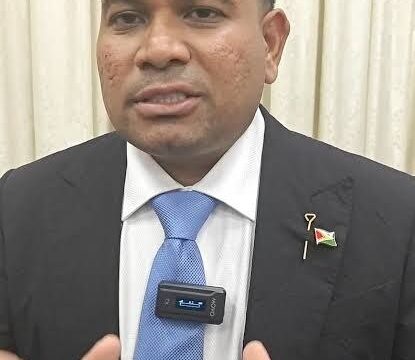
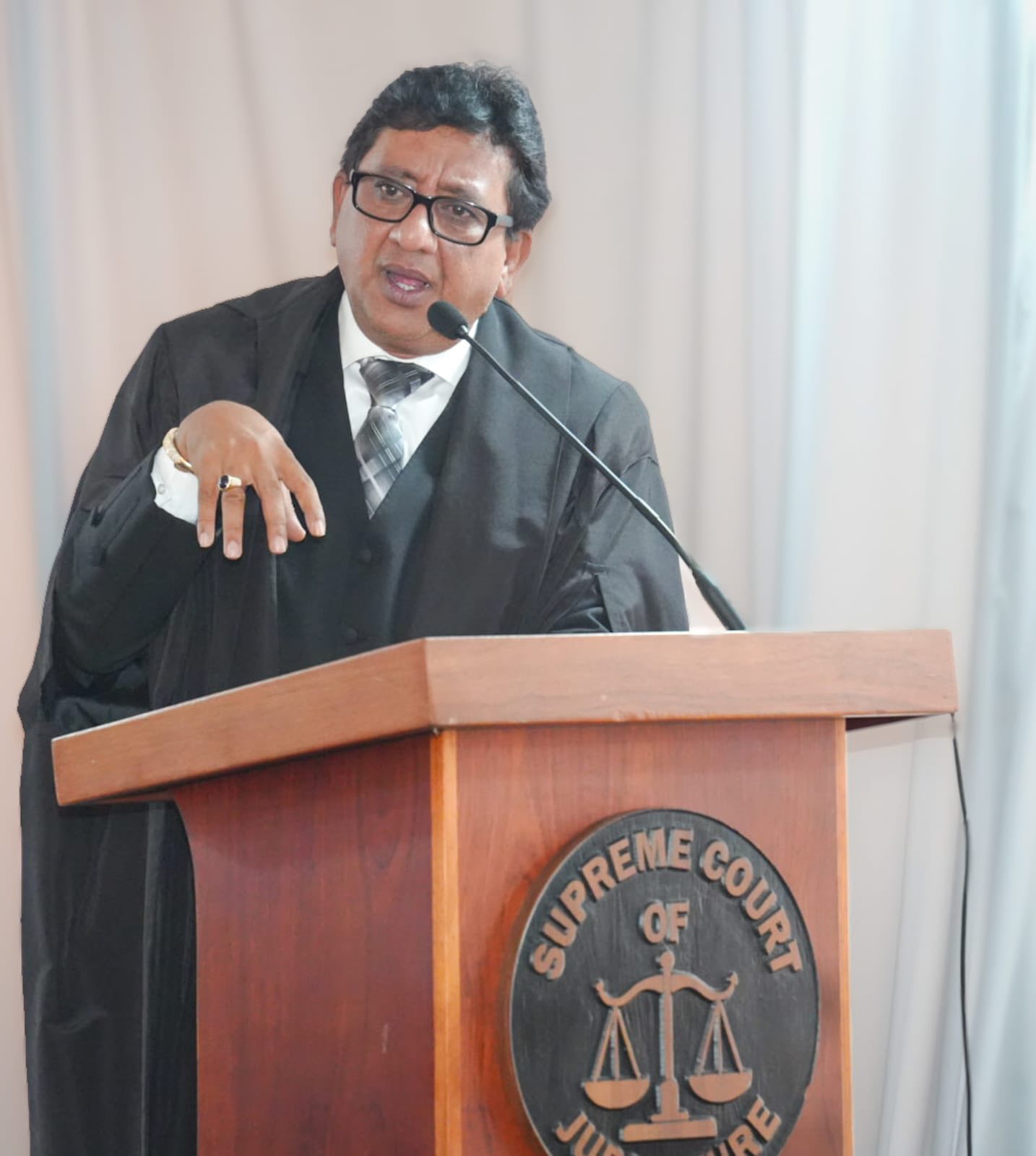

Attorney General Anil Nandlall on Wednesday dismissed as “absurd” the legal challenges filed by businessman Nazar Mohamed and his son Azruddin Mohamed, warning that politics cannot be allowed to become a shield to defeat extradition proceedings.
Speaking to members of the press after a full day of hearings before the Chief Justice, Nandlall said the judicial review proceedings were built on a theory that, if accepted, would fundamentally undermine extradition law.
“That case is predicated on a theory that is absurd,” the Attorney General said, adding that the applicants were advancing the argument that they were politically persecuted and that the entire government was biased against them.
The two High Court matters, one a constitutional challenge to sections of the Fugitive Offenders Act, and the other a judicial review seeking to quash the Minister of Home Affairs’ authority to proceed with extradition, were heard together.
According to Nandlall, the Mohameds’ case rests on the claim that alleged political bias on the part of government officials disqualifies them from participating in the extradition process.
“Politics will become a safe refuge for anybody who wants to defeat an extradition process by simply jumping into the political realm and start to oppose the government of the day, and then claim that the government is biased against you,” he said. “That can’t be the law of any country.”
The Attorney General told reporters that the defence filed “dozens and dozens of pages of affidavits” quoting speeches and public statements made by government officials to support claims of political persecution. However, he said the State responded with evidence outlining the Mohameds’ long-standing business associations and political affiliations, as well as the circumstances surrounding international sanctions and Guyana’s treaty obligations.
Nandlall stressed that the extradition process is a statutory one and that the Minister’s role in issuing an authority to proceed is not judicial.
“Bias doesn’t have a role to play,” he said. “The Minister is simply discharging a duty. It is a trigger. That’s all.”
He added that all questions relating to due process and the rights of the accused are to be determined by the courts during the committal proceedings, not at the stage of issuing an authority to proceed.
The Attorney General further described the High Court challenges as premature and intended to delay the extradition process.
“These proceedings are premature. They are intended to delay,” he said, noting that established authorities make clear that such objections ought to be raised after committal proceedings, not before.
The Chief Justice is expected to rule on the High Court matters on February 2, while the substantive committal hearings in the extradition matter are scheduled for February 5 and 6.