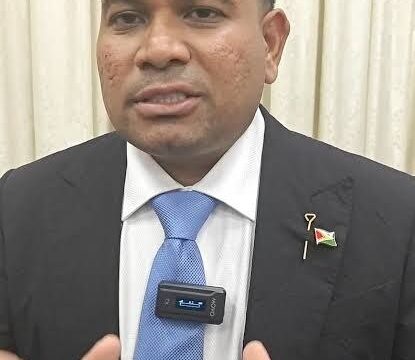
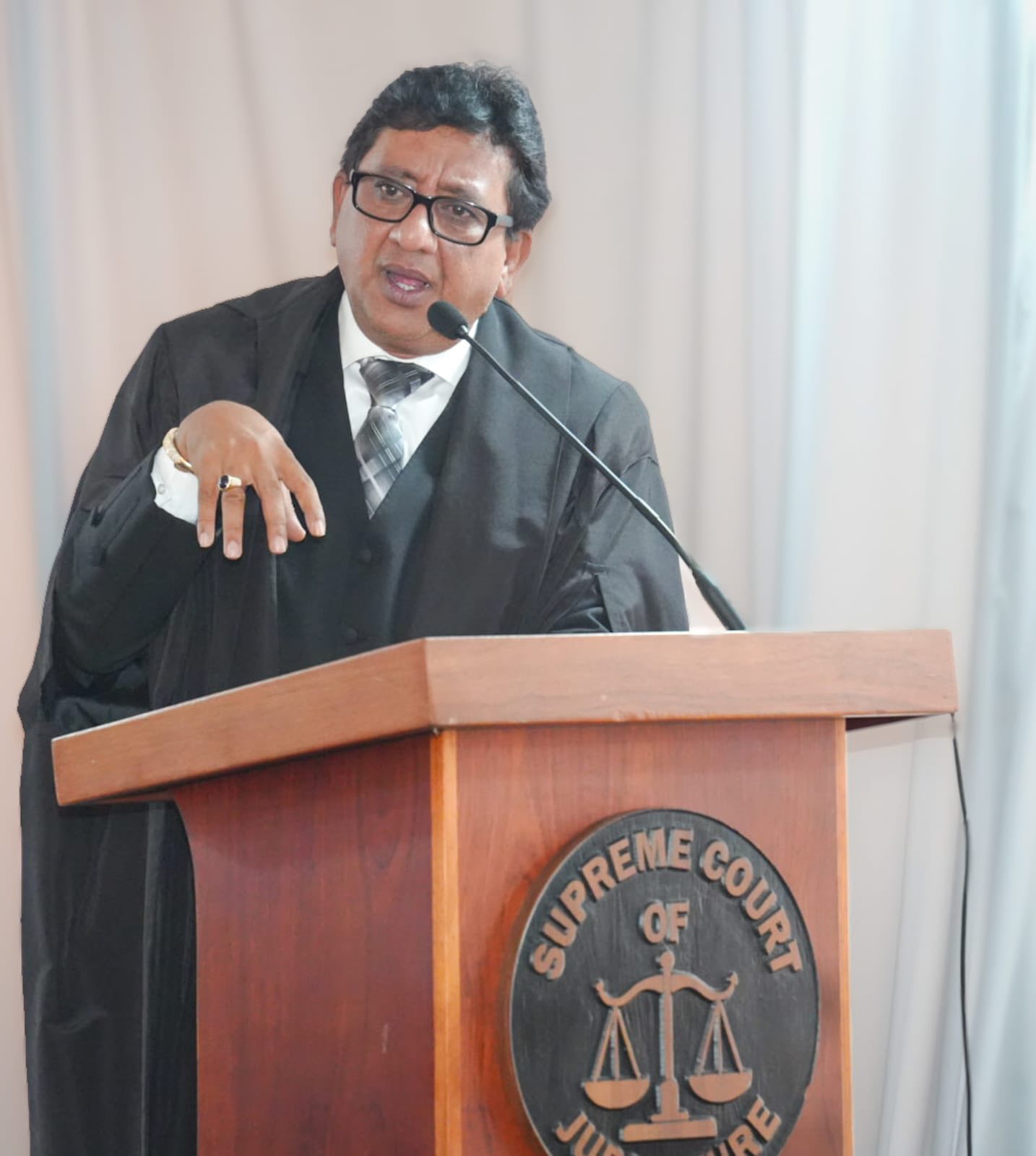

Attorney General Anil Nandlall on Wednesday sought to clarify the legal framework governing extradition proceedings, stressing that the process is statutory and executive in nature and that claims of political bias have no legal bearing at the stage where an authority to proceed is issued.
Speaking to members of the press after High Court hearings involving extradition proceedings filed by businessman Nazar Mohamed and his son Azruddin Mohamed, Nandlall explained that the role of the Minister of Home Affairs is limited and clearly defined by law.
“The extradition process is a statutory process,” the Attorney General said. “The Minister complied with that, bias or no bias. Bias doesn’t have a role to play.”
Nandlall said the Minister’s issuance of an authority to proceed is not a judicial act but a procedural step that allows the extradition process to move forward.
“The Minister is simply discharging a duty. It is a trigger. That’s all,” he said. “The Minister is simply granting permission for the extradition process to take place.”
He emphasised that the authority to proceed does not determine guilt or innocence and does not deprive the accused of their legal rights.
“All the due process of law, all the whatever rights they have, are going to be adjudicated upon by the judiciary, not the executive,” Nandlall told reporters.
Addressing claims that alleged political bias should have disqualified government officials from participating in the extradition process, the Attorney General said such arguments misunderstand the nature of ministerial responsibility.
“Treaty obligations, extraditions, are intrinsically executive government functions. They are inalienable,” he said. “You can’t delegate it. You can’t alienate it to any other sphere of government.”
Nandlall noted that even if delegation were possible, it would not resolve the issue raised by the applicants.
“If, let us say, they are arguing we should have delegated to someone else, who?” he asked. “How far down do you go?”
The Attorney General further explained that extradition begins and ends with executive action, but that the process in between is firmly in the hands of the courts.
“The extradition is a statutory executive of one country and ends with an executive of another country,” he said. “In the interregnum, there is a judicial process. That judicial process will be manned by judicial officers.”
He added that it is during that judicial phase that objections and legal challenges properly arise.
“That is where you’ve got to take those objections,” Nandlall said, reiterating that courts- not politicians- are responsible for determining the legal merits of extradition cases.