
The Government of Guyana is moving to reverse 19 “strikes” issued by the International Maritime Organization (IMO) following an audit in 2018 that found the country non-compliant with several mandatory maritime obligations.
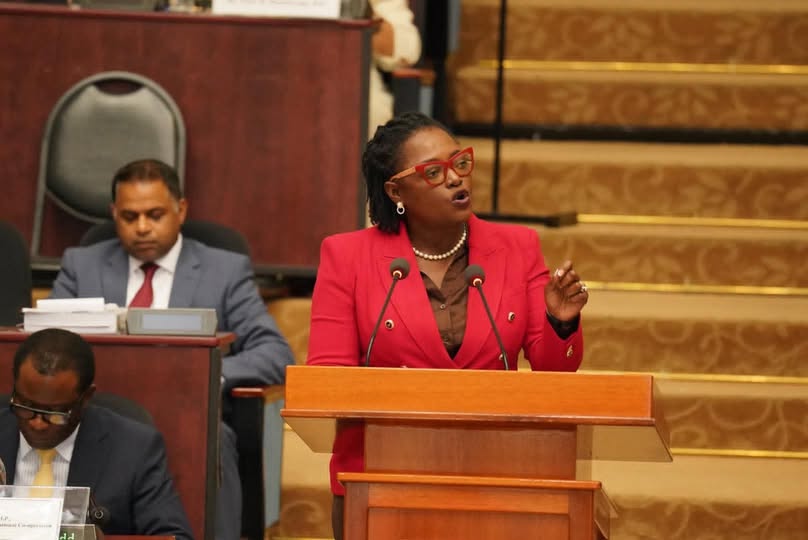
Addressing the National Assembly on Thursday during the Budget 2026 debates, Parliament Secretary and Legal Officer at the Guyana Maritime Administration Department (MARAD), Thandi McAllister, said the findings stemmed from failures under the former APNU+AFC administration.
She explained that although Guyana was notified well in advance that mandatory IMO audit amendments would take effect from January 1, 2016, the then government did not adequately prepare for the audit conducted between February 10 and 19, 2018. As a result, Guyana recorded 19 adverse findings.
“The APNU+AFC Government… failed to implement the requirements for verification of compliance. Hence, during the conduct of the audit… Guyana recorded 19 findings – 19 strikes,” McAllister told the House.
Those findings included the absence of sufficient technical and legal staff to implement maritime conventions, weak national prioritisation of maritime affairs, reliance on outdated management systems, and the lack of policies for retaining maritime data. Auditors also flagged limited technical capacity, poor enforcement mechanisms, and the absence of reliable systems for disseminating safety-of-navigation information.
McAllister assured that the PPP/C administration is addressing those shortcomings and remains committed to achieving full compliance ahead of a follow-up audit. “We will continue to build our maritime capacity and infrastructure so that when we have that follow-up audit… We will register 19 stars,” she said.
Since taking office in 2020, the Dr Irfaan Ali-led government has prioritised modernising the sector. This has included the construction of more than 30 navigation markers along the Essequibo River and key navigational aids in the Demerara River, alongside the acquisition of three new pilot boats. Repairs were also carried out on the David P vessel, which McAllister said had been left mechanically unsound when acquired in 2018.
Further upgrades are planned, including the addition of a hydrographic survey vessel and a specialised craft for maintaining navigational buoys and beacons.
These efforts are being complemented by ongoing dredging of the Demerara River, for which $6.3 billion has been allocated in Budget 2026. Minister of Public Utilities and Aviation Deodat Indar told the Assembly that continuous dredging is necessary due to rapid siltation and will allow larger vessels to access local ports, reducing freight and fuel costs.
Meanwhile, MARAD is also strengthening its institutional capacity. A Maritime Rescue Coordination Centre is set to become operational this year, while trained registrars, technical officers, legal professionals and port specialists have been appointed in keeping with international standards. Legislative reforms are also underway, including work on a modern Port Authority Act.
McAllister noted that Guyana’s progress is already gaining regional recognition, with the country set to host two major maritime conferences later this year.