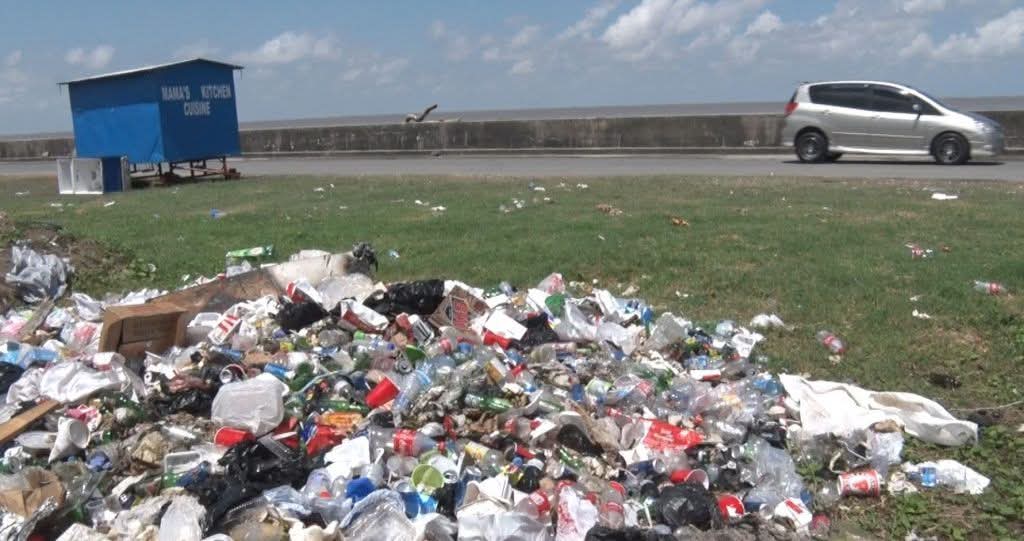

Attorney General and Minister of Legal Affairs Anil Nandlall, S.C., has disclosed that the government is preparing tougher action against garbage and littering, with a stronger legal regime and stricter enforcement to target both offenders and state agencies that fail to do their jobs.
Speaking on his Issues in the News programme, Nandlall said Guyana can no longer continue with what he described as weak enforcement, warning that even the best laws would mean little if they are not applied.
He said the government is already working to strengthen the legislation, but stressed that enforcement remains the major problem. According to him, agencies including local authorities, the police, the public health inspectorate, and the Environmental Protection Agency all have responsibilities under the law and must be made to discharge them.
Nandlall said the administration had made a campaign promise to carry out one national clean-up exercise, during which old, derelict vehicles and garbage would be removed. After that, he said, the new laws will be rigidly enforced.
He warned that once the clean-up is completed and wardens are appointed in communities, persons will be charged if derelict vehicles are found in front of their homes or if garbage is left there, unless someone is actually caught dumping the refuse.In such cases, he said, the vehicle will be removed, and the owner will also have to pay the cost of removal.
“There is no other way to apply the law,” Nandlall said, while making it clear that the days of tolerance are coming to an end.
The Attorney General also signalled that tougher action will not be limited to members of the public. He said agencies and officials who neglect or refuse to carry out their statutory duties will also be dealt with, arguing that taxpayers deserve better from bodies that are funded to enforce the law.
As an example, Nandlall pointed to a long-running nuisance complaint in Mon Repos North, where a pig-rearing operation has allegedly been creating stench, noise, and waste problems for residents for months. He said the EPA and the neighbourhood democratic council were both engaged, notices were served, and promises were made by the operator to relocate, yet eight months later, nothing had changed, and the authorities had still taken no meaningful action. According to Nandlall, if the matter is not addressed, he is prepared to take legal action himself. “I told them one last time. Or else the Attorney General will institute legal proceedings,” he said. He described the approach going forward as a “no-tolerance policy” on noise nuisance and garbage, with garbage being the more serious of the two.
Nandlall also argued that poor disposal practices and blocked drains are contributing heavily to flooding, saying that many citizens continue to dump garbage in drainage canals and obstruct waterways, worsening public health and environmental conditions.
He said the country must decide what kind of society it wants to live in, adding that cleaner communities will require both stronger state action and more responsible behaviour from citizens.