
Farmers are being urged to conserve water as Guyana prepares for months of below-normal rainfall, with Regions Seven, Eight and Nine expected to face the highest risk of drought conditions.
Parts of Regions Four, Five and Six could also be affected, while warmer-than-usual temperatures are forecast during both the day and night.
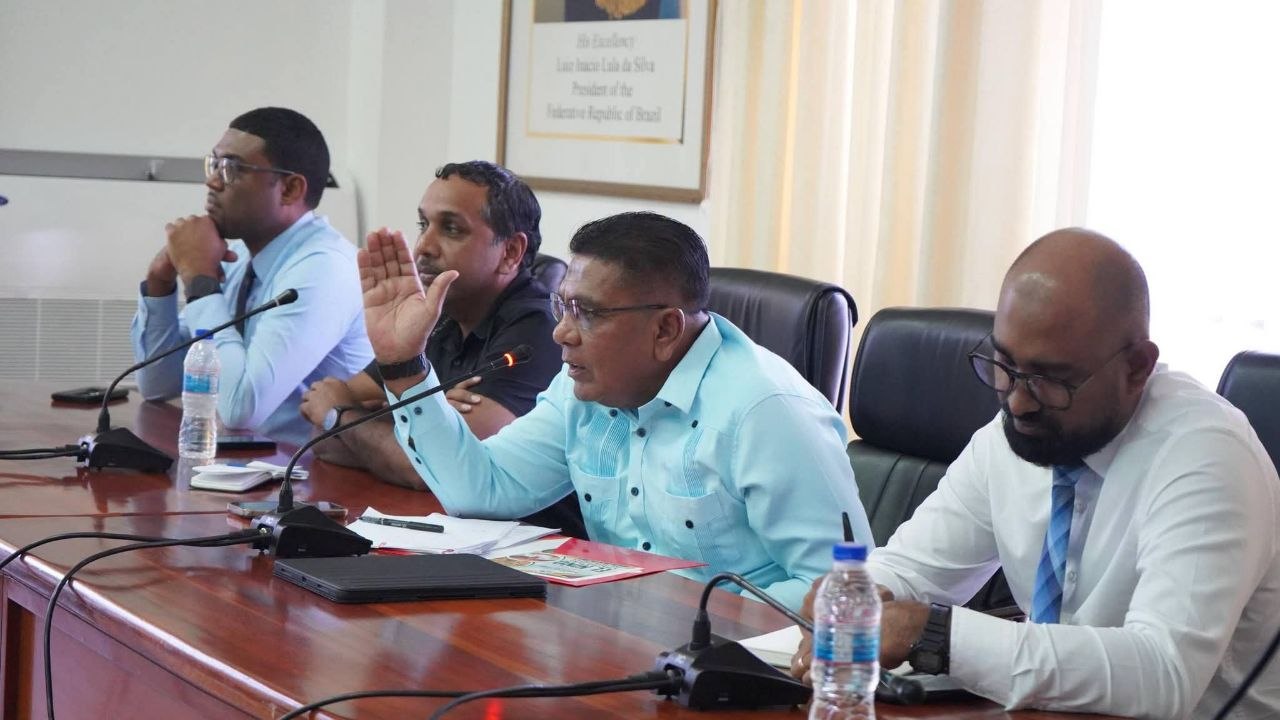
The outlook was presented on Monday during an El Niño Stakeholders’ Preparedness Forum at the Arthur Chung Conference Centre, where officials from the Ministry of Agriculture, Hydrometeorological Service and National Drainage and Irrigation Authority (NDIA) met with farmers, cattle rearers and fisherfolk.
Chief Hydrometeorological Officer Dr Garvin Cummings said forecasters have a high level of confidence that the current El Niño conditions could persist into early 2027.
Rainfall between September and November is expected to be well below normal across Guyana.
“The message should not really be surprising to you, but just to reinforce what you already have been hearing from the hydromet service and elsewhere, El Niño is upon us now. Importantly for you to know is that El Niño does not mean no rainfall. It rather means a reduction in rainfall in the context of Guyana,” Cummings said.
The Hydromet official warned that prolonged dry conditions could result in lower river, conservancy and groundwater levels, while potentially affecting hydropower generation, river transportation and other activities.
Heat stress, increased electricity demand and the possibility of water rationing were also identified among the potential effects if conditions become severe.
Against this backdrop, Agriculture Minister Zulfikar Mustapha called on farmers to make careful use of available water supplies.
“This period is very, very important for us that we have to ensure that we store it properly, manage it carefully, and it reaches the farmers when they need it,” Mustapha said.
He noted that Guyana has experienced El Niño conditions on several occasions, including in 1997-98, 2009-10, 2016-17 and 2023-24.
According to Mustapha, investments in drainage and irrigation systems, conservancies, pumps, canals, farm-to-market roads and agricultural services have placed the country in a stronger position to respond to prolonged dry weather.
The NDIA has meanwhile intensified monitoring of the country’s major conservancies and is addressing pump maintenance, canal clearing and possible saltwater intrusion.
NDIA Chairman Lionel Wordsworth disclosed that approximately 1,199 square kilometres of water storage is managed through the major conservancies, supporting close to 237,000 acres of active farmland.
Special attention is also being paid to saltwater intrusion in the Mahaica and Mahaicony rivers.
Farmers, particularly rice producers, are being encouraged to recirculate and conserve water and avoid unnecessary losses through open regulators and damaged embankments.
Authorities have stressed that the forecasts are intended to encourage early preparation rather than create alarm as the agriculture sector moves into what could be an extended period of drier and hotter conditions.