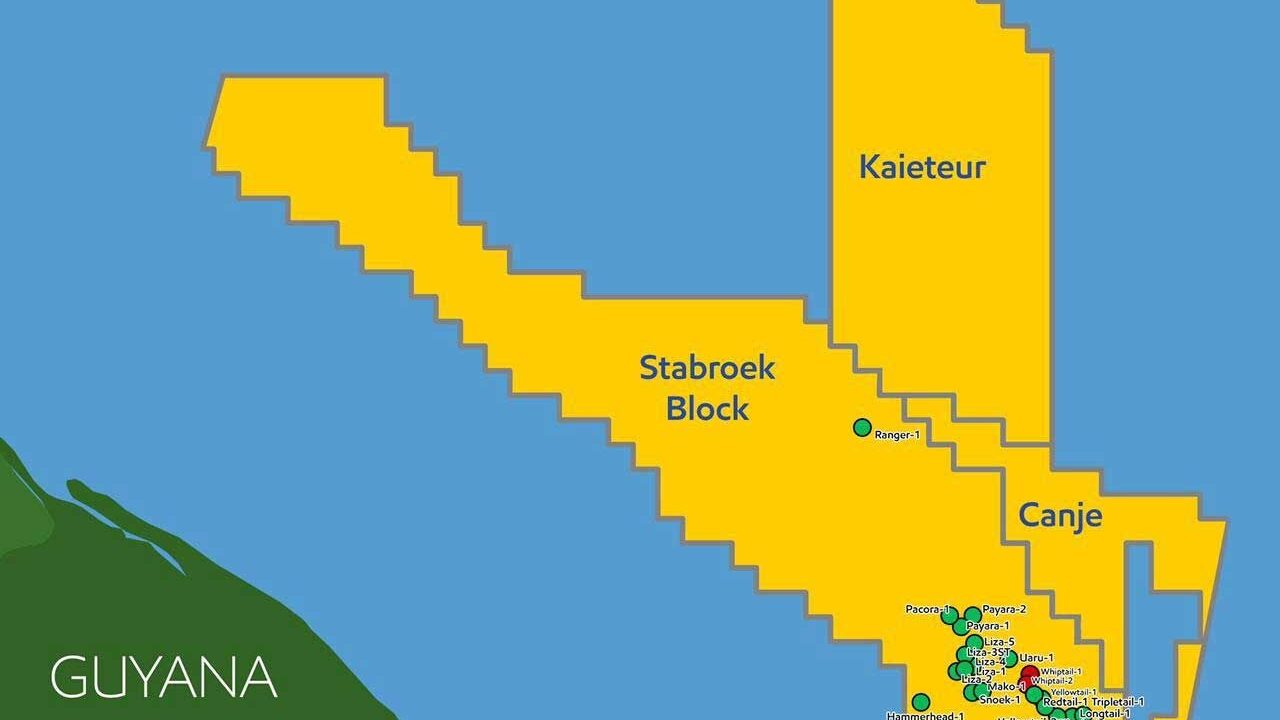
The Government of Guyana is now projected to receive 84 lifts of profit oil from the Stabroek Block in 2026, more than double the 40 lifts initially anticipated when this year’s National Budget was prepared.
The revised projection is contained in the Ministry of Finance’s 2026 Mid-Year Report, which points to changes in the Stabroek Block’s cost bank and increased oil production.
At the time Budget 2026 was prepared, total lifts from the Stabroek Block were projected at 309, of which Government was expected to receive 40. However, the latest estimates have increased total lifts to 326, with Government’s share now projected at 84 lifts.
“Most recent projections now indicate an estimated 326 lifts of profit oil from the Stabroek Block, with an estimated 84 lifts for Government, following cost bank desaturation, and planned ramp-up of crude oil production from the One Guyana FPSO,” the report stated.
The development is also expected to significantly increase petroleum revenues flowing into the Natural Resource Fund (NRF).
Petroleum deposits for 2026 are now projected at US$6.497 billion, some 136.8 per cent higher than anticipated when the budget was prepared.
Of that amount, Government is expected to earn approximately US$5.972 billion from the sale of its share of profit oil, along with US$508.1 million in royalties.
According to the Ministry, rapid development and elevated crude oil prices during the first half of the year accelerated cost recovery in the Stabroek Block.
Under the existing Production Sharing Agreement (PSA), the Stabroek Block co-venturers can recover costs up to 75 per cent of gross revenue from oil produced and sold. The remaining profit oil is then divided equally between Government and the co-venturers.
The report explained that as gross revenues increase and the accumulated cost bank declines, the amount deducted as cost oil moves closer to current operating costs, leaving a greater share as profit oil.
“As gross revenue increases and the cost bank reduces, the cost-oil deduction falls toward current operating costs, and Guyana receives more profit oil, consistent with the Agreement,” the Ministry explained.
However, the report cautioned that clearing the historical cost bank does not automatically mean Government would receive 50 per cent of gross revenue. The oil companies will continue to recover current costs, while future development expenditure from additional projects can also be added to the cost bank.
During the first six months of 2026, there were 162 lifts of crude oil from the Stabroek Block. Government received 21 profit-oil lifts across the four producing vessels — three from Liza Destiny and six each from Liza Unity, Prosperity and One Guyana.
Between January and June, Government received US$1.778 billion from its share of profit oil. That figure included payments for three lifts which occurred during the final quarter of 2025 and 18 of the 21 Government lifts recorded during the first half of this year.
Another US$218.4 million in royalties was received in relation to production and sales during the final quarter of 2025 and first quarter of 2026.
Meanwhile, crude production reached 163.3 million barrels during the first half of 2026, compared with 115.7 million barrels during the corresponding period last year. Average production stood at approximately 902,000 barrels per day, with further increases anticipated as production from the One Guyana FPSO ramps up.
The Ministry said that, in keeping with the Natural Resource Fund Act, approximately US$2.374 billion is expected to be withdrawn from the NRF during 2026.