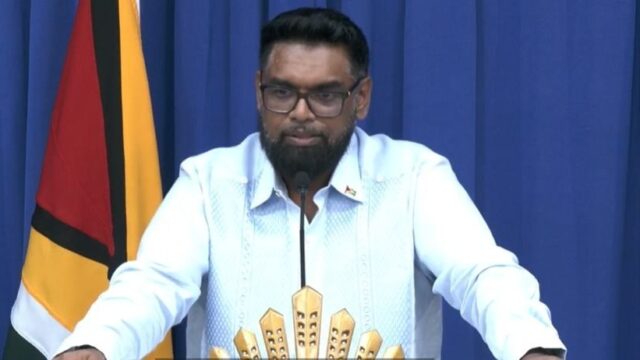
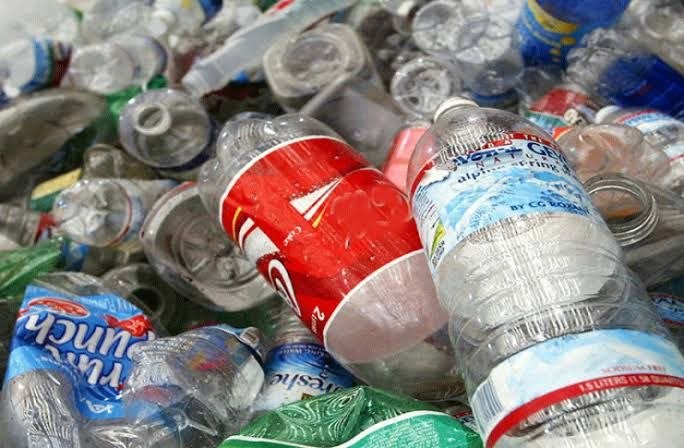
The Government is considering restrictions on single-use plastics as it examines how to address Guyana’s plastic waste problem, with Local Government and Regional Development Minister Priya Manickchand saying the country may not currently generate enough recyclable plastic to make a conventional recycling plant commercially viable.
Manickchand raised the possibility during an appearance on The Guyana Dialogue, where she was questioned about recycling programmes for plastic bottles, cans and other waste.
According to the minister, the Government is examining the issue closely and has been engaging recycling providers about the feasibility of establishing additional recycling operations locally.
However, she said one of the difficulties identified is the relatively small volume of plastic waste generated in Guyana.
“A lot of the language I’m hearing from recycling providers is that our volume is so small that for it to be profitable for them, we’d have to be producing” considerably more plastic waste, Manickchand said.
She described the situation as a “chicken and egg” problem, since generating more plastic waste simply to sustain a recycling business would run counter to efforts to reduce plastic pollution.
Manickchand said information received by the Government suggests that even a medium-sized recycling facility could struggle to secure enough material for continuous operations.
“If they were to open a recycling plant here that is even just a medium size, it would work only for one day in every month, given the volume of plastic waste that we produce,” she said.
“And people don’t find that to be profitable. So we have to find other ways.”
One of those alternatives, Manickchand said, could involve reducing or prohibiting certain disposable plastic products.
“Perhaps some of the things we can look at is banning single-use plastic and really, really changing out how we import with plastic,” she said.
The minister did not announce a formal ban, implementation date or list of products that could be affected, and cautioned that any such move would have financial implications for consumers and businesses.
“Of course, all those things have a cost. So these are not just things you can impose on a population,” she said.
The idea of restricting single-use plastics is not new in Guyana. In 2018, the then Department of Environment began national consultations on a proposed ban covering the importation, manufacture and sale of some disposable plastic products, including plastic bags and food containers. At the time, officials said legislation, standards, alternative products and possible incentives for businesses would have to be considered as part of the transition.
Guyana’s Low Carbon Development Strategy 2030 also identifies waste management and the circular economy as areas for reform.
Among the measures outlined in the strategy are the development of a national recycling system and steps to “minimise, and where possible eliminate” single-use plastics and other specified sources of pollution. The strategy also envisages greater waste separation and recycling services for households, businesses and public institutions.
During the 2026 Budget debate, Manickchand announced plans for new landfill facilities in Regions Two, Three, Four, Five, Six, Seven, Nine and Ten, with recycling components expected to form part of the new waste-disposal infrastructure.
The Government has also intensified anti-littering efforts this year, including collaboration between the Environmental Protection Agency and the Guyana Police Force, while expanding access to garbage trucks, bins and disposal facilities.
On The Guyana Dialogue, Manickchand said improving waste management will require more than simply collecting garbage. She identified reliable collection, environmentally responsible disposal and behavioural change as central to creating cleaner communities.