The Guyana Development Bank is being designed not merely to provide small entrepreneurs with cheap financing, but to help them establish credit histories and eventually move into the commercial banking system for larger loans, President Dr. Irfaan Ali has said.
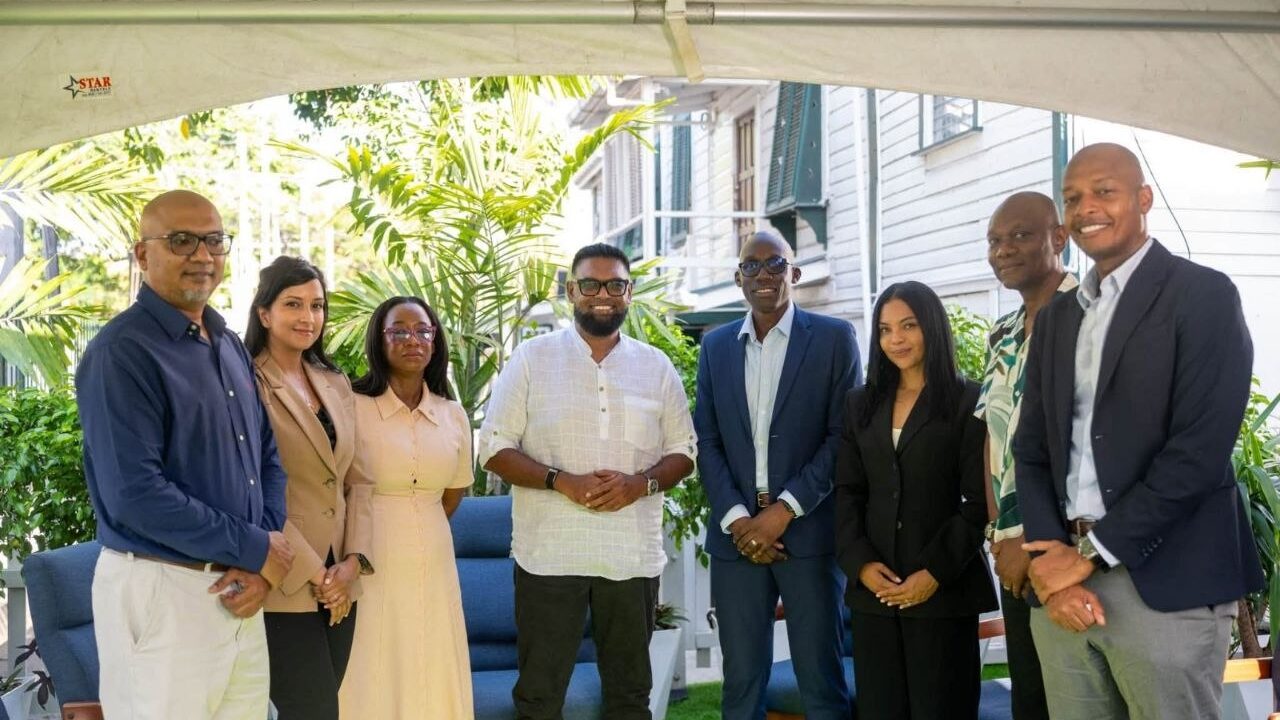
During an open discussion with private-sector representatives on Sunday, Ali outlined how the soon-to-be-operational bank is expected to work alongside commercial banks, mentors and technical specialists to turn small business ideas into enterprises capable of securing larger-scale financing.
The Development Bank is scheduled to begin processing loan applications on October 5, with a first tranche of US$100 million, approximately $20 billion, already committed by the Government. The commencement order bringing the institution into operation was signed and gazetted last week.
Eligible entrepreneurs will be able to access up to $3 million at zero interest and without traditional collateral requirements. But the Head of State stressed during Sunday’s discussion that the money is not a grant.
“This is not a grant. This is your opportunity to earn. This is your opportunity to pay back,” the President said.
More importantly, he said, borrowers should be able to use their performance under the programme to establish a credit record that can later support applications for larger commercial loans.
“This is an opportunity to build your credit, because we are going to use this to help you build your credit also, your credit score,” Ali said.
That approach builds on the co-financing framework already included in the Development Bank model. Qualifying borrowers can combine financing from the bank with additional funding from traditional financial institutions at preferential rates.
COMMERCIAL BANKS PART OF THE MODEL
President Ali said all commercial banks have agreed to provide space for Development Bank desks, allowing the new institution to have a presence within the existing banking network.
He said this is intended to create a pathway between entrepreneurs entering through the Development Bank and the wider commercial financial system.
“We hope that this will unlock larger-scale opportunities in the commercial bank itself,” Ali said, pointing also to financial literacy, mentorship and business support as key parts of the arrangement.
The President used a hypothetical poultry venture to illustrate how the model could work.
If several entrepreneurs each qualify for $3 million and pool their resources, he said, their Development Bank financing could provide the foundation for a substantially larger project.
In one example, Ali said a group requiring $100 million for a poultry operation could enter the project with $30 million in zero-interest Development Bank financing. That initial capital could reduce the amount that must be borrowed commercially and, according to the President, lower the collateral burden facing the borrowers.
He said discussions are already taking place with commercial banks on how such projects could be structured, including potentially favourable rates for productive sectors such as agriculture.
Another route would involve an entrepreneur who successfully repays a $3 million Development Bank loan and subsequently needs significantly more capital to keep expanding.
In such cases, Ali said the successful performance of the business could strengthen its application to a commercial bank, with Development Bank sector specialists helping the entrepreneur refine the proposal and make that transition.
“So it’s one system feeding into the other,” the President said.
The President confirmed that the bank will begin operating on October 5, when it is expected to start accepting and processing loan applications.
Ahead of that date, he said the bank will run an aggressive education campaign, followed by outreach across the country. The bank will not be limited to coastal communities.