Guyana’s remote interior remains particularly vulnerable to human trafficking, with some cases in mining communities linked to organised crime networks associated with illegal mining, according to the United States’ 2026 Trafficking in Persons Report.
The US State Department said trafficking in Guyana occurs primarily in interior and remote regions, although cases are also recorded in urban areas.
Both sex and labour trafficking occur in remote mining communities, where the report said limited government presence makes it difficult to determine the true scale of the problem.
“Limited government presence in the country’s interior renders the full extent of trafficking there unknown,” the report stated.
According to the State Department, victims are subjected to forced labour in several sectors, including mining, agriculture, forestry, construction, domestic service and shops.
Women and children from Guyana and other South and Central American countries, including Brazil, the Dominican Republic and Venezuela, are also exploited in sex trafficking in mining communities and urban areas.
The report identified migrants, women, children and young people from rural and minority communities as among those particularly at risk.
The challenges posed by Guyana’s vast interior also extend to law enforcement.
Although police units and courts cover all jurisdictions, observers cited in the report said limited government presence resulted in “inconsistent and insufficient” law enforcement action in the interior.
This included weaknesses in monitoring establishments, screening persons for signs of trafficking and tracking trafficking trends.
Geographic distance also delayed the delivery of social services to victims exploited in remote communities, according to the report.
Another challenge is communication.
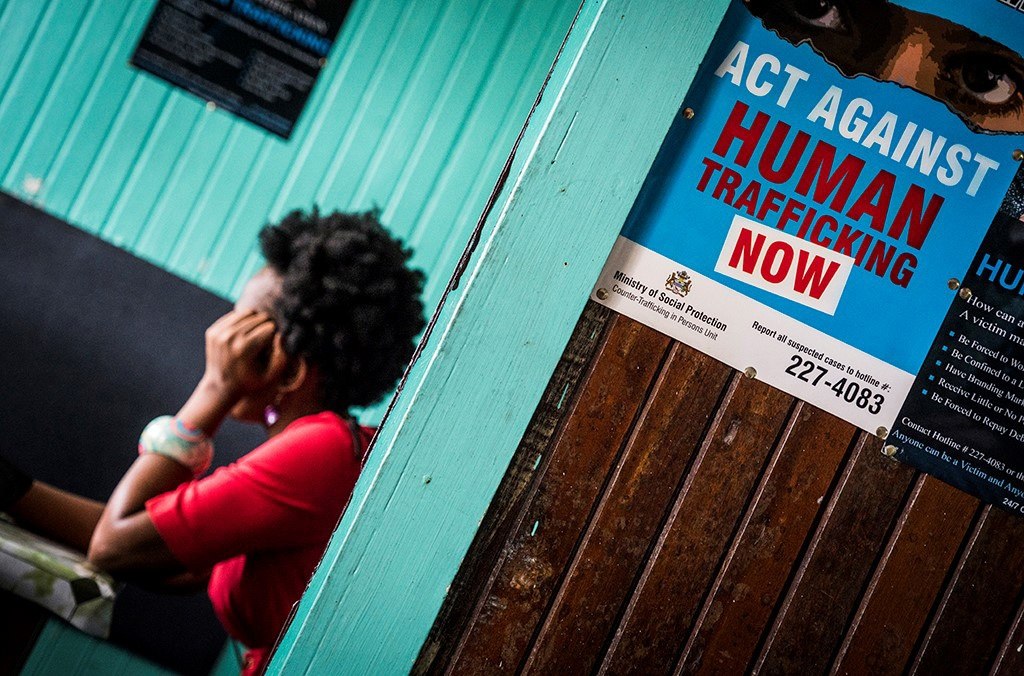
Guyana operates three anti-trafficking hotlines—two for English speakers and one for Spanish speakers—which recorded 15 reports of alleged human trafficking during the reporting period.
However, the report said poor cellular coverage in many mining areas limits the effectiveness of those hotlines among some of the communities most vulnerable to trafficking.
Authorities introduced a QR code reporting system in July 2025 to make it easier for members of the public to report suspected trafficking.
The government also carried out awareness activities targeting groups in areas considered particularly vulnerable, including miners, Indigenous community leaders, hotel operators, policing groups, private security firms and schools.
The report further highlighted the growing use of technology by traffickers to find potential victims.
According to the State Department, social media, messaging applications and online job advertisements are being used to recruit persons who are later exploited in mines or in jobs such as janitorial work and waiting tables at bars and hotels.
Children also face the risk of being exploited in forced criminal activity by criminal organisations and gangs, the report said.
The findings come as Guyana maintained its Tier 1 status in the US trafficking report, meaning the government continues to fully meet the minimum standards for eliminating trafficking.
However, the State Department said Guyana initiated fewer trafficking investigations and identified and referred fewer victims to services during the reporting period, even as vulnerabilities persist in the country’s remote interior.