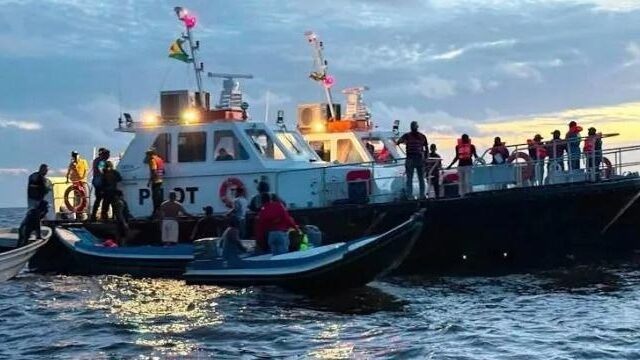

Rescuers lowered their engine noise to listen for cries from the sea as they searched through darkness for survivors of the MV Barima disaster, the Presidential Commission of Inquiry heard on Monday.
By 5 a.m. on July 19, a combined rescue effort had brought 69 people to safety. A fishing vessel that independently joined the operation rescued 11 passengers, while the responding agencies worked under a single command.
The accounts emerged during public hearings at the Arthur Chung Conference Centre, where seven witnesses testified about searches by sea and air and the recovery of the vessel’s emergency distress beacon. Their appearances brought the number of witnesses heard by the Commission to 21.
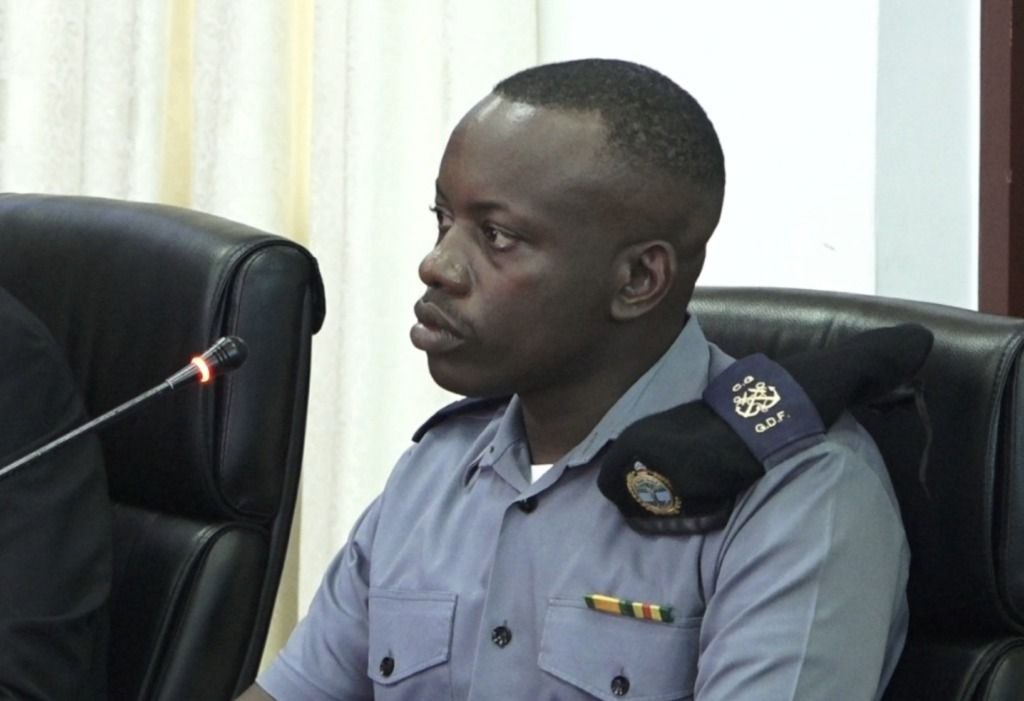
Petty Officer Jeromey Agard, who commanded Coast Guard vessel GDFS 1034, described finding survivors in small groups, holding on to wooden pallets, oil containers and life jackets.
His six-member crew reached the search area shortly after 3 a.m., joining another Coast Guard vessel from the Pomeroon Floating Base that was already recovering people.
Agard said his team slowed the vessel, swept the water with a searchlight and reduced engine noise to help locate those calling for assistance.
The crew used ropes and life rings to draw survivors alongside the vessel before lifting them aboard at the stern. By about 5 a.m., they had rescued 26 people, including children, who were later transferred to a pilot vessel.
None of the 26 was wearing a life jacket when recovered, Agard told the Commission.
Aircraft also supported the operation. Major Lloyden Layne testified that the Guyana Defence Force’s Air Corps deployed a Bell 407 helicopter and an Islander aircraft on successive reconnaissance missions. He departed Eugene F. Correia International Airport aboard the Islander after the helicopter returned from its earlier flight.
At sea, three Maritime Administration Department vessels spread out to cover a wider search area.
Captain Anthony Williams, who commanded the motor tug Arau, said the vessels travelled approximately one to one-and-a-half nautical miles apart to increase coverage and limit duplication.
Arau was the last of the three to leave Georgetown. Its crew encountered clothing, bags, cooking gas cylinders and approximately two or three empty life rafts, but did not recover survivors.
Williams said other vessels were conducting rescues and confirmed that Arau’s Automatic Identification System, which provides vessel-position information, was functioning.
Under questioning about how searched areas were recorded and communicated, however, he acknowledged that coordination among the three vessels was informal. Information about the completed sweep was not passed beyond that group.
The Commission also heard from MARAD Marine Superintendent Christopher Bailey, who recovered the Barima’s Emergency Position-Indicating Radio Beacon during the search.
Bailey said a faint light drew his attention between approximately 3:30 a.m. and 4 a.m. The beacon was floating on its own, separate from life rafts or other debris, about three to four nautical miles from the initial coordinates he had received.
He retrieved the device and said it deactivated immediately after being brought aboard.
Bailey explained that the beacon was intended to transmit distress signals and suggested that its float-free mechanism most likely released it from its housing when the vessel sank.
He described having seen a waterproof beacon housing on the starboard side of the Barima’s wheelhouse during an earlier inspection. However, he could not confirm that the recovered device was the same one he had previously observed.
A photograph of the beacon was presented during the hearing. Bailey said he later handed the device to Captain John Flores at the Marine Rescue Coordination Centre.
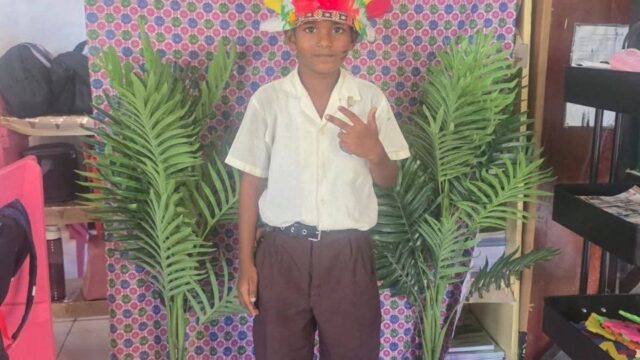
Neermala:
The five-member Commission is investigating the circumstances of the Barima’s capsizing and sinking, including questions of accountability and measures needed to improve maritime safety.
Public hearings are continuing in the Lula Room of the Arthur Chung Conference Centre at Liliendaal.