Air quality “non-negotiable” as stricter flaring rules enforced offshore -EPA Head
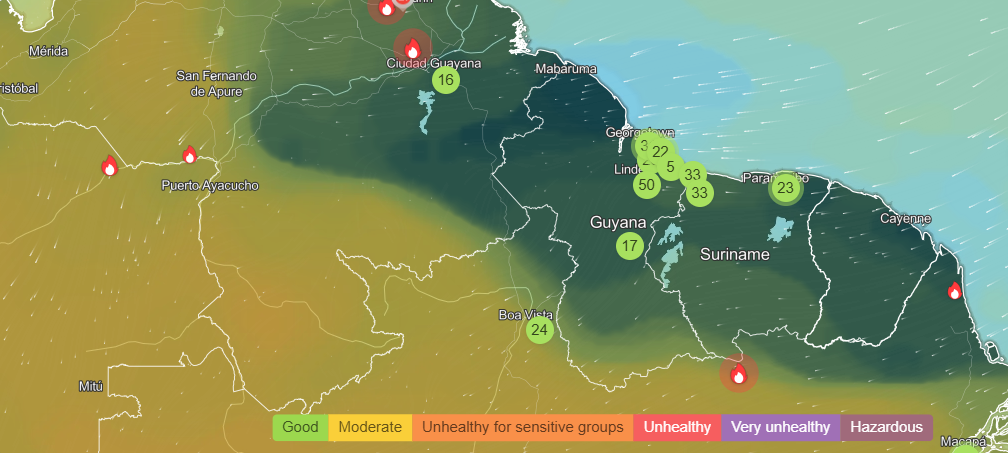


Air quality protection remains one of Guyana’s top regulatory priorities in the oil and gas sector, says Environmental Protection Agency (EPA) Head Kemraj Parsram, who highlighted stronger safeguards now embedded in ExxonMobil’s environmental permits.
Speaking on the Starting Point podcast hosted by Kiana Wilburg, Parsram said the EPA has significantly strengthened its conditions for emissions management, especially where flaring is concerned.
He confirmed that the evolution of the permits, now seven in total for ExxonMobil’s Stabroek Block projects, includes 14 safeguards to prevent flaring and another eight governing emergency situations.
“That is proof right there that we have come a long way. We’ve improved on our permit conditions,” Parsram said.
He stressed that protecting the air Guyanese breathe is a core mandate of the EPA.
“Air quality is non-negotiable in Guyana,” he said. “It’s our mandate as the agency to ensure that the air that we breathe is protected… Guyana has a good history and a good sort of record of excellent air quality.”
He also pointed to Guyana’s international climate obligations, noting that the country has a “rigid and strong” record under the global climate change framework.
Parsram recalled that from the inception of offshore production at Liza Phase One, routine flaring was explicitly prohibited. Unlike in some jurisdictions where gas is continuously burned off, operators here are required to reinject gas during oil extraction.
However, he acknowledged that the Liza One operation experienced a setback when a gas compressor malfunctioned, causing elevated flaring until replacement equipment arrived.
He said lessons were learned from that incident and applied to later permits.
“We ensured that subsequent permit, that there is a redundancy built in. So gas compressor, there’s not one, there’s two,” Parsram noted, adding that additional equipment is now required to enable quicker fixes.
The EPA head explained that emergency flaring is only allowed under clearly defined “upset conditions” and only after the operator obtains approval, with a strict 14-day limit to resolve the issue.
“It’s not just a carte blanche, you can do what you want. You have to seek approval from us. And we set a stipulated timeline and date for that,” he said.
Beyond that timeframe, the EPA now imposes taxes on flaring, a cost designed to discourage delays and push operators to restore safe operations swiftly.
“It’s serving as a deterrent… that tax prevents or encourages the developer to make sure that they fix the problem right away,” Parsram explained.
He reminded that while emergency flaring may sometimes be unavoidable, the rules remain firm.
“Zero routine flaring. Upset condition, yes… If you exceed that time, then it’s taxed to get you to hurry up in local language.”
Parsram asserted that emissions from oil production, like any industrial activity, must always be regulated to remain within standards and preserve Guyana’s strong environmental record.
“We have to maintain our air quality,” he emphasised.


