Ali slams Azruddin’s ‘bold’ court prediction, says due process, not defendants, will guide the case
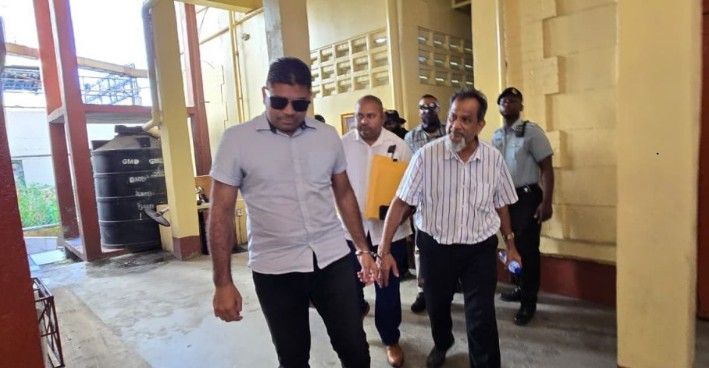


President Dr Mohamed Irfaan Ali on Thursday raised strong concerns over statements made by businessman Azruddin Mohamed, who publicly suggested that the extradition proceedings involving himself and his father could take “five years or more.”
Speaking on the sidelines of an event, the President said he was troubled by the confidence with which Mohamed made that claim, noting that such a declaration gives the impression that he believes he can predict or influence the court’s process.
Ali said he did not understand “why he believes he is in charge of the court,” describing the comment as “a very bold” and “concerning” statement. The President added that the judiciary itself would likely also view it as troubling, given the implication that Mohamed expects a particular outcome.
According to the President, the matter is straightforward and guided strictly by law. He stressed that while the Mohameds are entitled to due process, and are in fact receiving it, the role of the local court is limited. The magistrate, he explained, is not tasked with trying the case in Guyana, but only with determining whether there is sufficient evidence showing a crime was committed in the United States.
President Ali pointed out that all documents related to the alleged offences have already been submitted to the court. He further reminded that a U.S. grand jury, comprising about 12 persons, has already concluded that enough evidence exists to support the extradition request.
He said this makes the proceeding “a simple” one, and the country must now allow due process to run its course. The President reiterated that the trial itself is not for Guyanese courts, and that the grand jury’s decision signals that there is already a solid basis for extradition.
As Guyana awaits the outcome, President Ali maintained that the process remains clear; that the magistrate must simply decide whether the evidence presented is sufficient under the law, while the actual case will be tried in the U.S., not in Georgetown.

