CANU records over $433M in drug seizures in 2025 as cocaine and cannabis dominate trafficking trends
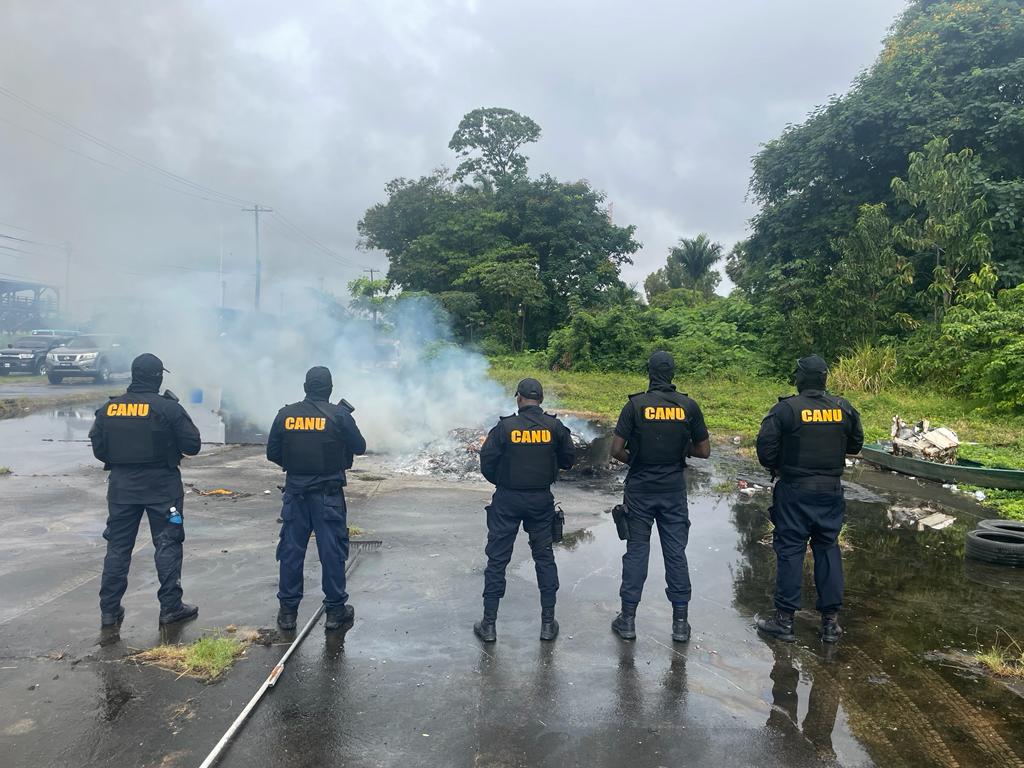


The Customs Anti-Narcotic Unit (CANU) recorded an estimated $433.9 million in street value from narcotics seized during 2025, with cocaine and cannabis accounting for more than 99 per cent of the total value, according to its 2025 Public Briefing.
CANU reported that the total estimated street value of seizures for the year stood at GYD $433,973,770, broken down as $235.9 million in cocaine, $197.7 million in cannabis, while ecstasy and methamphetamine accounted for less than one per cent combined.
The Unit said that “cocaine and cannabis remained the two dominant threats,” noting that these substances represented “the majority of trafficking attempts into and through Guyana.”
In terms of quantities seized during 2025, CANU disclosed that it intercepted 235.9 kilogrammes of cocaine and 726.3 kilogrammes of cannabis, alongside smaller amounts of 674 grams of ecstasy, 83 grams of methamphetamine, and 9.16 grams of cannabis products.
The agency explained that while cocaine quantities showed a reduction when compared to 2024, this was linked to “a single extraordinary seizure that occurred in Region One the previous year,” rather than a shift in trafficking patterns.
A regional breakdown of the seizures showed that Region Four recorded the highest cocaine seizures with 172.8 kilogrammes, while Region Six recorded the highest volume of cannabis, totalling 576 kilogrammes.
CANU noted that these regional patterns provide critical insight into how trafficking routes and methods continue to evolve across the country.
The Unit also pointed out that synthetic drugs appeared in small but increasing quantities, a trend that has prompted continued monitoring under Guyana’s newly launched National Early Warning System.
According to the briefing, intelligence-led operations carried out throughout the year focused on “targeting trafficking routes, organised criminal networks, and high-risk ports and border points,” contributing to the volume of drugs intercepted.
CANU said these efforts are part of a broader strategy to ensure Guyana remains “an active disruptor rather than a passive transit point within regional trafficking networks.”
The agency stated that it enters 2026 with strengthened intelligence tools and operational readiness to counter “evolving trafficking methods and rising synthetic-drug risks,” as cocaine and cannabis continue to pose the most significant narcotics threats to the country.


