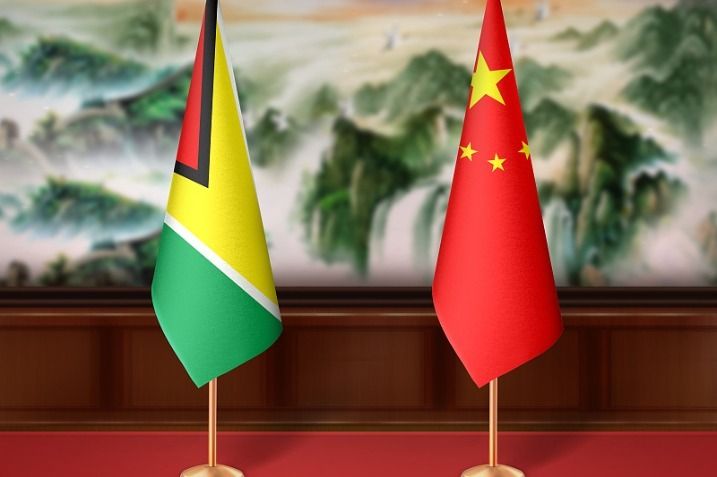


On September 10, 2025, H.E. Yang Yang, the Chinese Ambassador to Guyana, penned a signed article in local media outlets, including the Guyana Times and Stabroek News, outlining China’s latest proposal for reforming the global governance system. The piece, titled “The Global Governance Initiative Contributes Chinese Solutions for Improving Global Governance,” introduces the Global Governance Initiative (GGI), a framework launched by Chinese President Xi Jinping earlier this month at the “Shanghai Cooperation Organization Plus” meeting.
The Ambassador’s article situates the GGI against what Beijing describes as a period of profound global disruption—marked by economic stagnation, geopolitical tensions, widening North-South divides, and a deficit in international governance structures. According to Ambassador Yang, the current system is “increasingly failing to meet the needs of the times,” particularly as developing nations and emerging economies assume larger roles in global affairs.
The GGI builds on a suite of foreign policy proposals China has introduced in recent years, including the Global Development Initiative (GDI), the Global Security Initiative (GSI), and the Global Civilization Initiative (GCI). Together, they form the cornerstone of Beijing’s pitch to reshape international cooperation in a multipolar world.
Ambassador Yang outlined five core principles of the GGI. The initiative calls for sovereign equality among states, regardless of their size or wealth, and stresses the need for greater representation of developing countries in international decision-making. It emphasizes strict adherence to international law and the U.N.
Charter, opposing what it describes as “double standards” or the imposition of rules by a handful of powerful nations. Multilateralism is another central pillar, with China positioning the United Nations as the linchpin of international cooperation.
The Ambassador also underscored a people-centered approach, where governance structures are designed to benefit all populations and narrow the global development gap. Finally, he stressed the importance of “real actions,” calling for practical cooperation and outcomes that prevent governance frameworks from becoming outdated or fragmented.
For Guyana, the timing of this message is noteworthy. As a small state in South America with growing global influence due to its oil wealth, Guyana has increasingly engaged in multilateral forums where developing countries seek stronger voices. China’s invitation to join hands on the GGI highlights the deepening diplomatic and economic relationship between Georgetown and Beijing, as well as China’s interest in building alliances across the Global South.
This move coincides with Guyana’s growing engagement with China across multiple sectors. Beijing has already supported infrastructure projects in Guyana, including roads, bridges, and public facilities, while also signaling interest in Guyana’s rapidly expanding energy sector. Politically, Guyana has consistently reaffirmed its recognition of the “One China” policy, which forms the foundation of Beijing’s foreign relations. The GGI, therefore, offers another platform for cooperation, extending beyond economics into multilateral diplomacy and governance.
For Georgetown, partnership under the GGI provides both symbolic and practical benefits—symbolic in that Guyana positions itself alongside emerging powers advocating for a fairer international system, and practical in the sense that it may unlock new avenues for development financing, technical support, and diplomatic leverage.


