

Guyana has been granted the green light to establish its own law school, following full approval from the Commonwealth Caribbean’s Council of Legal Education (CLE).
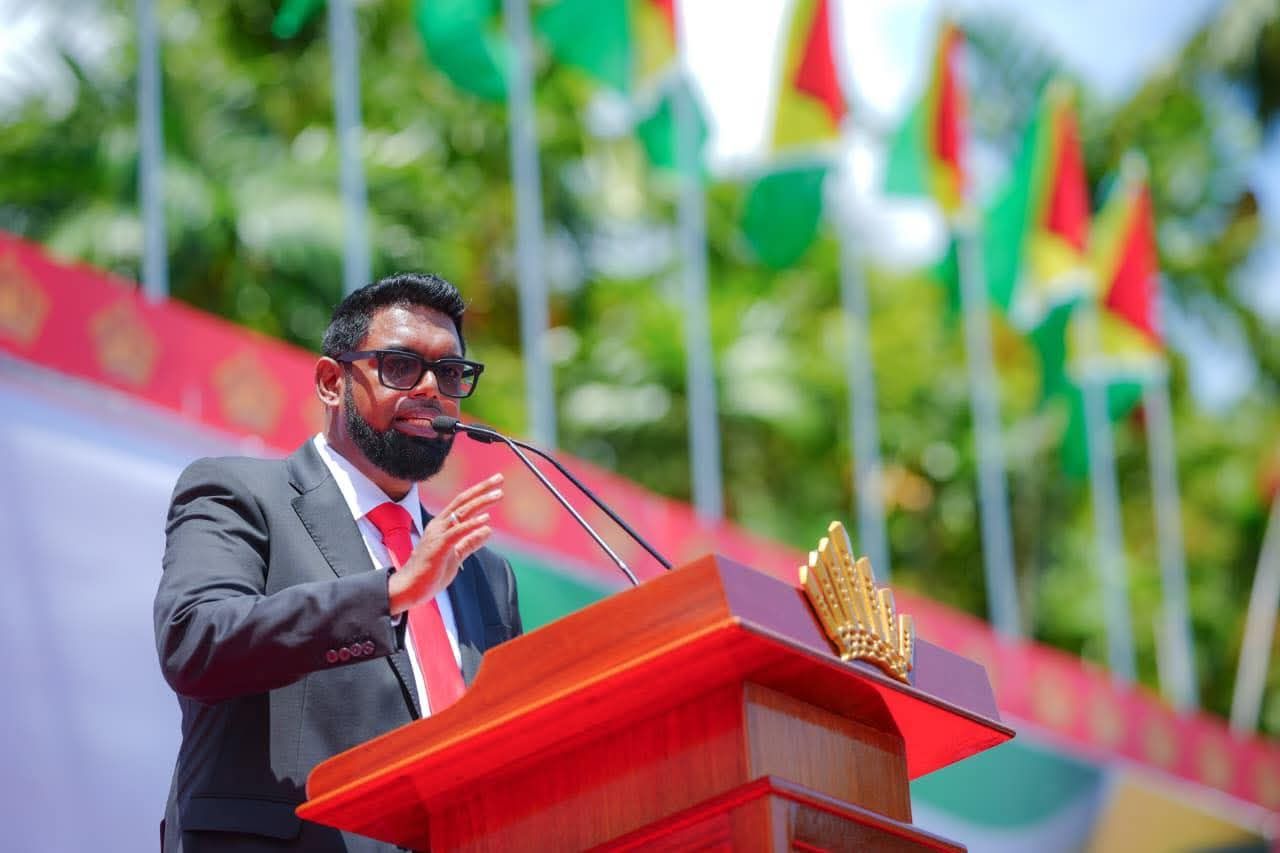
President Dr Irfaan Ali made the historic announcement this morning during his inauguration address, moments after taking the oath of office at State House in Georgetown.
The President described the development as a transformative step for Guyana’s legal fraternity, noting that local law graduates will no longer be required to travel to other CARICOM states to complete their studies.
“Based on a recent approval granted by the Council of Legal Education, we will commence work immediately on the establishment of Guyana’s very own Law School, thereby enabling hundreds of persons to qualify as Attorneys-at-law right here in Guyana with full rights to practice in CARICOM countries,” President Ali declared.
The establishment of a Guyana Law School has been in discussion for nearly a decade. Talks first began in 2018 under the APNU+AFC Government and continued throughout President Ali’s first term between 2020 and 2025.
Significant progress came in 2022 when the CLE signaled its support for Guyana’s proposal to provide the land and facilities for the institution. Two years later, a feasibility study confirmed the viability of the project, clearing the path for final approval.
With the green light now secured, Guyana is poised to host a fully accredited law school that will not only ease financial and logistical burdens on students but also expand opportunities for legal education and strengthen the country’s role within the regional legal community.
For decades, Guyana and several other Caribbean nations have been advocating for alternatives to the region’s three existing law schools: the Norman Manley Law School in Jamaica, the Hugh Wooding Law School in Trinidad and Tobago, and the Eugene Dupuch Law School in The Bahamas.
These institutions are administered by the CLE which was established to ensure that aspiring lawyers could be trained within the Caribbean rather than in the United Kingdom.
The CLE issues the Legal Education Certificate (LEC)—a mandatory requirement for admission to practise as an Attorney-at-Law in the Commonwealth Caribbean—which may be completed in either two years or six months, depending on the entrant’s prior qualifications.
Each year, Guyanese law students grapple with heavy financial burdens, with tuition and compulsory fees at the Hugh Wooding Law School (HWLS) for the two-year programme averaging about GYD $7,018,854.
Coupled with the high cost of living in Trinidad and Tobago, these expenses have discouraged many from pursuing a legal career.
In response, the Government of Guyana has introduced a limited number of fully-funded scholarships to HWLS, available to both new and continuing students.
To qualify, applicants must hold a Bachelor of Laws degree with a minimum GPA of 3.3, be under the age of 35, and have completed their degree within the last five years, along with presenting an official acceptance letter from the institution.
Current students of HWLS may also apply, provided they have successfully completed their first year with strong academic performance, including at least three Grade A passes.


