

Director of the Customs Anti-Narcotic Unit (CANU), James Singh, has confirmed that eight persons have so far been questioned in connection with the 146.9 kilograms of cocaine discovered at the Cheddi Jagan International Airport (CJIA) on September 20.
The illegal substance was reportedly about to be loaded onto an Amsterdam-bound KLM flight when CANU ranks made the bust. The cocaine was concealed in 53 plastic-wrapped parcels hidden beneath a ULD (Unit Load Device) used to load cargo and luggage onto aircraft.
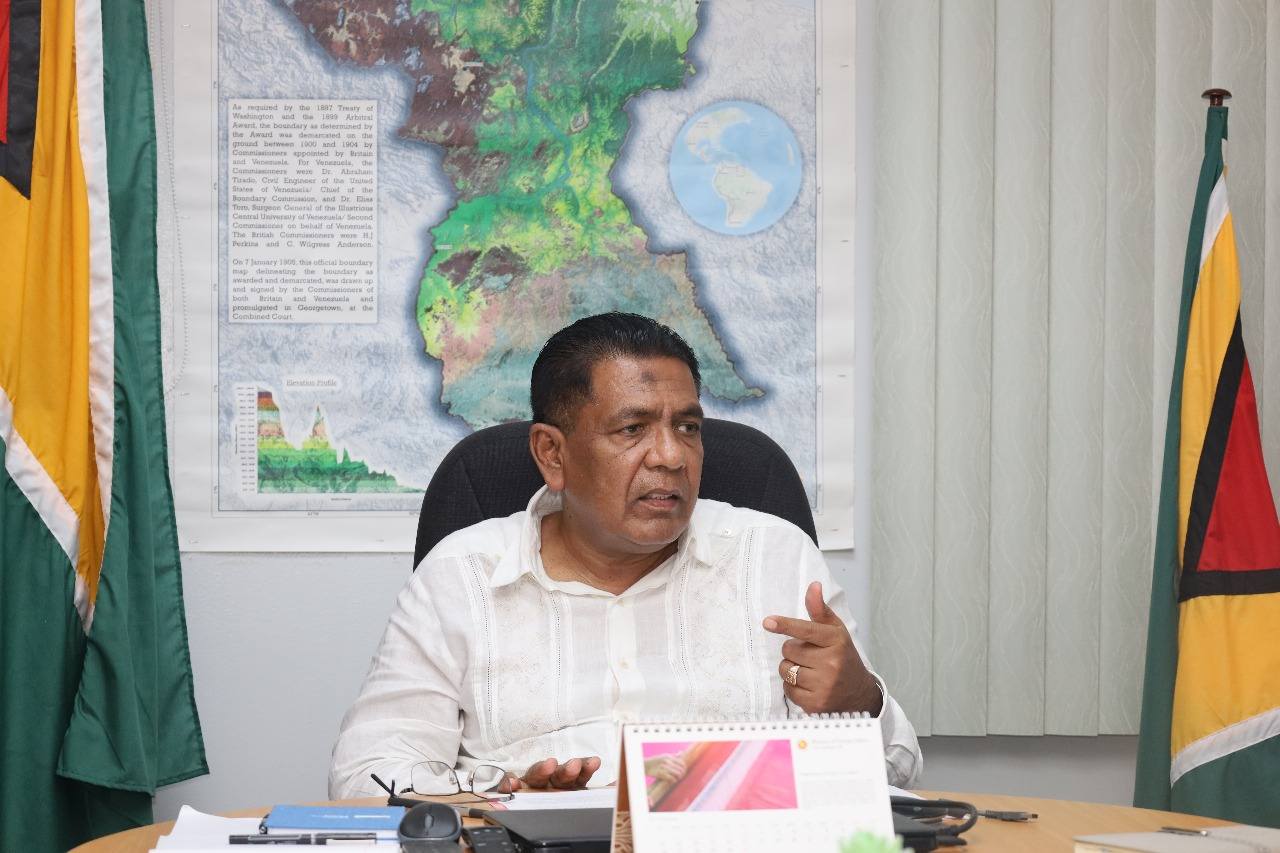
Speaking with reporters on the sidelines of an event yesterday, Singh said that investigations are ongoing, with the agency collaborating closely with both local and international partners.
“We have an idea who is behind this. The difference is, that’s intelligence and information. To put it before the court, that’s where the hard work is,” Singh explained. He added that the public often misunderstands the process, noting that while CANU may seize drugs and make arrests, successful prosecution depends heavily on the strength of available evidence.
“Oftentimes it may take a lot longer, but considering the fact that this is an international operation, we have to work with our colleagues overseas to ensure that the evidence we have here matches what’s happening in other territories,” the CANU Director said.
At the time of the September 20 bust, one suspect had been taken into custody but was released after 72 hours. Singh assured, however, that investigations continue to track those responsible.
For the year so far, CANU has seized over 112 kilograms of cocaine and more than 1,500 kilograms of marijuana. Singh noted that most of the cocaine entering Guyana originates from neighboring Venezuela.
“Like the Police Force, our job is to stop the flow of drugs coming into Guyana. At times, we have held foreign nationals with large quantities of cocaine and prosecuted them. I’m not going to label any nationality, but what I will say is that the drugs are coming from Venezuela into Guyana,” he stated.
Acknowledging Guyana’s porous borders, Singh said CANU continues to work alongside the Guyana Defence Force (GDF), the Guyana Police Force (GPF), and international partners to strengthen border security and prevent the transshipment of drugs.
“For CANU, or for me personally, success is not just about making big seizures. Stopping 4.4 tons of drugs is not a success; it’s a failure that it reached our shores in the first place. We have to continue to put up strong deterrents to send a clear message that Guyana will not allow the flow of drugs through our country,” Singh emphasized.
Guyana continues to be seen as a transshipment point for cocaine and other narcotics bound for international markets. CANU, with the support of its local and international counterparts, remains focused on dismantling the networks involved in the drug trade and preventing further trafficking activities.


