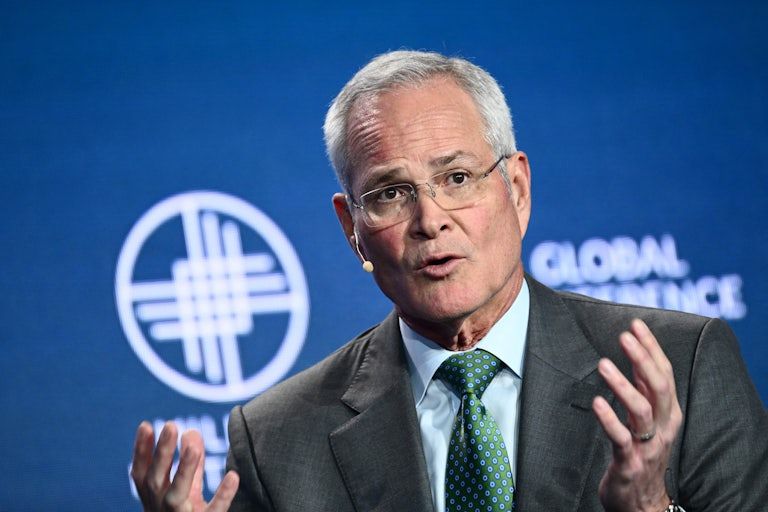


The head of Exxon Mobil, Darren Woods, is urging European lawmakers to roll back a landmark climate rule, warning it will hurt oil and gas operations in the region.
In an interview with The New York Times last week, Woods described the European Union’s Corporate Sustainability Due Diligence Directive (CSDDD) as “a very misguided effort to kill oil and gas as a way of addressing climate change.”
The rule, adopted in 2024, requires large companies doing business in the EU to identify and prevent negative environmental and human rights impacts throughout their supply chains. It also obliges them to prepare plans for cutting greenhouse gas emissions in line with the Paris climate goals. Implementation is set to begin in 2028.
Woods said Exxon has been in talks with the Trump administration and European lawmakers on the issue, warning that the directive would be a “significant impediment” to doing business successfully in Europe. Exxon remains the largest U.S. oil and gas company.
The EU has set binding targets to become climate-neutral by 2050. It has already pledged to cut emissions 55 percent by 2030 compared with 1990 levels and is now working toward a new target for 2035. On Thursday, European commissioners proposed a reduction between 66.3 and 72.5 percent by then. However, member states are divided on how strict the cuts should be.
The bloc also faces pressure from the auto industry. Carmakers such as BMW and Volkswagen have pushed back against a planned ban on producing combustion-engine vehicles by 2035, saying they cannot keep up with Chinese competitors while dealing with higher costs from tariffs imposed by the Trump administration.
Meanwhile, the European climate commissioner’s office did not immediately respond to the Times’ request for comment.
Scientists widely agree that rising global temperatures are worsening droughts, storms and wildfires, causing massive economic losses worldwide. European leaders have defended their climate policies, stressing that renewable energy sources like wind and solar not only curb emissions but also provide energy independence, especially in the wake of Russia’s invasion of Ukraine.
Russia, once a key supplier of gas to Europe, has largely been replaced by American fossil fuels. At the same time, Europe has been expanding its renewable energy capacity.
Woods, however, insisted the EU law should be “reversed and repealed,” accusing policymakers of dragging U.S. businesses into what he called a “mess.”
The Times noted that oil companies, including Exxon, are already facing lawsuits in Europe over the climate impacts of their business. The EU’s new rules represent a growing challenge for fossil fuel producers, especially American suppliers, who now dominate oil and gas exports to the continent.
Just last week, U.S. officials touring Europe criticized the climate laws as “ideology” while pushing for more fossil fuel sales. Under a new trade deal, the EU has agreed to buy an additional US$750 billion worth of American oil and gas over three years, a target many experts say is unrealistic.
The United States is currently the world’s biggest producer of oil and the leading exporter of liquefied natural gas.


