
ExxonMobil Guyana Limited recorded after-tax earnings of $982.5 billion in 2025, with higher production from the Stabroek Block helping to cushion the impact of weaker global oil prices.
According to the company’s audited financial statements for the year ending December 31, 2025, revenue reached $1.71 trillion, while operating profit before tax stood at $1.21 trillion.
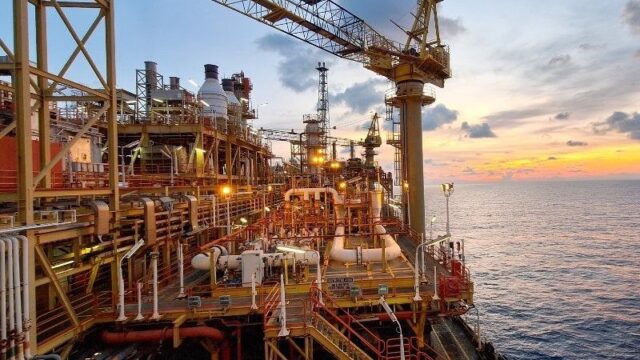
The results were presented on Tuesday by ExxonMobil Guyana’s Vice President and Business Services Manager, John Colling, who attributed the company’s performance to strong operations and increased output following the start-up of the One Guyana Floating Production, Storage and Offloading (FPSO) vessel.
“In 2025 ExxonMobil had a very strong year, underpinned by strong operational performance,” Colling told reporters.
Although production increased during the year, earnings were affected by a decline in oil prices on the international market.
“The overwhelming factor was lower oil prices in 2025 versus 2024. In 2025, the average realization was US$68 per barrel and in 2024 it was US$82 per barrel. In fact, volumes were up in 2025 versus 2024 with the startup of One Guyana,” he explained.
Financial records show that revenue slipped slightly from $1.73 trillion in 2024 to $1.71 trillion in 2025, while net profit declined from $995.1 billion to $982.5 billion.
Despite the reduction, the company continued to invest heavily in its Guyana operations. Capital expenditure totalled about $720 billion during the year, while the value of property, plant and equipment climbed from $2.94 trillion to $3.49 trillion. ExxonMobil also disclosed future capital commitments of almost $785 billion.
Colling said the figures reflect continued reinvestment under the Production Sharing Agreement.
“We continue to reinvest the profits that we’re making here, and the contract is doing what it was incentivized to do, incentivizing reinvestment and increasing production and revenue for all parties,” he said.
The commissioning of the One Guyana FPSO also contributed to higher operating costs. Production costs rose from $61.3 billion in 2024 to $82.2 billion last year.
“There are a number of items that go into production costs. The key driver was really the startup of the One Guyana. There are some additional costs that are included in there such as research costs and future development but really the key driver is the startup of One Guyana,” Colling noted.
The financial statements further show that ExxonMobil generated $1.38 trillion in cash from operating activities and ended the year with total assets of $3.87 trillion. The company recorded an income tax expense of $231.6 billion and distributed $463 billion to its head office during the reporting period.
Guyana’s oil industry continued its rapid expansion in 2025, with production from the Stabroek Block surpassing 900,000 barrels per day across the Liza Phase One, Liza Phase Two, Payara and Yellowtail developments.
ExxonMobil operates the block with a 45 per cent stake, alongside Hess Corporation, which holds 30 per cent, and CNOOC with 25 per cent.
Asked about the recent rise in oil prices linked to tensions in the Middle East, Colling said the company does not forecast commodity prices but acknowledged that higher prices generally result in increased revenues.