

Global Subsea Tree Orders Slump, but Guyana Remains a Key Growth Engine
Global orders for subsea tree units — critical components of offshore oil production — have hit their lowest level since 2020, with only 97 units awarded in the first seven months of 2025.
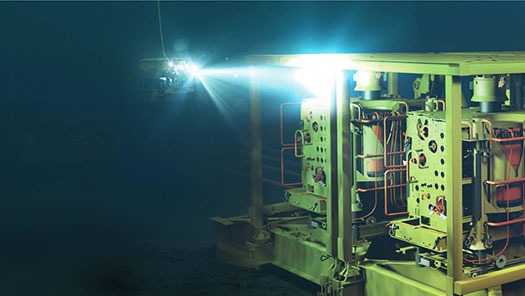
A subsea tree, sometimes referred to as a “Christmas tree,” is a complex assembly of valves, spools, and fittings installed on the seabed to control the flow of oil and gas from subsea wells. These units not only regulate pressure and production rates but also serve as a key safety mechanism, enabling remote operation and shutdown of wells thousands of meters below the surface. Without subsea trees, deepwater developments like those in Guyana’s Stabroek Block would not be technically or commercially viable.
According to data from Westwood Global Energy, Turkey and Norway together accounted for 61% of the year-to-date awards, driven largely by Turkish Petroleum Joint Stock Partnerships’ (TPAO) Sakarya development, Equinor’s Johan Sverdrup Phase 3, and Var Energi’s Balder project.
The sluggish start to 2025 is being blamed on a softer-than-expected oil price environment and inflationary pressures across the supply chain, which are squeezing operators’ free cash flow and forcing renewed cost-cutting. “Operators are increasingly focused on capital discipline,” the report notes, “prioritizing efficiency over aggressive expansion.”
Yet, optimism remains for the remainder of the year. Westwood forecasts an additional 142 units to be sanctioned before year-end. ExxonMobil’s Hammerhead project offshore Guyana is expected to account for 30 of those units, placing the South American nation firmly in the global spotlight. ExxonMobil also leads the world in pre-orders, with 177 subsea tree units already lined up — an unprecedented commitment that underscores Guyana’s status as one of the fastest-growing offshore oil provinces.
Other significant awards expected in late 2025 include Equinor’s Fram Sor (12 units), Chevron’s JSM field in the U.S. Gulf of Mexico (nine units), and potentially over 40 units from Petrobras under its global frame agreement call-out.
Looking ahead, Westwood’s base-case demand forecast for subsea trees between 2025 and 2029 stands at 1,422 units — averaging 284 units annually. A rebound is expected in 2026 with around 290 units, led by Africa’s offshore resurgence, particularly through TotalEnergies’ Venus project in Namibia, Eni’s Baleine Phase 3 in Ivory Coast, and Azule Energy’s PAJ project offshore Angola.
For Guyana, the numbers reinforce its role as a critical pillar of future offshore development. While global demand may be cycling through a lull, ExxonMobil’s long-term investment strategy — backed by its massive subsea tree orders — ensures that the country’s deepwater fields will continue to draw a disproportionate share of the industry’s capital and technological focus.


