Guyana, Yale University team up to build high-tech biodiversity system
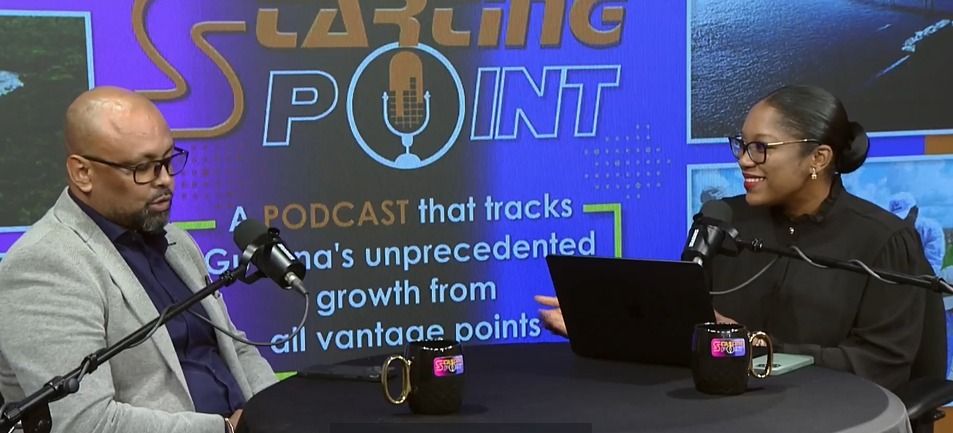


Executive Director of the Environmental Protection Agency (EPA), Kemraj Parsram, has announced a groundbreaking project to create a National Biodiversity Information System (NBIS) for Guyana, in partnership with Yale University.
The system will help the country better understand, monitor and earn value from its rich biodiversity, especially as development and oil and gas activities expand.
Parsram explained that while Guyana is already known for protecting its forests and natural environment, the next step is knowing exactly what is there and how to use that information wisely.
“You can protect all the forests and have all the areas set aside, but you need to know what is there and how you can leverage that,” he said. “This national biodiversity information system will collect all the existing knowledge about our biodiversity and ecosystems and put it into one system.”
The NBIS will bring together scientific data, maps, research and on-the-ground observations about Guyana’s plants, animals, forests, rivers, marine life and more. Once this information is in the system, decision-makers will be able to ask very practical questions.
Parsram gave a simple example: “If you want to put a development here, you should be able to ask: What will happen to our biodiversity? If we want to prepare policy advice or guidance for His Excellency, the President, that information can be analysed and used to create policy briefs.”
A key feature of the system will be its link to real-time monitoring of the environment. This means the NBIS will not just store old reports but will constantly receive new data from the field.
“The critical part is having a system that is linked to on-the-ground, real-time monitoring of our biodiversity,” Parsram said.
One of the most advanced elements of the project is the plan to create a “digital twin” of Guyana’s marine environment, including its Exclusive Economic Zone (EEZ), where most offshore oil operations are taking place. A digital twin is a detailed digital model of the real world that updates continuously as new data comes in.
“The idea is to create a digital twin of our marine environment,” Parsram explained. “We can create a digital twin of our oceans, of our EEZ, what is below the water, by using LiDAR, remotely operated vehicles (ROVs) and other tools. That will create a live image in the NBIS. You can see what is happening in those locations in real time. You can see the trees, the fauna, the flora, and you can see if there are any environmental impacts.”
To help people understand the concept, Parsram compared it to developments in medicine.
“In medicine, they are creating a digital twin of the human body,” he said. “You have the real human body, and then you have an artificial intelligence model of your body. Doctors can model what happens if they add a certain medicine and see how your heart or blood pressure might respond. It’s the same principle. We are creating a digital model of the real world and then using it to test and plan.”
According to the EPA head, the NBIS is not just about monitoring and protection. It is also about putting a fair value on Guyana’s biodiversity so the country and local communities can benefit financially from keeping nature intact.
“Once we know what we have, and we know that the actions we are taking to protect it are effective, we can then value that biodiversity,” Parsram said. “We can convert that into things like biocredits, which we can sell to international organisations. Communities can benefit. We can also look at other biodiversity financing mechanisms like green bonds.”
Biocredits are similar to carbon credits but focus on protecting species and ecosystems instead of just reducing emissions. Green bonds are special financial instruments that raise money for environmental projects. By building a solid, science-based system like the NBIS, Guyana can prove what it is protecting and make a stronger case for this type of financing.
Parsram noted that the project will be rolled out over the next five years and will support Guyana’s Low Carbon Development Strategy (LCDS), which aims to balance economic growth with environmental protection.
“This big national biodiversity information system is what we are working on for the next five years. It is going to be groundbreaking,” he said. “The digital twin is mind-boggling, but it is the way to go. This is the next step in advancing the work of the Low Carbon Development Strategy and creating new financial mechanisms for our people.”
He added that there is currently no proper global system that values biodiversity in countries that have made major efforts to protect their forests and ecosystems. Guyana, he said, is once again positioning itself as a leader.
“At this point, there is no real valuation for biodiversity in countries that have been dedicating their efforts to protecting their ecosystems,” Parsram said. “So Guyana is once again leading the way.”


