Major ICT expansion on the cards for 2026 as government rolls out new innovation initiatives
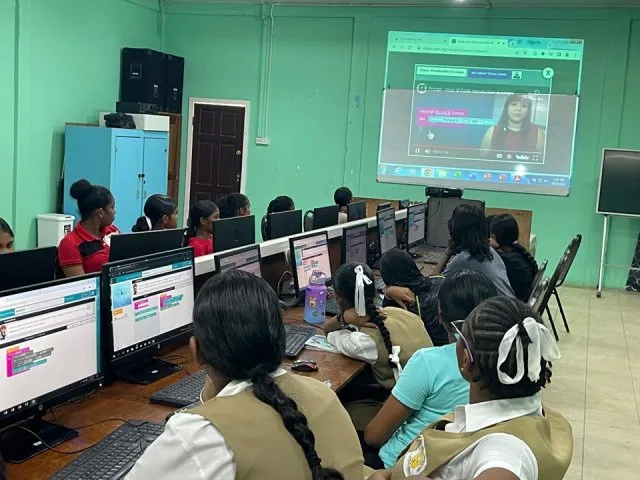


Prime Minister Mark Phillips has signalled a major expansion of the government’s Information and Communications Technology (ICT) and innovation agenda from 2026, outlining a series of new programmes aimed at deepening digital skills, widening access, and positioning Guyana as a regional leader in technology and innovation.
Speaking on recent initiatives and forward planning, Phillips said more than 1,200 persons across several regions have already benefited from ICT and innovation training, forming a strong base for the next phase of expansion. He noted that through the Train the Trainers initiative, “over 100 individuals in Region One and Nine were equipped to deliver ICT training within their own communities.”
In other regions, he said approximately 875 persons in Regions Two, Four, Five, Six and Ten received foundational ICT training, while disability-focused ICT programmes “empowered 24 persons in Region Four.” Innovation camps, Phillips added, also exposed “a further 169 participants to creative problem-solving and collaborative innovation.”
Building on what he described as “five years of foundational work,” the Prime Minister said the Industry and Innovation Unit under the Office of the Prime Minister will significantly expand its programming between 2026 and 2031. Among the planned initiatives are new training programmes in “artificial intelligence, animation, web design and development,” as well as “specialised coding camps for girls.”
He further announced that government plans to launch several flagship initiatives, including “research and development schemes, a developer’s conference, Guyana’s first Innovation and Technology Week, and an innovation lab to provide physical infrastructure for collaborative development and prototyping.”
According to Phillips, these efforts are intended to ensure that “inclusive, innovation-driven development will move closer to realization while positioning Guyana as a regional leader in digital transformation.”
The Prime Minister also pointed to continued progress under the Hinterland Poor and Remote Communities (HPRC) Project, which targets improved digital access in remote areas. He said to date, “170 ICT hubs” have been constructed to support education, telemedicine and government services. In 2025 alone, “33 new hub managers” were trained, bringing the total since 2022 to 192 trained managers nationwide.
Across 44 communities, Phillips said 130 community development officers and nearly 2,500 residents have been trained in basic ICT skills. He added that institutional capacity was also strengthened through training for 20 officers from the Ministry of Amerindian Affairs in “digital communication, productivity tools, cybersecurity awareness and ministry platforms.”
Regional public servants were not left out, with Phillips noting that “189 public servants within regional democratic councils were trained to better leverage digital tools for community outreach, data management and coordination.”
Looking ahead to 2026, the Prime Minister announced that “15 new ICT hubs will be built,” while training initiatives will be scaled up significantly. He said government is targeting “2,000 additional community members” for ICT training to ensure digital literacy becomes more widespread, particularly at the community level.


