‘Mental health is a basic human right’—AG declares as Guyana launches first Mental Health Court
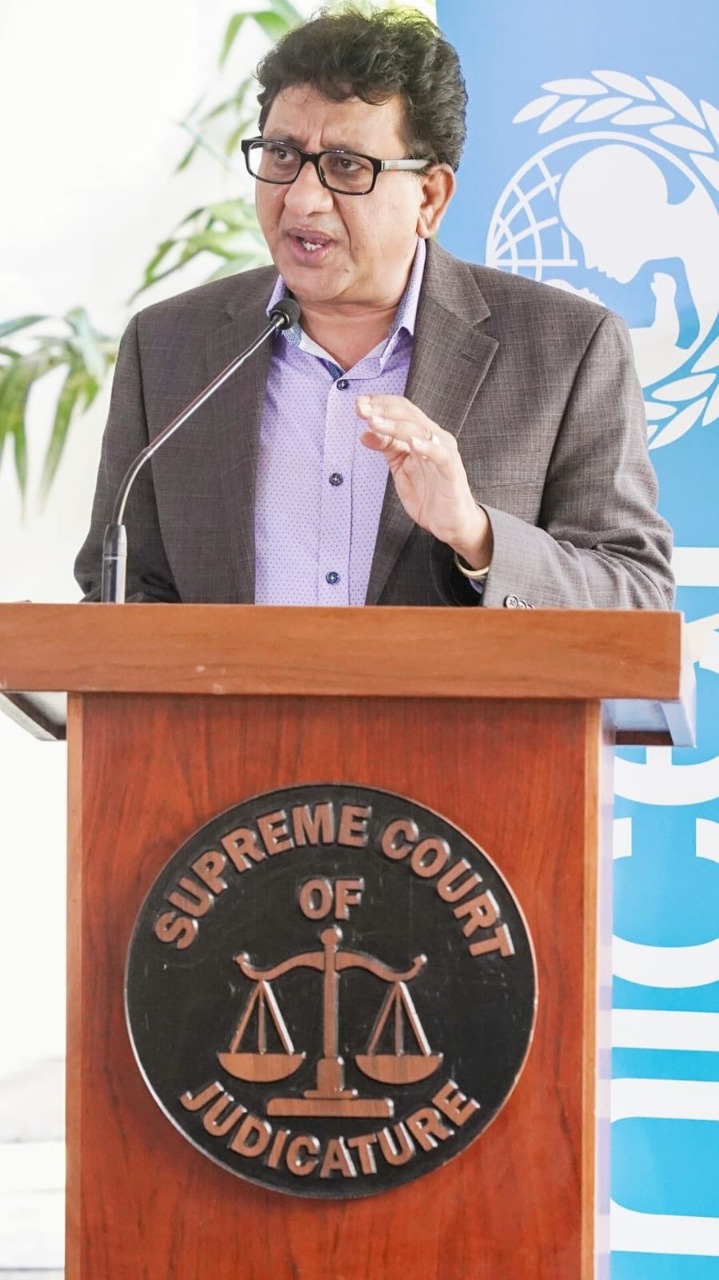


Mental health is a fundamental human right essential for personal dignity and societal development, Attorney General and Minister of Legal Affairs Anil Nandlall, SC, asserted on Thursday during the launch of Guyana’s first Mental Health Court.
“This court is historic and groundbreaking as it is the first of its kind in Guyana,” Nandlall said at the launch held at the Supreme Court of Judicature in Georgetown.
He added, “The opening of the Mental Health Court is an outstanding testament to the evolution and maturity of our society to holistically address the issue of mental health in Guyana.”
Designed to provide fair and informed treatment for defendants whose mental illness may have contributed to their alleged offences, the Mental Health Court represents a significant advance in the country’s justice and human rights framework.
It follows the recent launch of the Children’s Court at the Charity Magistrate’s Court, reflecting the government’s commitment to expanding specialised courts tailored to vulnerable groups.
Nandlall explained that the Mental Health Court directly supports the government’s broader agenda to improve the lives of persons living with mental illness, reduce the prison population, and cut recidivism.
“Historically, persons with mental illnesses faced discrimination, stigmatisation, and were relegated to living on the fringes of society,” he said. “They were referred to as mad, crazy, or insane, with their condition being grossly misunderstood.”
The Attorney General highlighted the Mental Health Protection and Promotion Act 2022 as a cornerstone of this progress. He noted, “Section 21 of the legislation guarantees equal access to justice for persons with mental health conditions and their right to participate fully in legal proceedings.”
According to him, Guyana’s mental health law is among the most modern in the region, if not the world, as it fulfils obligations under multiple international human rights conventions, including the Convention on the Rights of Persons with Disabilities and the Convention on the Rights of the Child.
Before the 2022 Act, he said that Guyana operated under the outdated Mental Health Ordinance of 1930—modelled on the United Kingdom’s 1890 Lunacy Act—a colonial-era framework that primarily saw mentally ill persons as candidates for institutionalisation and social exclusion.
“This court establishes the fact that we have matured significantly as a society,” Nandlall said, while acknowledging that “there is still much to be done in upholding human rights.”
The Senior Counsel added that “mental health care is of utmost importance if our society is to develop in the direction we hope.”
Referencing the World Health Organisation’s definition of mental health as a “state of mental well-being that enables people to cope with the stresses of life, realise their abilities, learn and work well, and contribute to their community.”
Nandlall emphasised that mental health is “crucial to personal, community and socio-economic development.”
He emphasised, referencing the WHO definition, that mental health is a basic human right essential for individual well-being, community strength, and broader socio-economic progress.
The Mental Health Court’s foundation is further supported by the Suicide Prevention Act of 2022, which decriminalised suicide in Guyana, and mental health training initiatives under the Support for Criminal Justice Programme (SCJP), funded by the Inter-American Development Bank (IDB).
Concluding his remarks, the Attorney General reaffirmed the government’s dedication to enhancing the health and well-being of all citizens.
“It is national policy to ensure access to quality healthcare for everyone, regardless of where they live,” Nandlall stated, pointing to the ongoing construction of modern hospitals countrywide.
“The Government of Guyana remains willing and ready to work with the judiciary to provide all the requisite resources to ensure this court’s success, and to ensure that this initiative is replicated across the 10 administrative regions,” he added.
The Mental Health Court will be established at the Georgetown Magistrates’ Courts. It is the judiciary’s second specialised treatment court, following the establishment of the Drug Treatment Court in 2019.
Also present at the launch were Justice Yonette Cummings-Edwards, Acting Chancellor of the Judiciary; Acting Chief Justice Roxane George, SC, Chief Medical Officer, Dr. Narine Singh; United Nations Children’s Fund (UNICEF) Representative, Gabriel Vockel, along with several judges, magistrates, and other key stakeholders.

