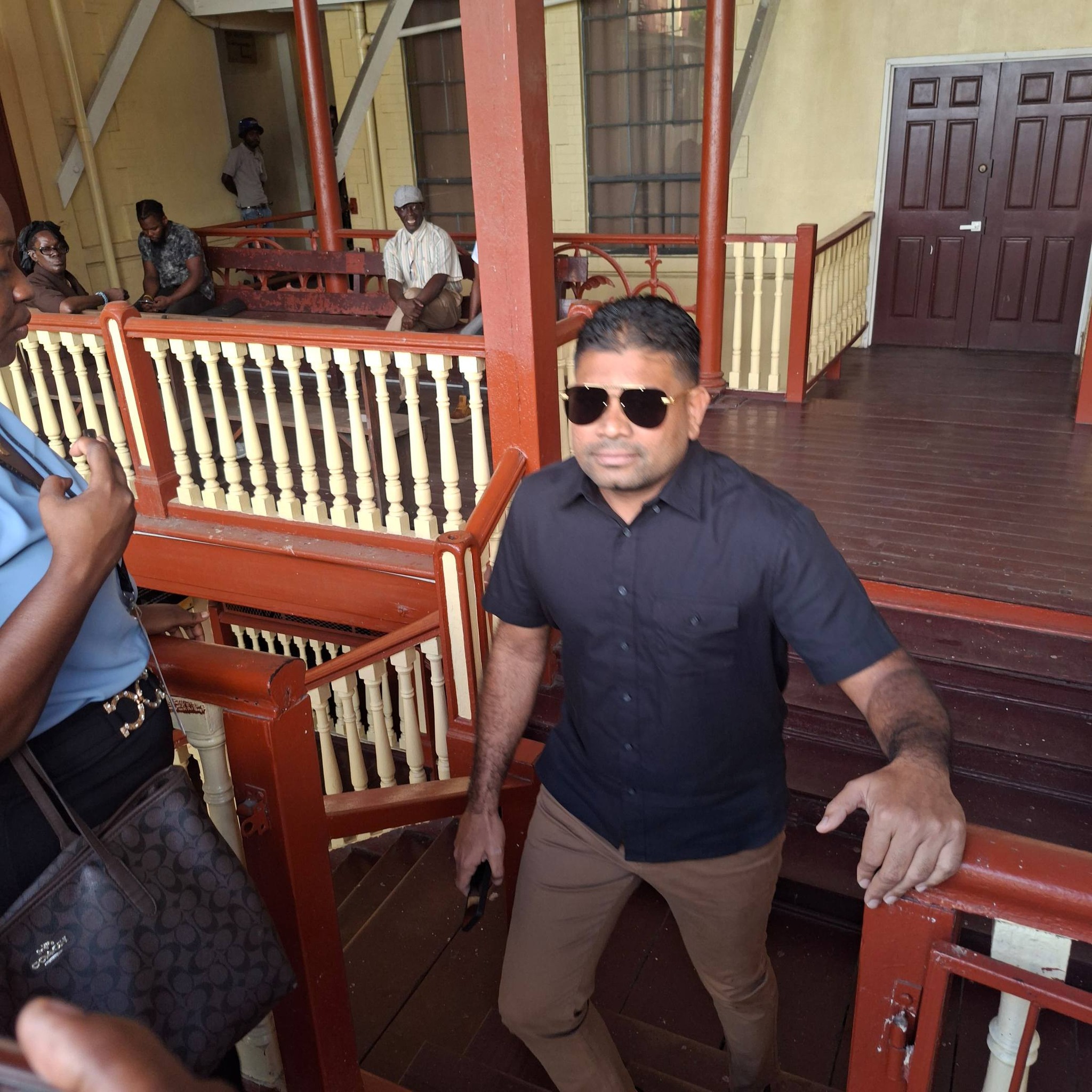


–committal hearing set to begin on January 6, 2025
On Wednesday, Principal Magistrate Judy Latchman dismissed an application by businessmen Nazar and Azruddin Mohamed to refer multiple constitutional questions to the High Court, ruling that their extradition proceedings will continue before her in line with Guyana’s laws and established judicial precedent.
At the heart of the dispute was whether constitutional issues arising from the Fugitive Offenders (Amendment) Act, particularly the 2009 amendments, needed to be determined by the High Court before the extradition matter could proceed.

The defence, led by Senior Counsel Roysdale Forde with Senior Counsel Rajiv Persad and attorneys Siand Dhurjon and Damien Da Silva, had launched a broad constitutional challenge.
They argued that sections 8(3)(a) and 8(3)(b) of the Act raised serious concerns about the legality of the extradition framework and violated their clients’ fundamental rights, including the rights to liberty, life, and access to a fair legal process.

The defence focused on several key issues. One concerned the scope of authority granted to the Minister of Home Affairs, which, they contended, allowed the minister to arrest, detain, and extradite citizens in ways that could undermine the separation of powers and judicial independence.
Another concern related to Parliament’s 2009 directive instructing courts to interpret the extradition treaty between Guyana and the United States “as if” it included a re-extradition safeguard, even though no such provision exists.
They argued this was constitutionally problematic, citing the Barry Dataram case, in which the Full Court had noted deficiencies in the treaty framework.
The defence also objected to a clause restricting individuals facing extradition from challenging irregularities in the treaty or extradition arrangements, arguing that it infringed on constitutional protections related to liberty, due process, and fair legal procedures.
Forde argued that barring them from challenging the extradition proceedings was unfair, since their clients could potentially be released after the process, and emphasised that his application for referral to the High Court was made under Article 153(3) of the Constitution.
These concerns were heightened when the prosecution submitted a U.S. diplomatic note providing assurances on re-extradition, which the defence argued lacked legal validity under the current legislative framework.
The prosecution, led by Jamaican King’s Counsel Terrence Williams with attorneys Glenn Hanoman, Herbert McKenzie, and Celine Deidrick, rejected the constitutional challenge.
They characterised the application as “frivolous and vexatious,” arguing that the issues raised were not for the magistrate’s consideration at this stage and that the application should be dismissed, as it was intended solely to delay the extradition process.
Williams emphasised that extradition hearings are governed by specific legal parameters and that many of the constitutional rights cited by the defence do not apply in this context.
He pointed to judicial precedent, particularly Justice Jo-Ann Barlow’s ruling in the Marvin Williams (Troy Thomas) case, which affirmed the legality of the 2009 amendments.
The prosecution also addressed the specialty rule, which prevents extradited individuals from being sent to a third country.
Williams noted that the defence raised the matter publicly rather than formally in court, prompting submission of a U.S. diplomatic note assuring that the Mohameds would not face onward extradition.
He argued that such concerns should be addressed after the conclusion of the extradition proceedings, warning that raising them now would unnecessarily delay the process.
In her ruling, Magistrate Latchman reflected on international law principles, citing Article 27 of the Vienna Convention on the Law of Treaties, which prevents states from invoking domestic law to avoid treaty obligations.
She stressed that treaty obligations must take precedence over internal legislation and that extradition is a state-to-state obligation, with the individuals subject to extradition playing no role in the contractual arrangements.
Latchman noted that the defence’s issues had already been adjudicated by Guyana’s superior courts, including decisions in Garfield Sobers, Stephen Edward King, and Marvin Williams (Troy Thomas).
She declined to rely on the Barry Dataram decision, stating it predated the 2009 amendments, and concluded that there was no basis to activate Article 153(3) of the Constitution.
She emphasised, “This court is not about to resurrect what has been put to rest. Having judiciously examined all the issues leveled by the defence and the request for a referral to be triggered, this court sees no basis to activate the referral article, since it is guided by the principles of stare decisis. This court, therefore, denies the application to engage the referral article of the Constitution of the Cooperative Republic of Guyana.”
King’s Counsel Williams welcomed the ruling, stating that the prosecution was ready to proceed.
Meanwhile, Forde indicated that constitutional proceedings would be filed directly in the High Court, and that the Mohameds intend to pursue the matter to the Court of Appeal and the Caribbean Court of Justice, Guyana’s highest court.
The substantive extradition proceedings are set to resume before Magistrate Latchman on January 6 and 7, 2026, when the prosecution is expected to start presenting its evidence.
Nazar and Azruddin Mohamed, owners of Mohamed’s Enterprise, remain on $150,000 bail each as proceedings continue. As a condition of bail, they have surrendered their passports, and must report weekly to the Ruimveldt Police Station.
They face 11 criminal charges in the U.S. Southern District of Florida, including wire fraud, mail fraud, money laundering, conspiracy, and customs violations, linked to an alleged US$50 million gold export and tax evasion scheme.
The United States is seeking their extradition to answer these charges.
The U.S. Treasury’s Office of Foreign Assets Control sanctioned them in June 2024 for alleged gold smuggling and public corruption, as part of an investigation dating back to the mid-2010s involving the DEA, FBI, and Department of Homeland Security.

