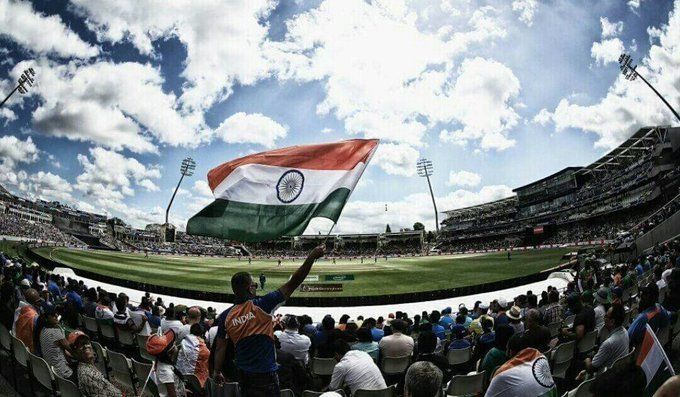


President Dr. Irfaan Ali has taken aim at the Board of Control for Cricket in India (BCCI) for its long-standing policy that prevents Indian players from participating in overseas T20 leagues.
Speaking out against what he described as an “unsustainable” approach, President Ali argued that the BCCI’s restrictions could ultimately hurt the growth of cricket on a global scale. His remarks have sparked renewed debate about whether the power and influence wielded by Indian cricket are helping or hindering the sport’s evolution.
India’s Indian Premier League (IPL) is widely recognized as the crown jewel of T20 cricket, attracting global attention and generating billions in revenue each year.
However, the BCCI’s rule that bars active Indian players from joining other T20 leagues—such as the Caribbean Premier League (CPL), the Pakistan Super League (PSL), and Australia’s Big Bash League (BBL)—has long drawn criticism from other cricketing nations. President Ali noted that while India’s cricketing strength is undeniable, using that power to restrict opportunities for players outside the IPL could damage the sport’s credibility and balance.
According to President Ali, India effectively holds “the cricketing nuclear button,” and by controlling player participation through market dominance, it risks creating a monopoly rather than fostering healthy competition. He compared the situation to boxing, suggesting that no fighter can claim to be a world champion if they refuse to step outside their own ring. The president argued that Indian players, many of whom possess world-class talent, deserve the chance to showcase their skills in various leagues around the world—not just within India’s borders.
Comparingly, the recently launched Guyana Super League (GSL), a new T20 competition, aims to build strong international partnerships and raise the profile of cricket in the Caribbean. President Ali highlighted that the GSL has already made waves globally, signaling that it intends to be a serious player in the cricket world. He said the league is not looking to compete with the IPL but rather to collaborate and help expand the sport’s global footprint.
The President also pointed to broader shifts in the sports landscape, noting that emerging markets such as Saudi Arabia are investing heavily in sports and could reshape how cricket’s global economy operates. He warned that if established powers like the BCCI continue to wall off their players and talent, they risk falling behind in a world that increasingly rewards openness and cooperation. In his view, cricket’s long-term survival and success depend on inclusivity and shared growth, not isolationism.


