Rohee warns of US-Venezuela tensions spilling into Caribbean; urges Guyana to step up international campaign
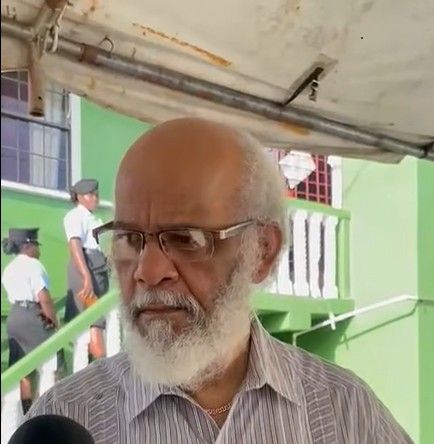


Former Minister of Foreign Affairs, Clement Rohee, has cautioned that unfolding geopolitical tensions between the United States and Venezuela could have serious implications for the Caribbean region, including Guyana.
In a letter released this week, Rohee noted that the United Nations General Assembly (UNGA) is meeting at a time when the world is shifting from a “unipolar system” dominated by a single power to a “multipolar” order where sovereign equality and multilateralism are supposed to take precedence. Yet, in the Caribbean, he warned, the reality is a growing risk of military confrontation.
According to Rohee, the heavy presence of US naval and military assets in the region goes beyond anti-narcotics operations or criminal interdiction. He argued that Washington’s actions are tied directly to what it perceives as the intrusion of other global powers- particularly BRICS-aligned states- into its “backyard,” especially with oil and economic stakes in play.
“The raison d’être for the ‘heavy’ US military and naval presence in the Caribbean,” Rohee said, “is not because of an increase in tension between the US and Venezuela…but because of what the US perceives as the rapid intrusion in its sphere of influence.”
He suggested that Caracas, under mounting US sanctions, has sought to frame itself internationally as a victim of American aggression—an argument that has already gained sympathy among academics, influencers, and some governments in the Global South. Rohee warned that this narrative, if left unchecked, could complicate Guyana’s own case at the International Court of Justice (ICJ), where it continues to defend its territorial sovereignty against Venezuela’s claim to the Essequibo.
Rohee urged policymakers in Georgetown not to take comfort in a favorable ICJ ruling alone. “Guyana should not rest on its laurels nor consider the matter closed,” he said, adding that the country must intensify its diplomatic work to counter Venezuela’s “belligerent policy” and international messaging.
The former Foreign Minister also pointed to divisions within CARICOM on how to collectively respond to both the Venezuelan situation and the controversial Cuban health workers programme, issues he described as “hot potatoes” that have exposed cracks in regional unity.
For Guyana, Rohee argued, the bigger picture is clear: the US’ evolving foreign policy and great power rivalry now sit at the centre of the country’s security interests. Even as regional states grapple with tariffs and external conditionalities, he said, Caribbean leaders must not lose sight of ensuring that the region remains what it has long declared itself to be- “a Zone of Peace.”


