
Region 10 (Upper Demerara-Berbice) is currently the only part of Guyana where electricity generation is falling short of demand, with the rapid expansion of sawmilling operations in Linden placing additional strain on the local power system.
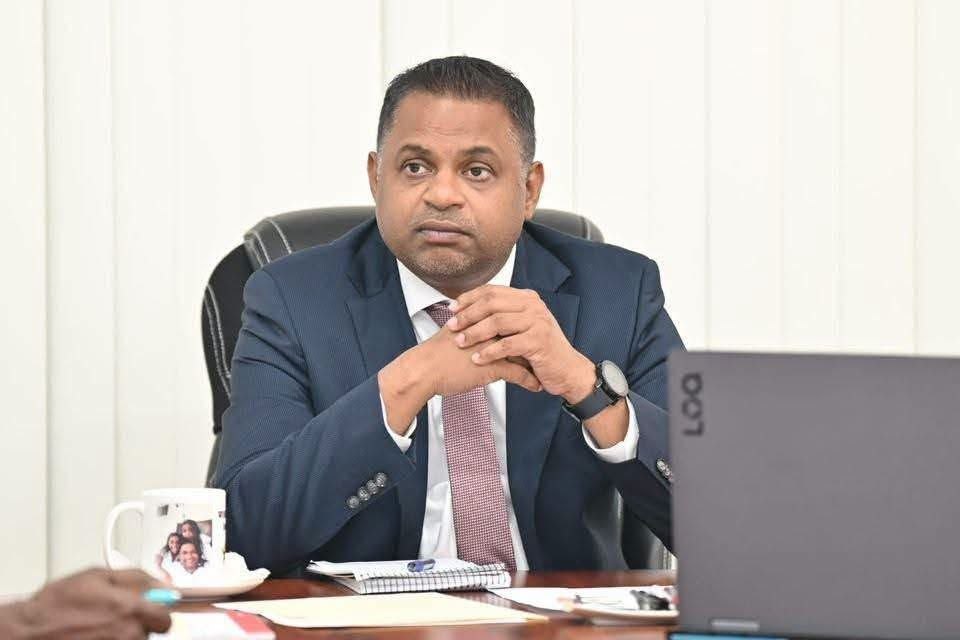
The issue was disclosed by Minister of Public Utilities and Aviation Deodat Indar during a press conference hosted by Prime Minister Brigadier (Ret’d) Mark Phillips on Friday.
Indar said peak demand in Region 10 had reached 15.1 megawatts (MW), surpassing the approximately 14.1MW being supplied by Bosai to Linden.
Region 10 operates an isolated electricity system, with power generated by Bosai Minerals and distributed to consumers through the Linden Electricity Company Incorporated (LECI) and the Linden Utility Services Co-operative Society Limited (LUSCSL).
He attributed the increase largely to growing economic activity, particularly the expansion of sawmills in the region.
According to him, there are currently 32 sawmills operating in the area.
He said the operations use high-speed motors that consume significant amounts of electricity, adding substantially to the local demand.
The increase has been particularly noticeable during the region’s peak periods.
Indar said Linden experiences two significant demand spikes during the day, including one between approximately 1pm and 3pm, and another between 7pm and 9pm.
To ease pressure on the grid, authorities have asked the sawmill operators to shift their operations to off-peak hours.
Indar said they have been asked to operate between 10pm and 6am, when household and commercial electricity consumption falls.
The arrangement is intended to allow the sawmills to continue operating without adding further pressure to the grid during periods when electricity demand is already at its highest.
“We have asked them to operate during the hours when people turn off the lights, the shops are closed down, and the demand drops,” Indar said.
The Minister said another issue being addressed is the electricity connections used by some of the sawmill operators.
He said some businesses currently have a single connection serving both their commercial operations and homes.
Government is therefore working to separate the connections so that residential customers can continue receiving electricity even when the sawmills are required to reduce their consumption.
Indar also said the tariff structure is contributing to the growth of the sawmilling sector in Linden.
He explained that the town does not currently have an industrial tariff, with customers paying a household rate of approximately $5 per kilowatt-hour and a commercial rate of about $12 per kilowatt-hour.
He suggested that the relatively low cost of electricity compared with the expense of operating independent generators has helped encourage sawmillers to establish operations in the region.
Meanwhile, Government is engaging Bosai about increasing the amount of generation available to the Region 10 grid.
Indar said discussions are underway to secure an additional 3MW of generation to address the immediate shortfall.
Beyond the immediate measures, the Government is also looking at renewable energy to strengthen the region’s electricity supply.
Under the Guyana Utility Scale Solar Photovoltaic Program (GUYSOL), several solar projects are planned for Linden.
Indar said one project is expected to provide 3MW, while another will add approximately 4MW, with both expected to be completed by the end of the year.
This would result in approximately 7MW of additional solar capacity being added to the grid serving the area.
The interventions come against the backdrop of rapidly rising electricity demand nationally.
Indar said Guyana’s overall peak demand has reached a record 242.64MW and is projected to rise to approximately 266MW during the August-to-October hot season.