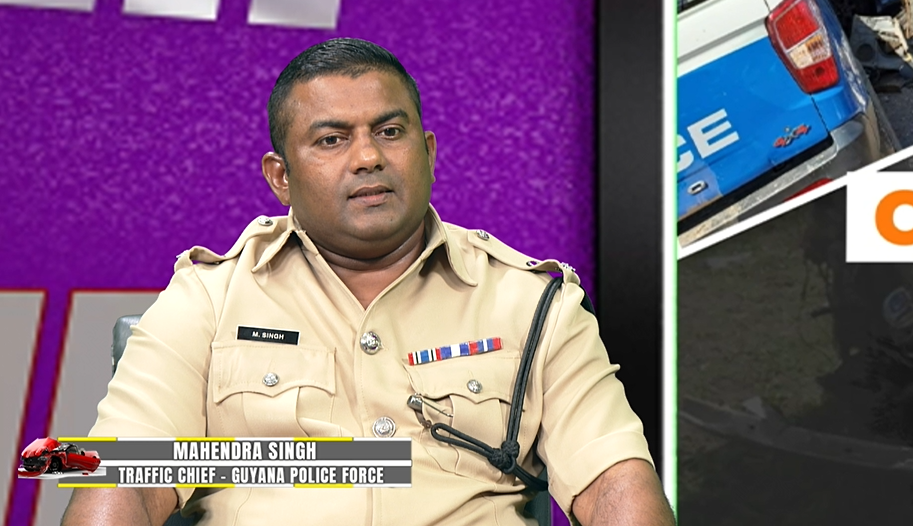
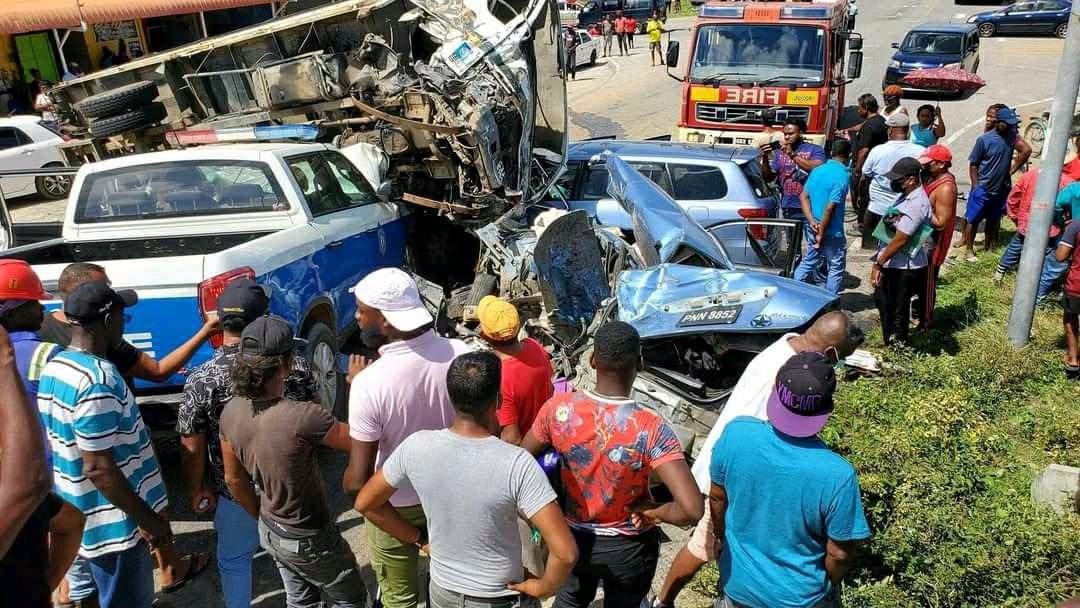
Eighty-nine people, including two children, have died on Guyana’s roads in the year-to-date period covered by the latest figures disclosed by Traffic Chief, Assistant Commissioner Mahendra Singh.
Speaking on the Starting Point Podcast, Singh said police recorded 83 fatal accidents during the reporting period, compared with 84 accidents that claimed 93 lives in the corresponding period last year. Five of those killed last year were children.
The figures show that while the overall number of crashes has fallen, the reduction in fatal accidents amounts to just one, with four fewer deaths.
“There is a minor reduction in the area of fatal accidents, but there are reductions in terms of the number of deaths and or children who would have died,” Singh said.
Speeding remained the leading contributor to fatal crashes. Singh attributed 65 fatal accidents this year to speeding, compared with 70 during the corresponding period last year.
He also identified inattentiveness and incidents involving pedestrians crossing the paths of moving vehicles as contributors to the death toll.
Singh said two fatal cases this year involved drunk driving. Investigative files in both matters had been completed in preparation for motor manslaughter charges against the drivers.
Region Four recorded the highest number of fatalities, with the East Bank Demerara police division accounting for 19 fatal accidents and an equal number of deaths. Georgetown and the East Coast Demerara division each recorded 14 fatal accidents and 14 deaths.
Together, the three divisions accounted for 47 of the 89 deaths disclosed by the Traffic Chief.
Asked why road deaths continued despite investment in roads and enforcement systems, Singh pointed to speeding, distracted and impaired driving, dangerous overtaking and a disregard for traffic rules.
He said the police response involved consistent, visible enforcement, sustained public education and wider use of technology to detect offences and influence motorists’ behaviour.
Public awareness efforts include visits to schools, talks with drivers and outreach at bars. Singh said the bar visits allowed police to engage both motorists and people consuming alcohol, while emphasising responsible practices among those serving drinks.
He credited school outreach and public education with contributing to the reduction in child deaths, although the interview did not establish how much of the decline could be attributed to those programmes.
The Traffic Chief also said accident data were being used to determine where officers should be deployed, with attention directed to locations where crashes were occurring.
As the country road network expands, he said plans were in place to establish and staff outposts and maintain mobile police patrols along new routes.
Technology is expected to play a greater role in enforcement, with Singh anticipating that additional speed cameras would become operational before the end of the year.
“Before the end of the year, I expect all of them to be operationalised to add to what we already have,” he said.
Singh also reported that 37 drivers had received court-imposed licence suspensions ranging from six to 12 months for offences including speeding and dangerous driving.
While he maintained that enforcement and education were producing improvements, he acknowledged that changes in driver behaviour had not yet reached the desired level.