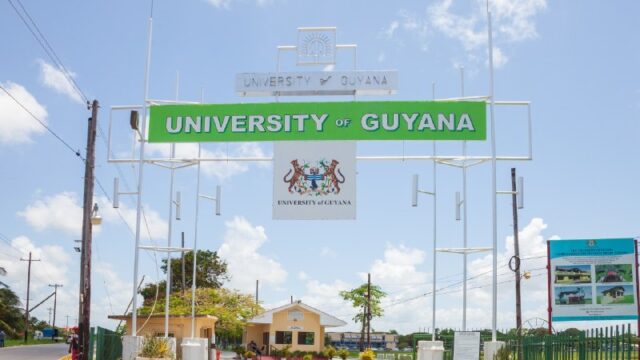

The University of Guyana’s School of Entrepreneurship & Business Innovation (SEBI) has announced a landmark partnership with the Guyana Revenue Authority (GRA) and the World Bank to introduce two specialized programmes aimed at building the country’s capacity in oil and gas financial management.
The initiatives—an Associate Degree in Oil & Gas Accounting/Taxation/Audit and a Graduate Executive Diploma in the same field—are designed to close the skills gap in one of the fastest-growing sectors of the economy.
The Associate Degree, a rigorous two-year, 72-credit programme, will be open to qualified applicants from the new academic year. It features a comprehensive curriculum covering technical communication, fiscal regimes, taxation, auditing, and an introduction to both local and global oil and gas industries. Participants will also gain practical experience through work attachments with the GRA and other agencies tied to the petroleum sector.
Comparatively, the one-year Graduate Executive Diploma, consisting of 45 credits, is tailored for GRA employees and professionals in related fields. The programme will strengthen expertise in risk management, analytics, oil and gas law, and advanced areas of accounting and taxation, equipping participants to keep pace with the demands of the rapidly expanding industry.
Dean of SEBI, Professor Leyland Lucas, underscored the importance of the collaboration, noting that Guyana’s oil boom has exposed gaps in human capital, particularly in monitoring revenue flows and ensuring effective oversight of the sector. With input from the International Monetary Fund (IMF) and the GRA, SEBI has crafted what he described as robust, globally competitive programmes that address both immediate and long-term needs.
Professor Lucas added that participants will be taught by a mix of international and local faculty, including experts from the International Monetary Fund and the GRA. This model, he said, not only ensures high-quality training but also builds sustainability by strengthening the capacity of local faculty and reducing long-term reliance on international expertise.
University Vice Chancellor, Professor Paloma Mohamed, hailed the collaboration as a transformative step in Guyana’s development and a critical response to the sophisticated training needs that have emerged in the country and across the region, praising the work of SEBI, the World Bank, and the GRA in designing programmes that directly align with Guyana’s strategic priorities in the oil and gas sector.
GRA also welcomed the initiative, pointing out that the specialised training will help build the human capital necessary to ensure that Guyana captures maximum value from its petroleum resources. With revenues from oil and gas playing a central role in Guyana’s economic transformation, the Authority stressed that strengthening technical expertise in accounting, taxation, and auditing is vital for both compliance and oversight.
The Associate Degree is open to individuals who have completed secondary education with the required qualifications or hold a degree from an accredited tertiary institution. The Graduate Executive Diploma is geared toward current GRA employees, professionals in accounting, taxation, and auditing, and others seeking to enter the oil and gas field. Both programmes begin in the upcoming academic year.