
The Caribbean Examinations Council (CXC) has announced sweeping reforms to its School-Based Assessment (SBA) system, citing the growing use of generative artificial intelligence (AI) as a major threat to the integrity of its examinations.
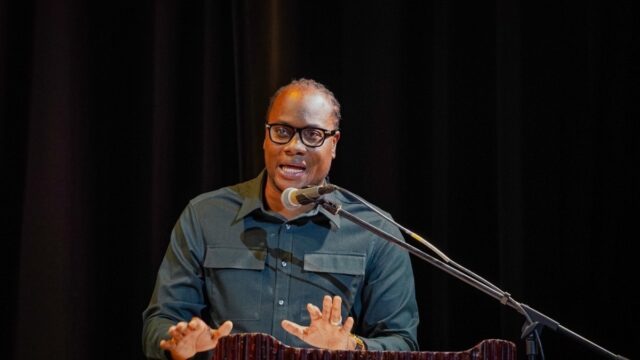
In a statement on Thursday, CXC Director of Operations Nicole Manning said the changes are aimed at ensuring students are assessed on their own knowledge and abilities while preserving the value of CXC qualifications.
“For decades, the SBA has been a distinctive feature of CXC’s examinations. It was designed with a clear and noble purpose to give students the opportunity to demonstrate what they know and what they can do over time,” Manning said.
However, she noted that the widespread availability of AI has placed the traditional SBA system under “serious strain.”
“When AI is used to produce an SBA that is submitted as a student’s own original effort, we can no longer be certain whose work we are assessing. And when we cannot be certain of that, the integrity of the qualification itself is placed at risk,” she explained.
Manning stressed that CXC is not opposed to the responsible use of AI but believes students must ultimately demonstrate their competence under controlled examination conditions.
Under the new framework, practical subjects such as Agricultural Science, Visual Arts, Music, Physical Education, Technical Drawing, and Food, Nutrition and Health will continue to use SBAs, with stronger moderation measures.
For non-practical subjects, including Mathematics, English, Caribbean History, Social Studies and Principles of Business, the traditional SBA will be replaced by Paper 032, an assessment conducted under examination conditions.
Candidates will receive their assessment topics approximately one month before the examination and will be allowed to bring reference notes into the examination room.
According to Manning, the revised approach preserves the benefits of extended assessment while restoring confidence in the authenticity of students’ work.
She said the reforms follow extensive consultations across CXC’s 21 participating territories involving teachers, principals, curriculum officers, local registrars and ministries of education.
“We surveyed close to 2,400 educators across the region. Of these, 77% indicated support for this reform in CSEC and 76% in CAPE. The Caribbean education system has spoken and CXC has listened and continues to listen,” she stated.
The changes will take effect for CAPE candidates in the May/June 2027 examination session for non-practical subjects.
For CSEC, schools will be allowed to choose either the traditional SBA or Paper 032 in 2027, with full implementation of the new system beginning in 2028.
Manning also assured students who have already completed SBAs that their scores will remain transferable under the existing two-year rule, while Paper 032 scores will receive the same treatment going forward.
She said CXC will support teachers throughout the transition by providing guidance through frequently asked questions, webinars and assistance from local registrars.
“Reforming the CXC SBA is about making sure that what you are recognized for you have truly learned,” Manning said. “Every decision we make begins with a commitment to ensure that the CXC certificate your child receives is worth exactly what it represents.”