
Vice President Dr Bharrat Jagdeo has urged the Global Biodiversity Alliance (GBA) to put its weight behind existing United Nations biodiversity targets, while helping countries overcome the technical and financial hurdles to protecting nature.
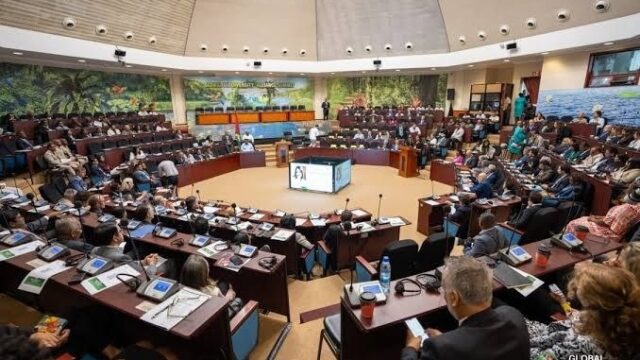
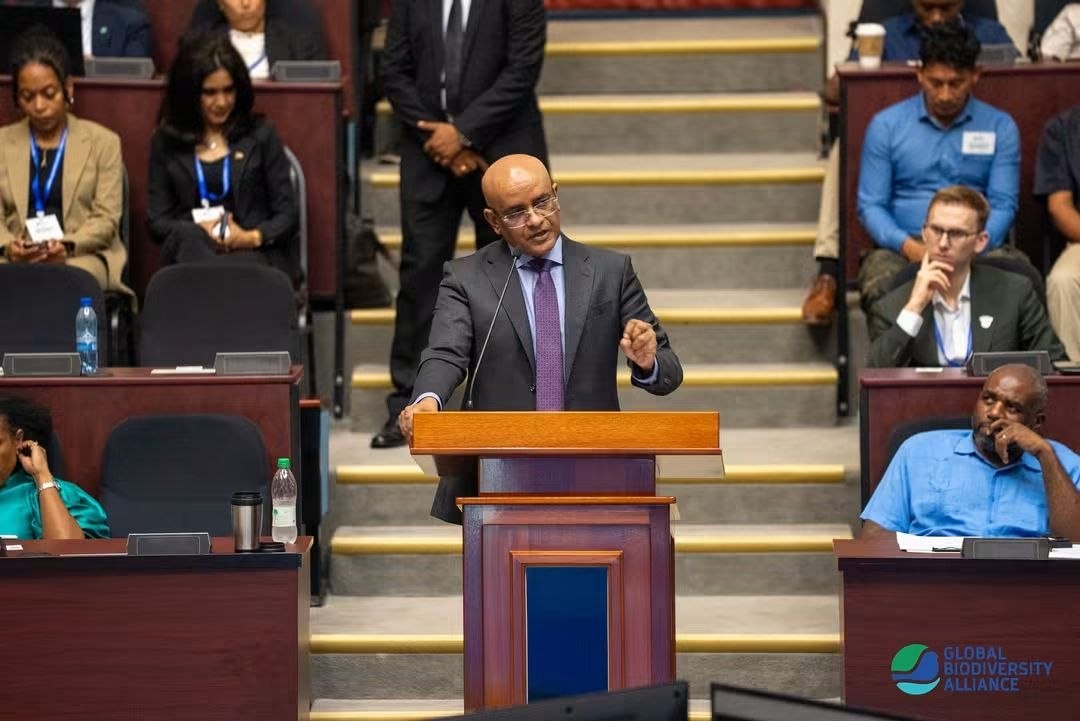
Addressing the Second Global Biodiversity Alliance Conference at the Arthur Chung Conference Centre on Friday, Jagdeo said the body’s role must be to support the UN Convention on Biological Diversity (CBD).
“The alliance cannot supplant the UN Convention on Biodiversity. That’s a point we need to make right up front,” the Vice President said.
He identified several obstacles to financing conservation, including a funding gap of about US$700 billion, the absence of an established compliance or major voluntary market for biodiversity credits, and continued uncertainty over how those credits should be defined.
Against that backdrop, Jagdeo proposed working groups to examine the technical questions surrounding biodiversity credits and provide negotiators with sound analysis.
“So I think that we need to get back to quiet work,” he said.
Drawing on his involvement in climate finance discussions ahead of the 2009 Copenhagen talks, Jagdeo said technical work had helped establish forest carbon as one of the least costly options for reducing emissions. He suggested a similar approach could help advance biodiversity financing.
The Vice President outlined four priorities for the alliance: keeping nature on policymakers’ agendas, strengthening technical support for negotiations, defending gains already made and demonstrating conservation models that deliver results.
He warned that energy costs, food security concerns and regional conflicts could push biodiversity further down the international agenda.
Jagdeo also criticised arguments that high-forest, low-deforestation countries such as Guyana should receive less compensation than countries restoring forests they previously cleared. Such an approach, he said, would penalise countries that preserved their forests while rewarding poor practices.
Pointing to Guyana’s Low Carbon Development Strategy (LCDS), he said more than 3,000 projects had been completed across 252 Indigenous villages using about 20 per cent of LCDS funds. The remaining 80 per cent supports adaptation, including works on 840 kilometres of canals and 125 kilometres of embankment.
He maintained that Guyana remains committed to environmental protection despite the rapid expansion of its oil and gas sector and rising demand for electricity and vehicles. He cited the country’s no-flaring policy, carbon tax on scheduled flaring and commitment to protect 30 per cent of its territory by 2030.
“We can pledge to you that we will remain firmly in favour of strong environmental stewardship here and globally,” Dr Jagdeo said.