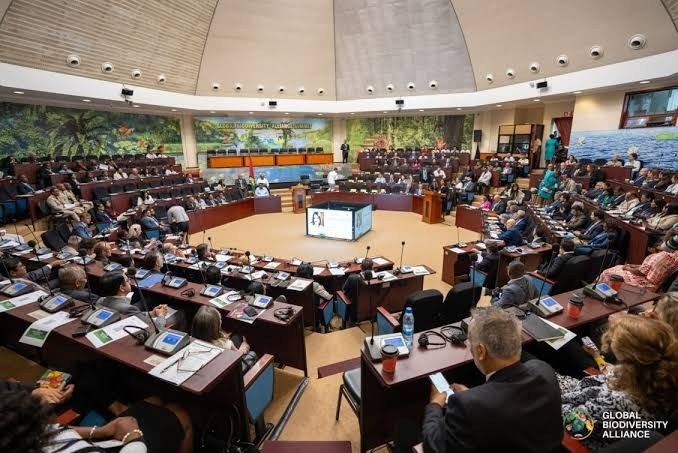

Guyana will this week bring together members of the Global Biodiversity Alliance (GBA) to examine how commitments to protecting nature can be backed by financing.
The Alliance’s second conference opens on Friday, October 30, at the Arthur Chung Conference Centre, Liliendaal. The two-day meeting will explore investment options and policies to support conservation in countries rich in biodiversity.
Discussions will be held under the theme “Investing in Nature: Accelerating Biodiversity Finance for Sustainable Development.”
Launched by President Dr Mohamed Irfaan Ali in July 2025 with 17 founding members, the Alliance has since grown to more than 140 members. Its membership includes governments, indigenous peoples, civil society organisations and private entities.
Among the financing options to be examined are green and biodiversity bonds, blended finance, carbon and biodiversity markets, and funding through multilateral institutions.
Guyana’s experience in earning revenue from forest conservation will feature prominently. Vice President Dr Bharrat Jagdeo is scheduled to lead Friday’s open plenary, “The Guyana Story: Creating a Model for the World.”
Between 2009 and 2015, Guyana received US$227 million in results-based payments through its forest partnership with Norway.
The country later became the first to issue jurisdictional forest carbon credits under the ART-TREES standard in November 2022. An agreement signed shortly afterwards with Hess covered 37.5 million credits, valued at a minimum of US$750 million.
Under the Low Carbon Development Strategy 2030, at least 15 per cent of forest carbon earnings goes directly to Amerindian villages.
Director of Climate and REDD+ at the Ministry of Natural Resources, Pradeepa Bholanath, said the Alliance allows Guyana to “expand the focus from forest carbon services to now biodiversity-related services.”
The conference forms part of Guyana Nature and Biodiversity Finance Week and coincides with the state visit of King Charles III, whose programme includes engagements with scientists, indigenous community members and conservation innovators.