AG Nandlall says United States assurances undermine Mohameds’ constitutional challenge
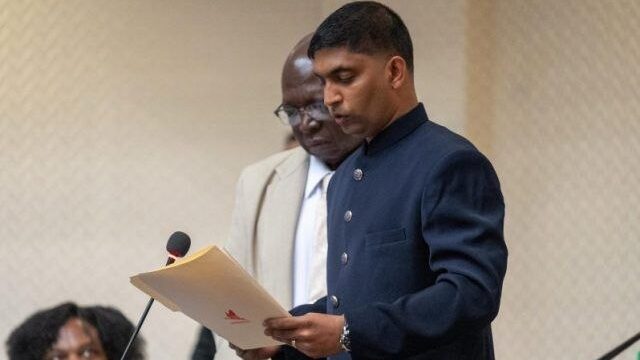
Attorney General and Minister of Legal Affairs Anil Nandlall, SC, on Tuesday dismissed the constitutional challenge brought by Opposition Leader Azruddin Mohamed and his father, Nazar Mohamed.
He argued that their concerns about possible extradition to a third country were unfounded and already addressed by the extradition treaty and written assurances from the United States.
Speaking to reporters following the hearing before the Court of Appeal, Nandlall said the government had obtained a diplomatic note from the US confirming that the two men would not be re-extradited to another state if they were extradited from Guyana.
“We got the US to confirm, in writing, in the form of a diplomatic note, that they will not extradite the two Mohammeds, should they be extradited,” Nandlall said.
Nandlall argued that the 1931 Extradition Treaty between the United States and the United Kingdom, which remains applicable between the US and Guyana, provides protection against the transfer of extradited persons to a third country.
He said the treaty’s safeguards, together with additional written assurances from the US, addressed the concerns raised by the Opposition Leader and his father.
The Attorney General said, “So the fear that the Mohameds have expressed do not exist. It’s not real. It’s not founded in reality.”
Nandlall described the constitutional challenge as “highly academic”, contending that the applicants had failed to demonstrate how the challenged provisions of the Fugitive Offenders (Amendment) Act violated their constitutional rights.
He said the court had repeatedly questioned defence attorney Roysdale Forde about the specific constitutional provisions allegedly breached, but the arguments had not clearly identified how the rights of his clients were affected.
“Which one of the provisions in the constitution are you relying on? Which one of the rights provided for in the Constitution to your clients are being breached?” Nandlall recounted the court asking.
He said Forde had referred to several constitutional articles, including Articles 139, 144, 40 and 148, but had failed to explain precisely how the provisions were violated.
Nandlall pointed specifically to Articles 139 and 148, which address personal liberty and freedom of movement, respectively, arguing that both recognise exceptions in the context of extradition proceedings.
“The big concern is about this third state extradition,” he said, maintaining that the defence had not identified a constitutional provision guaranteeing that a person extradited to one country could not subsequently be sent to another.
Nandlall said, “If you can point where the Constitution says that no Guyanese, once extradited to country A, cannot be extradited to country B, and that is a provision that the Constitution guarantees you, that is a protection that the Constitution guarantees you, then you have a case.”
He added that the defence had “abysmally failed” to establish that point.
The Attorney General also defended Parliament’s authority to amend legislation, stating its legislative sovereignty was subject to the Constitution.
He acknowledged that the courts could strike down legislation that violated constitutional provisions, but argued that judicial review did not give the courts unrestricted power over Parliament’s legislative functions.
“Parliament has what is called legislative sovereignty,” Nandlall said, adding that the courts could intervene where legislation was inconsistent with the Constitution.
The Mohameds are challenging aspects of the Fugitive Offenders Act in proceedings separate from the ongoing extradition case before Chief Magistrate Judy Latchman at the Georgetown Magistrates’ Courts.
The constitutional challenge concerns the legality of provisions governing the extradition proceedings initiated at the request of the United States.
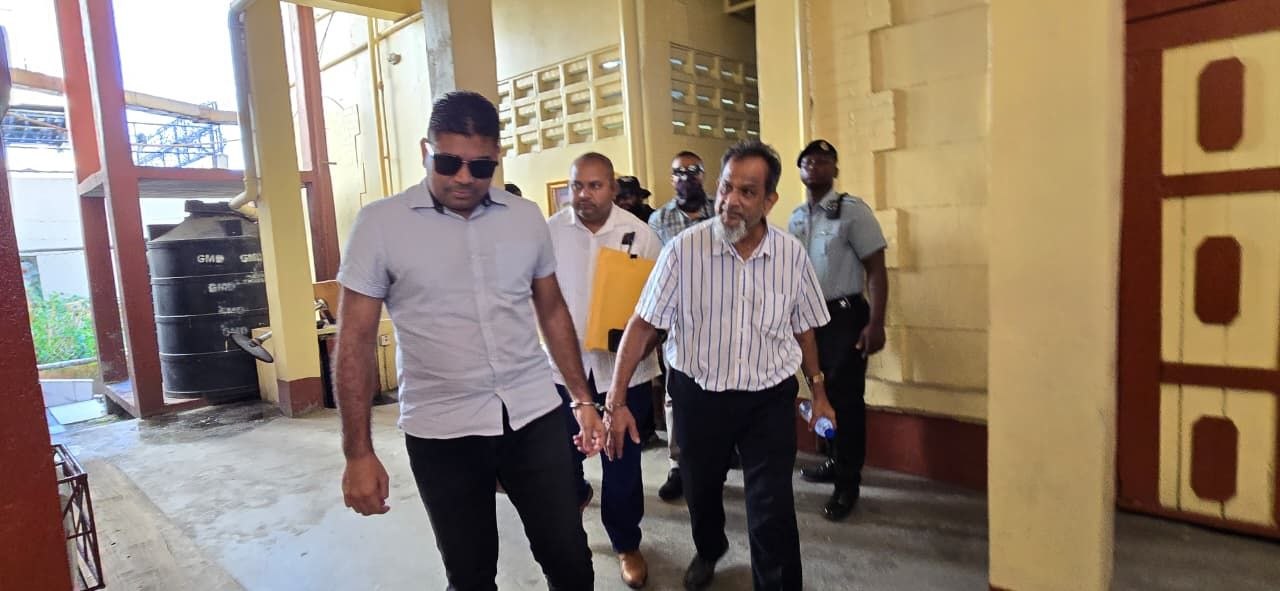
The extradition proceedings against Opposition Leader Azruddin Mohamed and his father, Nazar Mohamed, are continuing before the Chief Magistrate, with the next hearings scheduled for October 21 and 22.
The Court of Appeal ordered the Chief Magistrate to continue hearing the Mohameds’ extradition case but refrain from making a final decision until the constitutional appeal is heard and determined.
This means she can continue hearing witnesses and considering evidence, but cannot conclude the extradition proceedings while the appeal remains unresolved.
The Court of Appeal, meanwhile, reserved its ruling on their constitutional challenge on October 13, indicating that it could take up to a month to deliver its decision.
The United States is seeking their extradition to face an 11-count federal indictment filed in Florida in 2025, alleging wire fraud, mail fraud, money laundering and customs offences linked to an alleged gold-export and tax-evasion scheme that deprived Guyana of more than US$50 million in revenue.
The indictment also includes a separate count against Azruddin Mohamed relating to the importation of a 2020 Lamborghini Aventador SVJ into Guyana.
US prosecutors allege that the vehicle, purchased for approximately US$680,000, was invoiced at US$75,300, resulting in more than US$1 million in allegedly evaded taxes.
In June 2024, the US Treasury sanctioned the Mohameds and associated companies over alleged gold smuggling and corruption. Both men deny wrongdoing.
They remain on bail of G$150,000 each, with conditions requiring them to surrender their passports and report weekly to the Ruimveldt Police Station.