
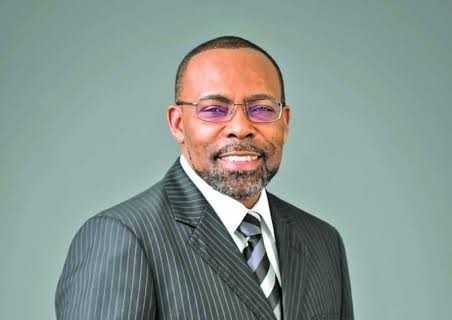

– says his intervention was not political, acknowledges he could have taken a different approach in raising issue
President of the Caribbean Court of Justice (CCJ), Justice Winston Anderson, has expressed concern over Guyana’s failure to make substantive appointments to the offices of Chancellor and Chief Justice for more than two decades.
In a statement issued Friday, Justice Anderson said the prolonged use of acting appointments raises concerns about the independence and constitutional protection of Guyana’s judiciary.
He said his concern was not directed at any particular government, political party or individual, but at the constitutional principle that the country’s two highest judicial offices should be held by substantively appointed office holders.
Justice Anderson pointed to Article 122A(1) of Guyana’s Constitution, which requires the courts and those presiding over them to exercise their functions independently and without political, executive or other forms of direction and control.
He said prolonged acting appointments create a structural vulnerability that is difficult to reconcile with that constitutional guarantee.
He also noted that his concern predates his presidency of the CCJ and has been shared by his predecessors.
Justice Anderson referenced former CCJ President Sir Dennis Byron’s 2013 comments that Guyana’s President and Leader of the Opposition have a constitutional obligation to agree on substantive appointments to the posts.
He also cited former CCJ President Justice Adrian Saunders, who in 2022 described the absence of confirmed appointments as “one significant blot” on Guyana’s legal and judicial landscape.
Justice Anderson said his position is not based on a preference for who should occupy either office.
He noted, “Let me be clear. I have no personal interest or preference in who is appointed Chancellor or Chief Justice of Guyana.
He said his concern has instead been about ensuring that the judiciary is headed by substantively appointed officials who have the constitutional protections intended for those positions.
The CCJ President disclosed that he held separate discussions with President Dr. Irfaan Ali and then Opposition Leader Aubrey Norton during visits to Guyana, including an effort in October 2025 to encourage progress towards substantive appointments.
He said those discussions were held privately and in good faith, with the aim of advancing judicial independence and the administration of justice, but they did not produce the outcome he had hoped for.
However, Justice Anderson acknowledged that he might have handled his involvement differently.
“Looking back, I recognise that another course would have been much better,” he said, adding that it may have been preferable to confine himself to public commentary on the constitutional importance of substantive judicial appointments, as his predecessors had done.
Despite that acknowledgement, he maintained that his actions were not motivated by political preference, personal interest or an intention to interfere in Guyana’s domestic affairs.
He said his actions were guided by what he considered his responsibility as President of Guyana’s final appellate court to protect judicial independence and the constitutional integrity of the judiciary.
At the time of Justice Anderson’s visit to Guyana, Justice Yonette Cummings-Edwards was serving as Chancellor of the Judiciary, while Justice Roxane George-Wiltshire, SC, was Chief Justice, with both offices held in an acting capacity.
Justice Cummings-Edwards subsequently proceeded on early retirement, after which Justice George was appointed Chancellor and Justice Navindra Singh became Chief Justice, with both appointments remaining in an acting capacity.
Justice Cummings-Edwards is now Chief Justice of the Turks and Caicos Islands.