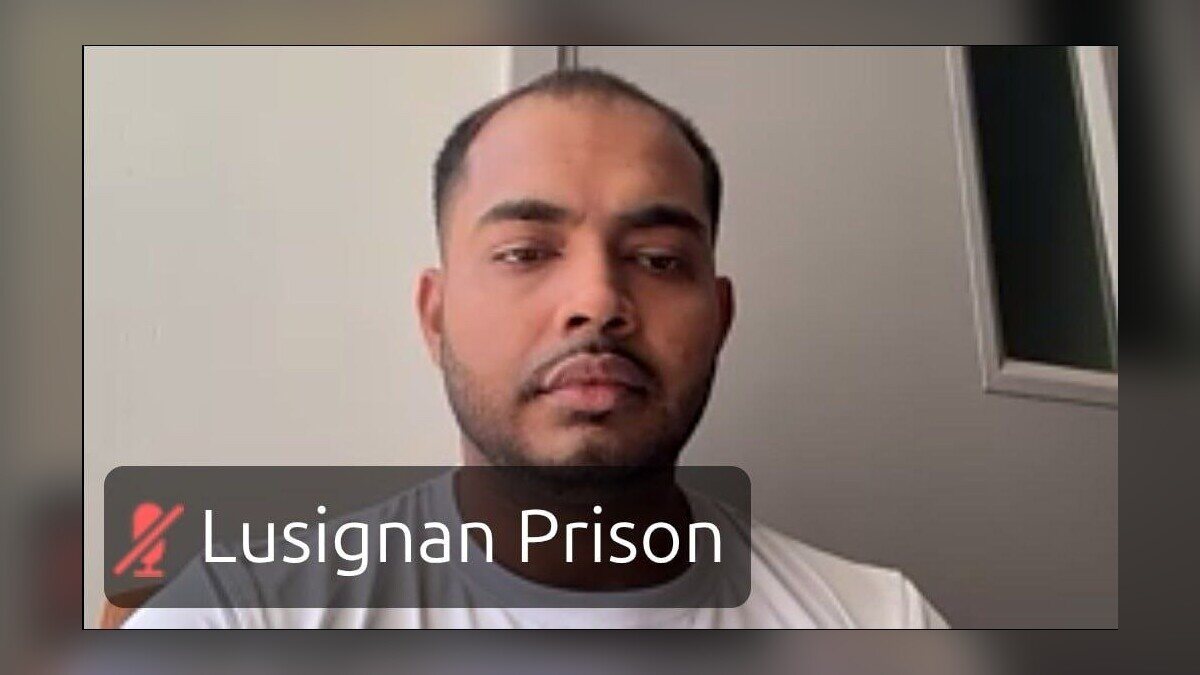

Former Region Four Chairman and National Border Patrol Director Daniel Seeram has avoided further immediate imprisonment after Magistrate Abigail Gibbs sentenced him to 13 months in prison, suspended for 30 months, for assaulting his former wife, Farzana Hamid.
The decision, delivered at the Sparendaam Magistrate's Court on Monday, followed a sentencing hearing during which the magistrate considered a favourable probation report, a detailed victim impact statement from Hamid, and an expression of regret from Seeram.
The court determined that although the assault warranted imprisonment, Seeram's previous good character, public service and prospects for rehabilitation justified suspending the sentence.
Under the order, Seeram will not serve the prison term immediately. However, if he commits another offence punishable by imprisonment during the 30-month suspension period and is subsequently convicted, the suspended sentence could be activated.
The ruling follows his October 2 conviction for assault causing actual bodily harm, arising from an incident on September 11, 2023, at the Cummings Lodge apartment he shared with Hamid.
In delivering her ruling, Magistrate Gibbs outlined the principles of sentencing, including punishment, deterrence, prevention and rehabilitation.
She described the offence as serious, noting that Hamid was assaulted while asleep and sustained injuries to several parts of her body.
The magistrate also identified Seeram's destruction of Hamid's cellphone, while she attempted to record the incident, as an aggravating circumstance.
Although the defence submitted that no weapon was used and that the injuries were at the lower end of the severity scale, Gibbs found that the nature and circumstances of the assault prevented it from being treated as trivial.
The court adopted a starting point of 24 months' imprisonment.
Gibbs then deducted 10 months in recognition of Seeram's previous good character, absence of criminal convictions and established record of service to the state.
A further month was deducted for the time he had spent in custody since his conviction, reducing the sentence to 13 months.
The magistrate subsequently considered whether immediate imprisonment was necessary.
Relying on sentencing principles that permit rehabilitation to be considered alongside punishment, she concluded that Seeram's personal circumstances and the findings of the probation report supported rehabilitation within the community.
She therefore suspended the 13-month prison sentence for 30 months.
A probation report presented during the hearing portrayed Seeram, 36, as an educated individual with a stable employment history, strong family support and positive community relationships.
The assessment outlined his upbringing, academic achievements, military service and political career. Seeram attended Queen's College, pursued engineering studies and served in the Guyana Defence Force, attaining the rank of captain.
He subsequently served as Chairman of Region Four before assuming a government appointment as the Director of National Border Patrol.
The report indicated that police checks revealed no previous criminal convictions. It also highlighted his stable family circumstances and earlier participation in relationship counselling.
According to the probation assessment, Seeram could benefit from supervision if the court considered a non-custodial approach appropriate.
However, the report also acknowledged that Seeram continued to maintain his innocence despite his conviction.
During questioning, attention was directed towards whether he had accepted responsibility or expressed remorse for the offence. The probation officer indicated that she could only report what Seeram had communicated during the assessment.
In her ruling, Gibbs attached significant weight to his previous good character and record of service but emphasised that his education, financial circumstances and public position did not entitle him to preferential treatment before the law.
Instead, those factors were relevant to assessing his previous conduct and prospects for rehabilitation.
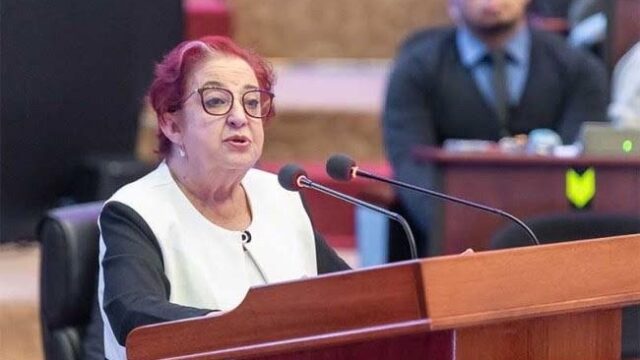
In her victim impact statement, Hamid described the physical, emotional and psychological consequences of the assault and the difficulties she has experienced since leaving the marriage.
She told the court that she endured years of physical and emotional abuse and recalled being awakened on September 11, 2023, when Seeram repeatedly punched her in the head and face.
Hamid said she pleaded with him to stop and attempted to record the incident before he destroyed her cellphone.
She explained that the experience affected her sense of safety, confidence and ability to trust others, eventually leading her to seek professional psychological therapy.
The emotional consequences, she said, continued after the marriage ended, leaving her struggling with anxiety and difficulty establishing new relationships.
Hamid also described the burden of pursuing the criminal case for nearly three years, including repeated court appearances, medical and therapy expenses, and interruptions to her employment.
Her parents, who supported her throughout the proceedings, also experienced financial and personal disruptions, she said.
Although the guilty verdict brought relief, Hamid told the court that the period following the conviction introduced additional distress.
She alleged that she and her family were subjected to hostile social media commentary, including personal insults, false allegations and attempts to damage their reputations.
She also expressed concern that Seeram might retaliate against her for reporting the assault and pursuing the matter through the courts.
Hamid told the magistrate that Seeram had never apologised to her or acknowledged the harm he caused.
She urged the court to impose a sentence that reflected the seriousness of the offence, its lasting impact and the need to deter similar conduct.
Hamid emphasised that she was seeking accountability rather than revenge and wanted the opportunity to continue her life without fear.
Before sentencing, Seeram addressed the magistrate, expressing regret over the breakdown of his marriage and the circumstances surrounding the criminal proceedings.
He said he had never envisioned his marriage to Hamid ending in such a manner and suggested that external influences contributed to the deterioration of their relationship.
Seeram also expressed sorrow for those affected by the proceedings, including Hamid and individuals who had supported him.
He referred to the attention the matter had attracted in the courtroom, the media and the wider public, before wishing his former wife well in her future endeavours.
Gibbs subsequently acknowledged that Seeram had apologised to Hamid and her family during the hearing.
However, his remarks did not clearly acknowledge criminal responsibility for the assault, and his continued assertion of innocence had previously been recorded in the probation assessment.
The distinction was significant given Hamid's statement that the absence of an acknowledgment of responsibility had compounded her emotional suffering.
Seeram was found guilty on October 2 after Magistrate Gibbs rejected his account of the September 2023 incident and his claim that he acted in self-defence.
During the trial, Seeram maintained that he had pushed Hamid while attempting to leave during a confrontation.
The magistrate rejected that explanation, accepted Hamid's evidence and found that the injuries she sustained were consistent with her account of the assault.
Following the conviction, Seeram was remanded pending sentencing.
His legal team subsequently challenged the remand order before the High Court, but Justice Joy Persaud-Singh dismissed the application on October 5.
Seeram later filed an appeal challenging his conviction on 20 grounds, including objections to the magistrate's assessment of the evidence and treatment of his self-defence argument.
The appeal remains separate from Monday's sentencing decision and does not itself overturn the conviction.
The case also attracted public scrutiny over the delay in transferring Seeram from police custody to prison following the remand order.
The Women and Gender Equality Commission subsequently raised concerns about the handling of the process and its implications for public confidence in the administration of justice.
Seeram's government position has added to public interest in the proceedings.
A former senior member of the People's National Congress Reform who subsequently aligned himself with the People's Progressive Party/Civic, Seeram served as Region Four Chairman before receiving a national border security appointment in 2026.
His professional background featured prominently in the probation assessment and ultimately influenced the magistrate's decision to suspend his prison sentence.
However, Gibbs made clear that public office, education and financial stability were not grounds for preferential treatment.
The magistrate treated Seeram's professional record as evidence relevant to his character and prospects for rehabilitation, rather than as a defence to the offence.
Monday's ruling leaves his conviction intact and imposes a 13-month prison sentence, with its immediate execution suspended for 30 months.
The decision also leaves unresolved the separate appeal against his conviction, which his legal team filed following the October 2 guilty verdict.