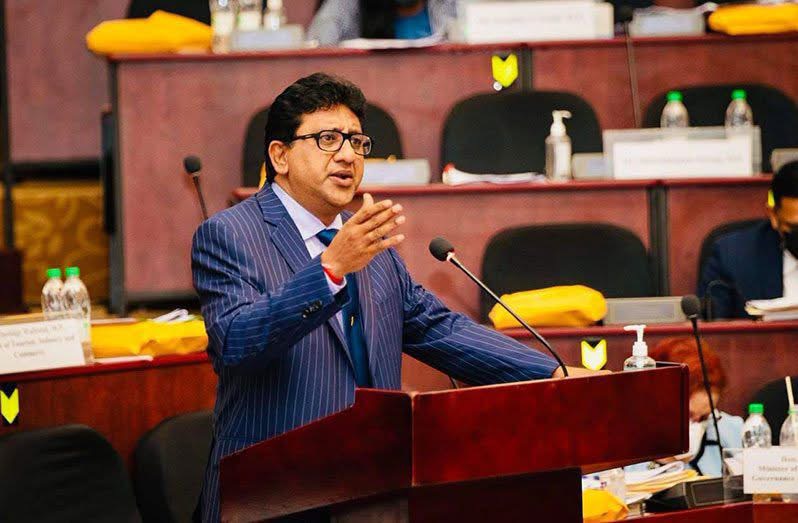
The government has begun reviewing Guyana’s citizenship and immigration laws, with Attorney General and Minister of Legal Affairs Anil Nandlall, SC, saying the exercise will examine stronger controls over the acquisition of citizenship and the ownership of land and property by non-citizens.
Speaking on his weekly Issues in the News programme, Nandlall said the review is being undertaken by the Attorney General’s Chambers in collaboration with the ministries responsible for Labour, Home Affairs and Foreign Affairs, among other agencies.
“In terms of our immigration and citizenship laws, that is also the subject of a review,” Nandlall disclosed.
He stressed, however, that significant portions of Guyana’s citizenship framework are entrenched in the Constitution and therefore cannot simply be altered through ordinary legislation.
“A large part of our citizenship regulatory framework is constitutional. So that can’t be changed by ordinary legislation,” he explained.
According to Nandlall, the government is instead examining those aspects of the legal framework that Parliament can amend through legislation.
“The objective is to restrict acquisition of Guyanese citizenship, to put checks and balances in place, to regulate with greater scrutiny the grant of citizenship, and to regulate land ownership or property ownership in respect of non-citizens of Guyana,” he said.
Guyana’s existing citizenship framework is governed both by the Constitution and the Guyana Citizenship Act. The 1967 Act provides for the acquisition of citizenship by persons who do not automatically qualify as citizens under the Constitution, as well as matters concerning deprivation and renunciation of citizenship.
The Attorney General said calls for changes have come from several stakeholder organisations.
He described citizenship and property ownership by non-citizens as increasingly topical issues and said stakeholders have continued pressing the government to begin examining the existing framework.
Any changes, he stressed, would first be subjected to consultation.
“Obviously, it will be a consultative process,” Nandlall said.