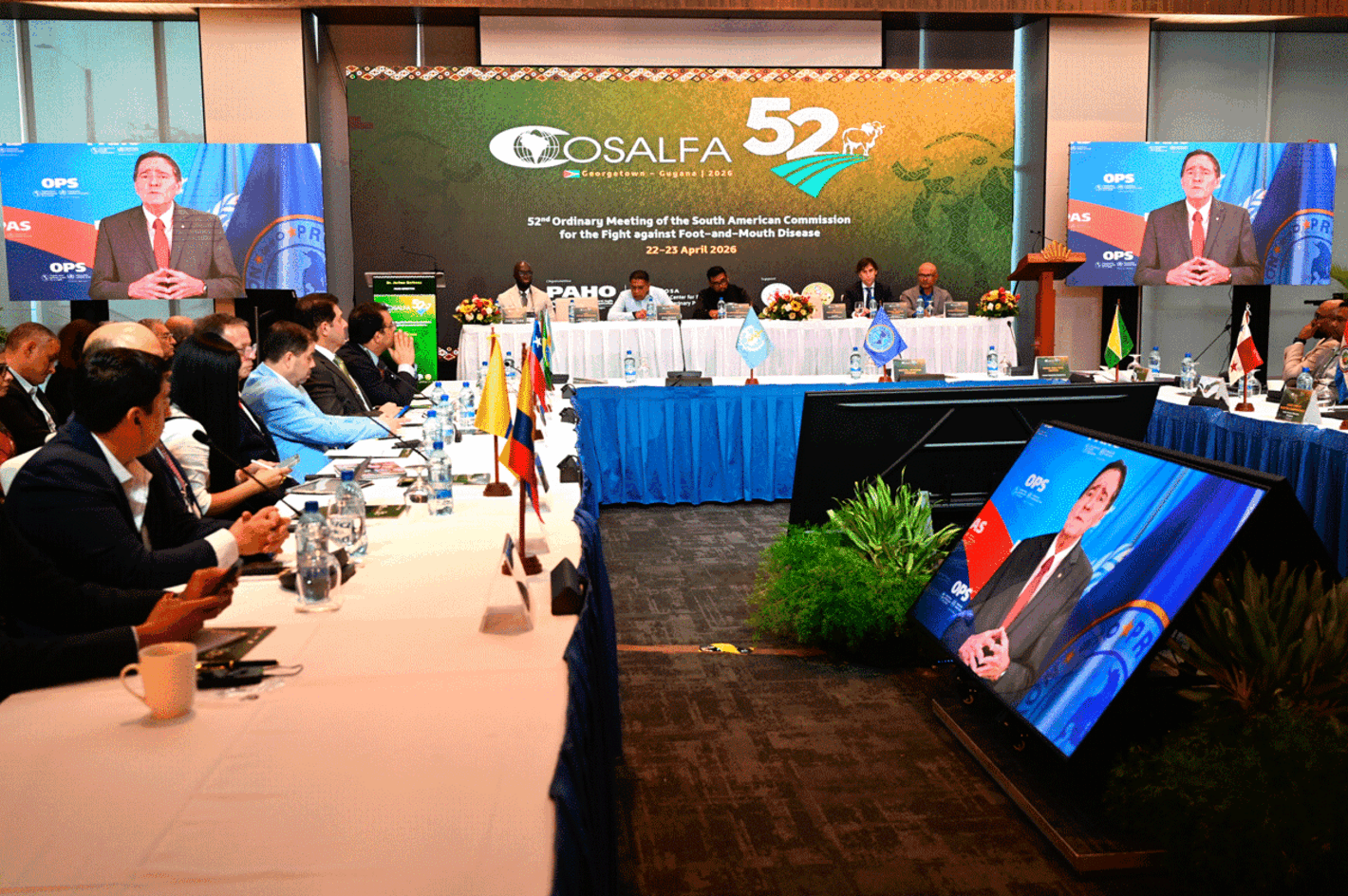

Guyana is playing a central role in the Region of the Americas’ push to eliminate foot-and-mouth disease, as the 52nd Ordinary Meeting of the South American Commission for the Fight Against Foot-and-Mouth Disease (COSALFA) opened here last Wednesday. The high-level meeting comes at what regional authorities have described as a critical juncture, with the Americas now advancing toward the final phase of eradicating the disease.
President Mohamed Irfaan Ali and Minister of Agriculture Zulfikar Mustapha were among officials attending the opening ceremony, reaffirming Guyana’s commitment to strengthening animal health, food security, and regional collaboration.
The meeting is being organised by the Pan American Health Organization through its specialised centre, PANAFTOSA, with support from the Guyana Livestock Development Authority (GLDA), highlighting the country’s growing technical leadership in the sector.In a video message, PAHO Director Jarbas Barbosa stressed the significance of the moment, noting: “we are entering the final stage to complete the eradication of foot-and-mouth disease in the Americas.”He further underscored the need for regional unity, pointing to “the participation of all countries in the Region, beyond COSALFA members in implementing the strategies of the 2026–2030 Action Plan… to protect the regional health status and strengthen preparedness against transboundary risks.”
President Ali, in his address, positioned Guyana as a leader in modern animal health systems, stating that “the country’s traceability systems, combined with advances in molecular diagnostics, position Guyana as a regional reference point for modern, evidence-based animal health management.”
Meanwhile, Minister Mustapha said hosting the meeting reflects Guyana’s ongoing investment in the sector. “For our country, hosting COSALFA 52 is part of our commitment to strengthening veterinary governance, expanding diagnostic capacity, and improving our national surveillance system,” he said.
Director of PANAFTOSA and ex officio Secretary of COSALFA, Manuel Sánchez, highlighted that the region’s work is not only about eliminating the disease but also safeguarding progress already made.
“Our task is not only to complete the remaining steps toward continental eradication… but also to safeguard what has already been achieved in an increasingly complex global environment,” he noted, adding that this will depend on “strong regional cooperation.”
Discussions during the first day focused on key priorities for the next phase of eradication efforts, including the rollout of the 2026-2030 Action Plan under the Hemispheric Programme for the Eradication of Foot-and-Mouth Disease (PHEFA), emergency preparedness in the Caribbean, and strengthening response systems.
Delegates also examined regional coordination against transboundary threats, the post-eradication landscape, and the performance of the Regional Antigen Bank (BANVACO) in its first year.