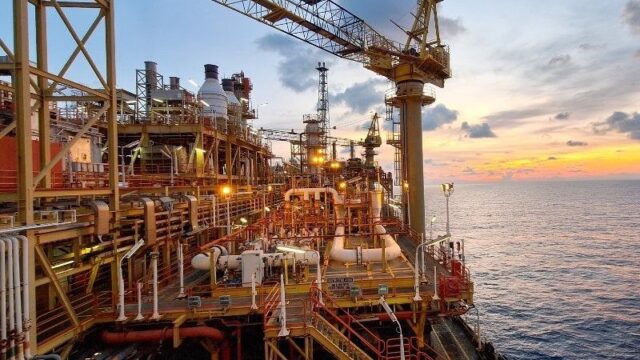
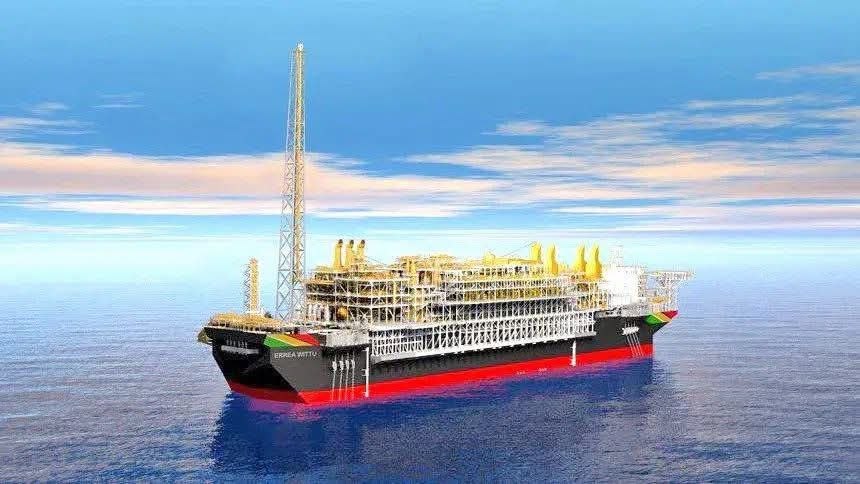

Guyana is preparing to cross a major oil-production milestone, with President Dr. Irfaan Ali announcing that the country’s fifth floating production vessel is expected to arrive offshore this week and push national output above one million barrels per day for the first time.
Speaking during a press conference on Tuesday, the Head of State said the fifth production vessel left Singapore in early August and is expected to arrive off Guyana’s coast this week, with first oil targeted for the fourth quarter of 2026.
The President said the vessel was built by MODEC at a cost of US$12.7 billion and will be the largest floating production, storage and offloading vessel, or FPSO, in Guyana’s fleet.
According to Ali, the FPSO is designed to add about 250,000 barrels per day to national production.
That additional output is expected to lift Guyana’s total oil production above the one-million-barrel-per-day mark, a major threshold for the country’s fast-growing petroleum sector.
Ali said Guyana’s four existing FPSOs, Liza Destiny, Liza Unity, Prosperity and ONE GUYANA are currently producing between 900,000 and 920,000 barrels per day.
The President also used the update to address the country’s production-sharing arrangement, saying the formula has not changed from what was included in the 2016 agreement.
He said the agreement still provides for royalty first, up to 75 percent of production going to cost recovery, and the remaining profit oil being split evenly between Guyana and the Stabroek Block co-venturers.
However, Ali said Guyana’s share of Stabroek Block oil has increased from 12.5 percent to 39.8 percent because the cost bank was recovered two years earlier than originally expected.
Explaining the shift, Ali said that, previously, 75 of every 100 barrels produced went toward cost recovery. Today, he said, only about 20 barrels out of every 100 go to cost, while the remaining profit oil is split equally between Guyana and the companies.
Ali said Guyana’s half of the profit oil now amounts to about 39.8 barrels out of every 100 barrels produced. The companies’ matching share is split among the Stabroek Block co-venturers.