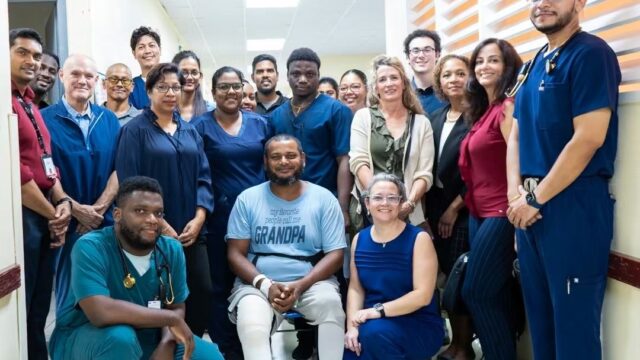
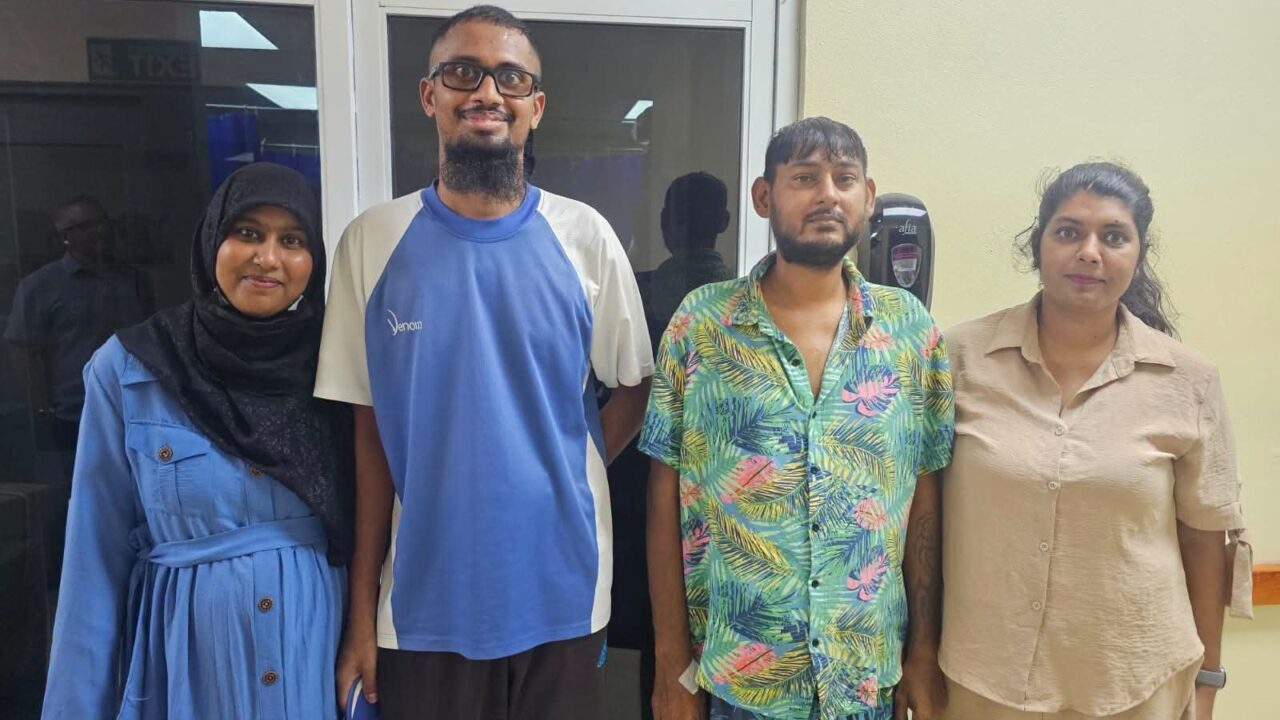

Two working fathers from the West Coast Demerara are now free from dialysis after their wives, unable to donate directly to their own husbands, each donated a kidney to the other woman’s spouse.
The paired kidney exchange was facilitated by the Georgetown Public Hospital Corporation (GPHC) in September. In a release on October 22, the hospital said both men have since been discharged with good kidney function.
For the two families, the successful transplants have brought renewed hope after blood tests initially stood in the way of the wives’ efforts to help their husbands.
The journey began when GPHC’s Nephrology team diagnosed a 31-year-old man with end-stage renal disease. He was referred to the Transplant Department for the placement of a peritoneal dialysis catheter, but his young age also prompted the team to discuss a kidney transplant.
He expressed interest, and his wife willingly offered to donate. Testing, however, showed that their blood groups were incompatible, making a direct transplant unsuitable.
The man began peritoneal dialysis while the transplant team continued examining other possibilities.
About five months later, a second couple approached the hospital with a similar challenge. The 38-year-old husband had kidney disease, and his wife was also willing to donate a kidney. They, too, were found to have incompatible blood groups.
The transplant team recognised an opportunity to help both families through a paired exchange: each wife could donate to the other woman’s husband.
Both couples agreed. Further crossmatch testing produced favourable results, allowing the operations to proceed in September.
The men remained in hospital for approximately two weeks after surgery, with the older patient requiring a slightly longer stay.
Both are now continuing their recovery through follow-up appointments for wound care, routine investigations and monitoring. They also take prescribed medication to support their transplanted kidneys.
GPHC said the outcome demonstrates the importance of organ donation, thorough compatibility testing and cooperation between patients and healthcare professionals.
“When a willing donor is not compatible with their loved one, another option may be possible through paired kidney exchange,” the hospital stated.
For these two fathers, that option became a reality through their wives’ generosity and the work of the transplant team, giving both families the opportunity to look towards healthier days together.