In 2009, Guyana first launched its Low-Carbon Development Strategy (LCDS) Fifteen years later, as the LCDS evolves into its 2030 edition, Guyana finds itself in a paradoxical position: one of the world’s fastest-growing oil producers, yet still trying to lead on climate and sustainable development.
The first iteration of the LCDS, launched by then-President Bharrat Jagdeo, was built around the idea that forests are not just trees but global assets that store carbon, protect biodiversity, and sustain communities. The breakthrough came in 2009 with the Guyana-Norway partnership, which rewarded Guyana with performance-based payments for keeping its deforestation low.
Between 2009 and 2015, Guyana earned over US$200 million under this arrangement, funds that were channeled into renewable energy, Amerindian land titling, and community development projects. By 2013, the LCDS had been updated to include broader investment priorities such as clean energy and sustainable infrastructure. However, after 2015 momentum slowed, as international support waned and political priorities shifted.
In 2021, President Irfaan Ali’s administration relaunched the concept with LCDS 2030. This time the strategy was framed as a blueprint for building what the government calls an “ecosystem services economy,” in which forests, biodiversity, water, and other natural assets are valued and integrated into economic planning. Following a nationwide consultation process, the updated plan set out a series of pillars: developing market mechanisms for forest and carbon services, investing revenues in clean energy and climate-resilient infrastructure, ensuring Indigenous and local communities share directly in benefits through village sustainability plans, and decoupling economic growth from emissions so that Guyana’s GDP can expand several-fold while keeping its net carbon output close to zero.
Guyana demonstrated that a small country could pioneer forest climate services at scale, influencing international Reducing Emissions from Deforestation and Forest Degradation (REDD+) frameworks and climate policy. Additionally, Indigenous communities have benefitted from land titling and livelihood projects funded by LCDS revenues.
The strategy also gave Guyana visibility and credibility on the world stage, allowing it to influence climate negotiations far beyond what its size might suggest, but recent global carbon markets have proven volatile, creating uncertainty in revenues. Delivery of some renewable energy promises has lagged behind ambition.
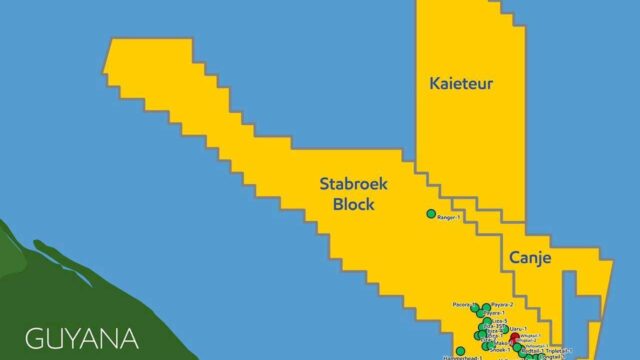
Most critically, Guyana’s booming oil sector now tests the credibility of a “low-carbon” development model. As production surges toward one million barrels per day, the optics of oil wealth alongside climate leadership are increasingly complex.
Looking to 2030, Guyana’s challenge will be to prove that LCDS 2030 is more than just rhetoric. If executed well, it could transform forests and ecosystems into reliable revenue streams, finance a new wave of renewable energy projects, and distribute benefits more equitably across Indigenous and hinterland communities.
The new takes to the LCDS plan for 2030 could position Guyana as both an oil exporter and a carbon sink, a dual identity few countries possess. But risks loom large. International scrutiny will intensify as Guyana continues to expand oil production, and questions will persist over whether low-carbon ambitions can truly coexist with fossil fuel dependence.
From the bold experiment with Norway in 2009 to the sweeping ecosystem vision of LCDS 2030, Guyana’s journey has been pioneering if not always consistent. The strategy’s performance to date shows both the potential and the pitfalls of trying to build a new development path on the value of nature.