
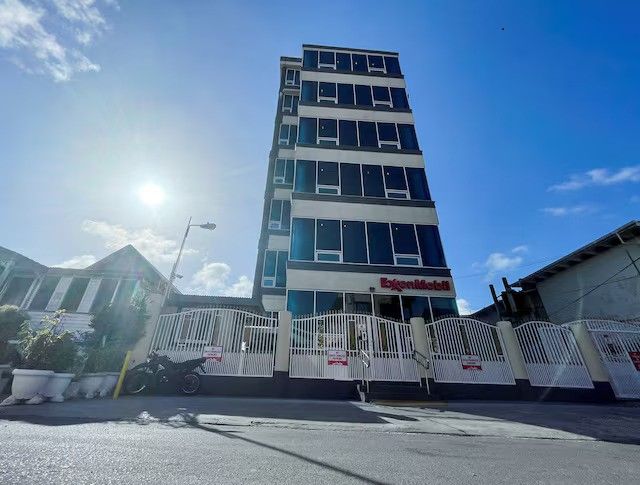
ExxonMobil Guyana says it has pumped more than GY$600 billion into the local economy through spending with Guyanese businesses since operations began in 2015.
In the first half of 2025 alone, the company reported direct spending of GY$87 billion with some 1,800 local vendors. According to Exxon, this forms part of its continued investment in local content, including business development, workforce training, and community initiatives.
This year also brought what the company called a “significant milestone”- the start of in-country fabrication services at the Vreed-en-Hoop Shore Base Inc. (VEHSI). Work there now includes the fabrication of quad joints and Pipeline End Terminations (PLETs), which Exxon said marks an important step in building local industrial capacity.
Employment figures also continue to climb. As of mid-2025, ExxonMobil Guyana and its contractors employed more than 6,200 Guyanese, representing 70% of the total workforce. Of that number, one in three are women, and 1,800 Guyanese are currently working offshore.
The company said local workers have benefited from over 370,000 hours of training so far this year, covering leadership, technical and professional skills, and health, safety, and security standards.
Meanwhile, with backing from ExxonMobil Guyana, its Stabroek Block partners, and the Government, the Guyana Technical Training College Inc. (GTTCI) is preparing to welcome its first group of students in October 2025. For the first time, students will be fully trained in-country, a development Exxon described as a “major achievement” in technical education.
The company’s internship program is also showing results. Five interns from the inaugural class have been hired, while the 2025 program recently wrapped up, continuing to provide career opportunities for young Guyanese professionals.
Commenting on the progress, ExxonMobil Guyana President Alistair Routledge said, “We are proud of the progress we’ve made in developing local talent. Seeing more Guyanese take on key roles in the oil-and-gas industry is a clear sign that our commitment to capacity building is working.”