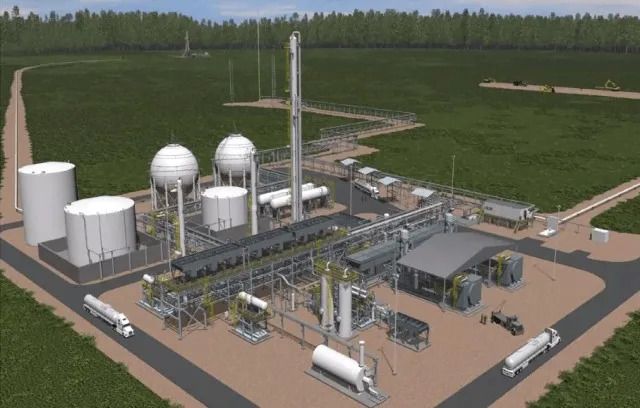

Guyana’s Ambassador to Belgium and former GuySuCo Chief Executive Officer, Sasenarine Singh, has come out in strong defence of the Wales Gas-to-Energy (GTE) Project, arguing that concerns raised by economist Elson Low about the project’s soil stabilization cost fail to acknowledge its long-term national importance.
In a letter to the media, Singh described Low’s criticism as overlooking the “strategic necessity” of the multi-billion-dollar project, which he said is key to resolving Guyana’s decades-old struggle with energy insecurity.
“Mr. Low’s call for disclosure and accountability is valid,” Singh wrote. “But shelving the project over soil stabilization costs overlooks the long-term vision guiding it.”
According to Singh, Guyana’s energy insecurity has been “a primary barrier to progress for over forty years,” and the GTE initiative must be viewed as “a foundational intervention aimed at resolving this chronic issue.”
He argued that dismissing the project’s benefits as “fiction” disregards the broader strategic analysis behind it.
Addressing concerns about the US$100 million being spent on soil stabilization at Wales, Singh pointed to major international projects that faced similar challenges.
He cited the Battersea Power Station in London- built on marshy terrain along the River Thames- and the RWE Eemshaven Power Station in the Netherlands, both of which required extensive and costly soil stabilization works before becoming key parts of their national energy networks.
“These projects confronted their challenges in the interest of national development,” Singh said. “History will show both the United Kingdom and the Kingdom of the Netherlands are better as a society because they persevered and made the hard decisions at the right time. Guyana is in the same position today; we must press on!”
Singh stressed that Guyana’s coastal soil conditions have always been complex, and the current stabilization work should be seen as “a necessary, one-time investment” to establish a stable industrial platform for the next 50 years.
He added that the contractor’s warning about potential risks if the facility is built incorrectly should not be interpreted as a case against construction- but rather as justification for “undertaking the correct engineering interventions, regardless of cost.”
The ambassador also linked the GTE project to broader development plans for the West Bank of Demerara, noting that it would serve as an anchor for the development of over 30,000 acres of currently undeveloped land.
He said this growth would be supported by planned transportation links from Bartica to Timehri and the new Jagdeo Bridge, all of which would “make the broader development- and its potential for cross-subsidization- economically feasible.”
“I encourage Mr. Low to visualize the ‘BIG THINK’,” Singh stated.
Responding to claims that the site is now unsuitable due to its soil issues, Singh argued that once the stabilization work is completed, “the land becomes a stable asset.”
“The GTE project, as the anchor tenant, will provide the cheap, reliable energy needed to overcome the single greatest barrier to Guyanese manufacturing,” he wrote, noting that this would attract new industries and create much-needed jobs.
Singh also said it was unfair to blame the GTE project for the current high cost of power generation, since the expensive power ships now in use are only “interim measures” until the project comes on stream.
“The call to shelve this US$2 billion strategic project is misguided,” Singh concluded. “The path forward is not abandonment, but rigorous oversight and course correction. The cost of stabilization, however high, pales in comparison to the cost of forfeiting our energy future.”