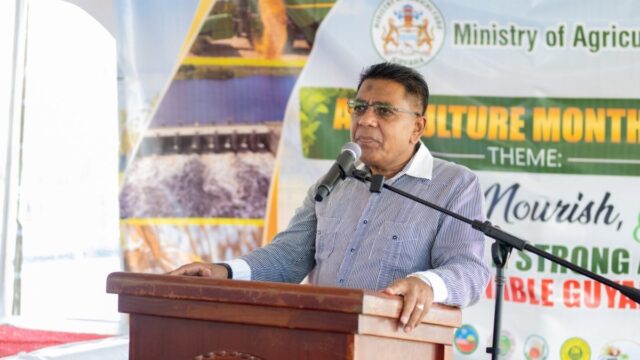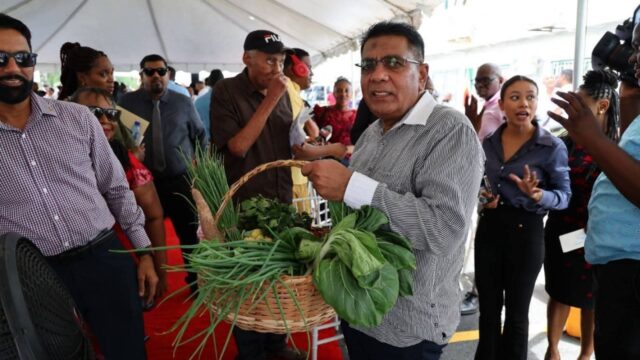
President Dr. Mohamed Irfaan Ali and Agriculture Minister Zulfikar Mustapha have placed innovation, climate resilience and increased food production at the centre of Guyana’s agricultural agenda, as Agriculture Month 2026 gets underway.
In separate messages to mark the month, both officials pointed to global uncertainty, climate pressures and disruptions to food supply chains as reasons Guyana must continue strengthening its ability to produce food for itself while expanding its role as a supplier to the Caribbean.
Agriculture Month is being observed under the theme, “Innovate, Nourish, Grow: Building a Strong and Sustainable Guyana.”
President Ali said food production must now be viewed as an issue of national security and economic strength, particularly as countries grapple with conflicts, climate shocks and supply-chain disruptions.
“Food is more than what we put on our tables. It is security. It is opportunity. It is economic strength,” the President said.
According to Ali, the Government’s broader ambition is to position Guyana as the “food capital of the Caribbean”, producing and processing more locally while expanding exports and contributing to regional food security.
He said the transformation of the sector is already underway through precision farming, improved genetics, hydroponics, protected agriculture, modern poultry systems, digital extension services and plans for agro-processing hubs.
The President also pointed to the sharp increase in public spending on agriculture, noting that the sector’s budget moved from $18.4 billion in 2020 to $113.2 billion in 2026, an increase of 515 per cent.
That investment, he said, is supporting corn and soya bean production in the Intermediate Savannahs, drainage and irrigation works, farm-to-market roads, storage and logistics, livestock, aquaculture, research and extension services.
The soon-to-be-launched Guyana Development Bank is also expected to provide additional access to financing for small-scale food producers and agro-processors.
However, Ali stressed that infrastructure and increased spending alone will not be enough to transform the sector.
“Innovation must be at the heart of that transformation,” he said, pointing to artificial intelligence, precision agriculture, improved genetics and data-driven production systems as areas expected to play a greater role in food production.
While both officials highlighted technology and increased production, their messages also focused heavily on getting more young people and women involved in agriculture.
Ali said the Government wants to develop a new generation of agricultural entrepreneurs who see the sector as a technologically driven industry capable of generating wealth.
He said partnerships and consortiums involving the private sector, women and young people will continue to be encouraged to give producers the scale needed to improve productivity and profitability.
Mustapha similarly said greater access to financing, training, technology and productive resources is intended to make agriculture a more attractive sector for young entrepreneurs and business leaders.
The two officials also tied Guyana’s domestic agricultural expansion to the wider Caribbean food-security drive, with the country seeking to reduce reliance on imported food and increase supplies to regional markets.
President Ali said Guyana possesses the land, water, natural resources and skills needed to play a larger role in meeting the Caribbean’s food needs.
“Agriculture is therefore no longer simply about feeding ourselves. It is about helping to secure the future of the Caribbean,” he said.
Mustapha said Guyana is strengthening its ability to satisfy domestic demand while supporting CARICOM’s target of reducing the Region’s food import bill by 25 per cent by 2030.
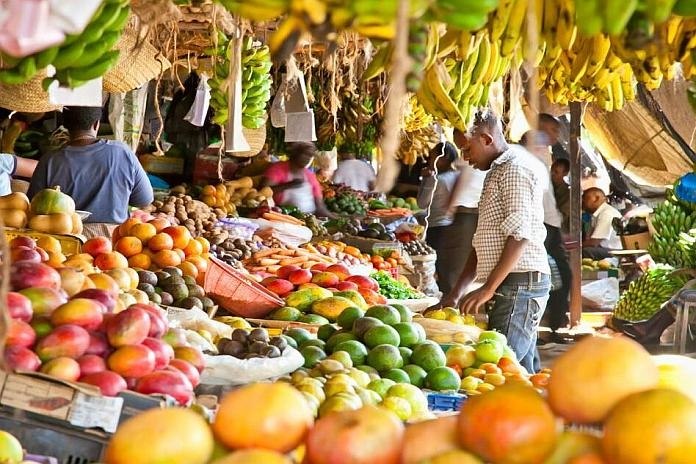
Agriculture Month activities will include farmers’ markets, the inaugural Farmers’ Conference and the Annual Honey Fest, among other events across the country.
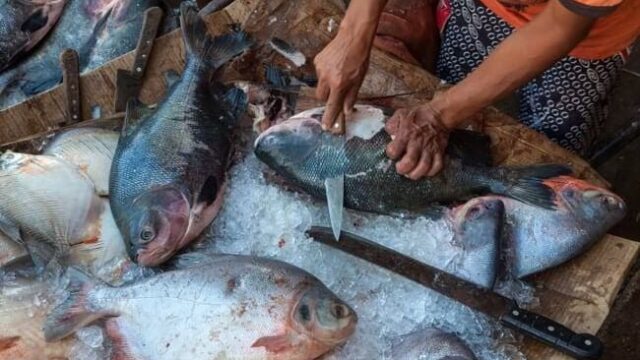
Both Ali and Mustapha said the ultimate objective is to develop an agricultural sector that is more productive, resilient, competitive and inclusive, while generating greater opportunities for farmers, fisherfolk, agro-processors and entrepreneurs.